

Phantom Flag: Britain’s Latest Middle East Foray Whispers More Than It Roars
POLICY WIRE — London, UK — The ghost of empire still lingers, doesn’t it? A faded maritime power, grappling with internal convulsions, quietly dispatches a single warship to a distant...

POLICY WIRE — London, UK — The ghost of empire still lingers, doesn’t it? A faded maritime power, grappling with internal convulsions, quietly dispatches a single warship to a distant chokepoint. It’s less a triumphant fleet deployment, more a murmured acknowledgement of past obligations and present anxieties, a spectral shadow cast over the unforgiving waters of the Middle East.
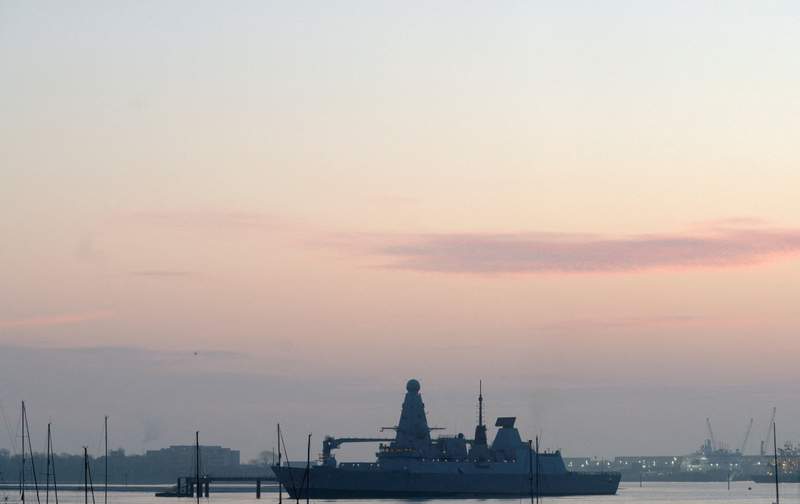
It’s HMS Lancaster, a venerable Type 23 frigate, that’s made the long trek. You might remember the type—they’re the workhorses, not the show ponies, of the Royal Navy. Officially, it’s about “maritime security operations” and “protecting British interests.” But when you send one ship, you’re not exactly projecting overwhelming force, are you? You’re making a statement, sure. A carefully hedged, deeply pragmatic one.
The mission’s unspoken objective hovers somewhere near the Strait of Hormuz, that narrow, immensely turbulent bottleneck through which a staggering proportion of the world’s seaborne oil and gas still squeezes. The UK, like many a nation with a historical propensity for meddling (read: intervention), maintains a modest, continuous naval presence in the Gulf. This particular deployment feels a bit like plugging a teacup into a broken dam—necessary, perhaps, but certainly not decisive.
“Britain stands firm as a reliable partner in safeguarding the critical sea lanes that underpin global commerce,” declared Defence Secretary Grant Shapps, likely while juggling a dozen other parliamentary headaches. “Our commitment to a free and open international order isn’t just rhetoric; it’s tangible, and it’s backed by our assets and our personnel in theatre.” It’s the sort of statement that sounds resolute enough on paper, designed to soothe domestic voters and perhaps irk a few regional adversaries, but the logistics are complex. But the real meat of the matter isn’t about grand gestures; it’s about the relentless, grinding reality of maritime security in a deeply unstable region.
And stability in these waters directly translates to stability far beyond the Gulf’s arid shores. Think Pakistan, for instance. A nation already teetering on a precarious economic edge. Any major disruption in energy flows through Hormuz doesn’t just mean a few pennies added to London’s petrol prices; it sends shockwaves through economies like Islamabad’s. Imagine the spiraling costs for fuel, for power, for transportation—it’s an almost instantaneous jolt to the national metabolism, worsening issues already creating a nation’s fiscal agony. Their lifeline is lashed directly to these trade routes.
Because, for all the talk of a diversified energy landscape, the Strait of Hormuz remains unequivocally king. The U.S. Energy Information Administration confirms that roughly 20% of the world’s total petroleum consumption, alongside 20-30% of global liquefied natural gas (LNG), transits through this single strait. That’s a significant chunk of change, impacting everything from manufacturing in Shanghai to winter heating in Europe. You disrupt that, and the global economy catches a nasty cold—or maybe pneumonia.
📄 POLICY WIRE WHITEPAPER PUBLISHED: PAKISTAN'S NATIONAL SECURITY POLICY PRIORITIES
👉 READ BY CLICKING HEREThe Ministry of Defence, ever the masters of diplomatic understatement, echoed the sentiment. “Our posture in the Gulf is carefully calibrated to respond to evolving threats,” a spokesperson stated, their words as smooth and impenetrable as a ship’s hull. “We’re not naive to the complexities of the region, and our forces are there to contribute to a wider international effort.” Not exactly rattling sabres, are they? It’s more like a low hum, a constant presence meant to deter rather than provoke.
What This Means
This deployment isn’t just about protecting a tanker or two; it’s a multi-layered political signal. Domestically, it reinforces the government’s narrative of ‘Global Britain’—even if that globe feels smaller and more challenging with each passing year. For international allies, particularly the United States, it’s a visible, albeit modest, sign of solidarity and burden-sharing in a region where tensions simmer just beneath the surface. It’s also a quiet reminder to Iran that international eyes (and indeed, hulls) are watching.
Economically, maintaining open sea lanes isn’t a luxury; it’s a necessity. Disruptions lead to immediate price spikes, harming consumers — and industries alike. For emerging markets across South Asia and the wider Muslim world, reliant on these oil and gas flows, any perceived instability is deeply concerning. It feeds into broader concerns about global economic shocks and how they reverberate through the Global South’s enduring struggle for stability.
And strategically, it represents Britain’s continued, if diminished, commitment to projecting influence beyond its shores. It’s a pragmatic necessity born of both strategic imperative and economic self-interest, playing a very small hand in a very large, dangerous game. It’s not a return to empire; it’s a nervous shuffle around the periphery, hoping to keep the main act from falling apart.