
Silent Ember, Sprawling Threat: New Mexico Wildfire Mirrors Global Strain
POLICY WIRE — SOCORRO COUNTY, N.M. — It’s just another fire. A footnote, really, in the grand theater of a warming planet. But this isn’t some abstract concept, not here. Deep in New Mexico’s...

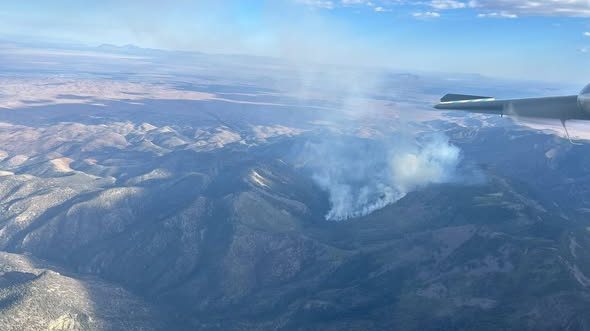
POLICY WIRE — SOCORRO COUNTY, N.M. — It’s just another fire. A footnote, really, in the grand theater of a warming planet. But this isn’t some abstract concept, not here. Deep in New Mexico’s Magdalena Mountains, a relentless, churning blaze dubbed the Six Mile Fire continues its slow, hot crawl. Officials, ever calm in the face of inevitable, annual infernos, assure everyone it isn’t threatening any homes. Not yet, anyway.
Started on March 8, the cause remains a blank space on a report. Could be lightning. Or maybe—and this is often the quiet suspicion—some human misstep. A staggering 87% of wildfires in the U.S. are caused by humans, according to the National Park Service. It’s a fact that adds a layer of weariness to every plume of smoke, a silent indictment against the very creatures battling the flames. This one, born at approximately 4 p.m. on that Friday, has since devoured over 40 acres of rugged terrain within the Magdalena Ranger District, a pocket of the vast Cibola National Forest & National Grasslands. It’s not Hollywood scale, not yet. But it’s growing.
And these aren’t just local volunteer efforts, bless ’em. We’re talking serious assets deployed. Forest Service engines. Those stoic Smokeys and Santa Fe Hotshots—elite units who routinely walk into the teeth of infernos. Apache Kid — and Pecos River Fire Modules, their names hinting at the fierce lands they defend. Air Attack is coordinating, high above the smoke, guiding a Type 3 helicopter. Air tankers sit ready, humming on standby for a call that often comes far too late.
“We’re fighting this one like it’s every other wildfire, which is to say, with every ounce of our coordinated effort,” Ranger Eleanor Vance of the Cibola National Forest told Policy Wire, her voice raspy, no doubt from too many smoky briefings. “You can’t take any of these fires for granted, even the small ones. They’ve got a nasty habit of getting very large, very quickly, if you turn your back even for a minute.” Her sentiment captures the perennial wariness of those on the front lines.
For now, folks aren’t being evacuated. Nobody’s being rousted from their beds in the middle of the night. But don’t let the lack of immediate panic fool you; the situation is monitored with the precision of a surgeon. The public’s just asked to steer clear of the surrounding area. And please, for the love of sanity, keep the recreational drones grounded. They’re a hazard to air operations, creating another wrinkle in an already complex aerial ballet of containment.
Because, well, smoke. It’s an undeniable presence. Folks living along Highway 60 west of the fire, or driving I-25, they’ve seen it. Felt it. Smelled it. It hangs, a hazy shroud. And that’s where the human cost beyond acreage burned comes in. If you’ve got compromised lungs or a tender heart—any respiratory issue, really—you’re urged to take precautions. The AirNow interactive smoke map? It’s becoming as routine a check as the morning weather for some. That’s the reality.
📄 POLICY WIRE WHITEPAPER PUBLISHED: PAKISTAN'S NATIONAL SECURITY POLICY PRIORITIES
👉 READ BY CLICKING HERE“These persistent, medium-sized fires—the ones that don’t quite make national headlines—they’re really what drain our long-term resources,” remarked Socorro County Commissioner David Garcia. “We’ve got a limited budget for this stuff, just like every other county, every state. We’re often robbing Peter to pay Paul, shifting resources from fire suppression to community preparedness, or to something else entirely. It’s a juggling act with potentially devastating consequences if we drop a ball.”
What This Means
This slow-burn crisis in New Mexico isn’t just a local spat with nature. It’s a microcosm of a much larger, global issue. Consider for a moment the ongoing environmental calamities hammering nations far and wide, particularly in regions like the Global South. From the brutal heatwaves scorching cities in Pakistan and India to the intensifying monsoon floods that devastate communities across Southeast Asia, the script often reads the same: environmental shifts straining limited governmental capacities and human resilience. Much like New Mexico’s emergency services juggling a wildfire that’s ‘contained but active,’ governments across the Indus Basin or parts of Africa find themselves constantly triaging crises that, individually, might seem minor but collectively threaten systemic collapse.
The resources poured into even a mid-sized wildfire in the American West — highly trained crews, advanced air support, constant monitoring — reflect an infrastructure that, while stressed, still largely holds. But the environmental calculus is shifting, pushing even well-resourced nations to their limits. It raises questions of fiscal sustainability. Of long-term planning for climates we no longer quite recognize. And for nations already grappling with enduring economic turmoil and political instability, these new climate realities simply add another, heavier brick to a tottering stack. This fire, then, becomes more than smoke — and ash. It’s a reminder of a future that’s already here, demanding solutions that stretch beyond borders and departmental silos.
It’s an unspoken acknowledgment that the seemingly routine battle in Magdalena might just be one more flickering ember in a worldwide conflagration we’re still struggling to comprehend, much less control. And we all need to start figuring out what comes next.