


Jaipur’s Shaky Crown: IPL’s Rajputana Royals Face Gujarat’s Ascent in High-Stakes Regional Drama
POLICY WIRE — Jaipur, India — The dust, and certainly some reputations, has yet to settle across the IPL landscape as Rajasthan’s favored ‘Royals’ find themselves on an unexpectedly...

POLICY WIRE — Jaipur, India — The dust, and certainly some reputations, has yet to settle across the IPL landscape as Rajasthan’s favored ‘Royals’ find themselves on an unexpectedly precarious perch. For a franchise often emblematic of a certain Rajputana bravado, their recent stumble—three losses in five games—isn’t just a cricketing blip. It’s become a low hum of disquiet among fans and, perhaps more significantly, among stakeholders keenly watching the tournament’s broader economic and political reverberations.
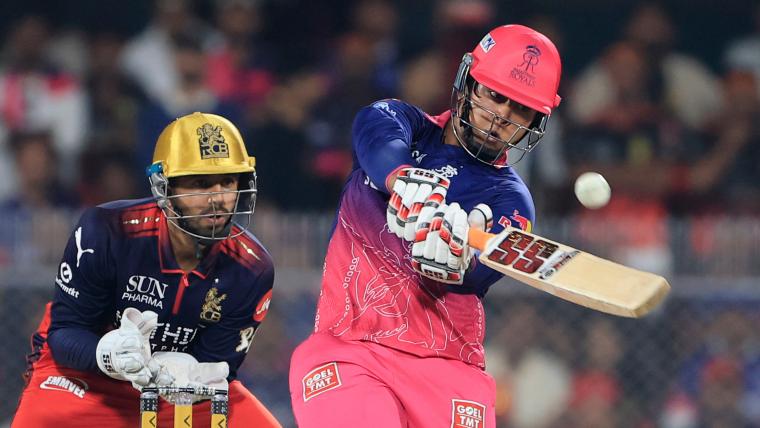
It’s Saturday. And the buzz in Jaipur isn’t merely about boundaries and wickets; it’s about bragging rights, about regional identity playing out on a multi-million-dollar stage. The upcoming fixture against the Gujarat Titans in IPL 2026 isn’t just Match 52; it’s a direct contest for the psychological, and very tangible, benefits of top-tier performance in India’s commercial juggernaut of a sport. A win for the Titans could propel them into the league’s top two, shifting the balance of power, while a Royals victory might just steady a ship that’s suddenly started listing.
Rajasthan Royals, it’s fair to say, launched their campaign with the swagger of conquerors. But then, as these things often do, reality intervened. Their seven-wicket drubbing by the Delhi Capitals? A particularly stinging public rebuke. Much like a governing party facing mid-term blues, the Riyan Parag-led outfit finds itself battling a narrative of wavering fortunes. Their bowling attack, especially beyond the formidable Jofra Archer, has appeared… thin. Archer, the West Indian spearhead, stands among the joint second-highest wicket-takers in the powerplay this season, a singular force in an otherwise inconsistent line-up. Nandre Burger, Brijesh Sharma, and Tushar Deshpande, for all their flashes of brilliance, haven’t quite managed to provide the consistent support an IPL title bid demands. It’s like a coalition government where one strong minister shoulders the weight of several underperformers.
Gujarat, conversely, began their season like a car stuck in second gear, just three wins from seven starts. But a string of three consecutive victories has shifted their trajectory dramatically. Shubman Gill’s squad has found its rhythm, demonstrating that elusive quality of momentum that can make or break a championship run. They’re building, brick by painful brick, what looks like a formidable late-season charge. You’ve got to admire the turnaround. As Mr. Arvind Shah, a veteran sports analyst from Ahmedabad, put it, Gujarat’s late-season surge isn’t accidental; it’s a blueprint for resilience. They’ve adapted their strategy, and that sends a strong message – not just in cricket, but in any competitive endeavor.
The historical ledger between these two franchises offers little solace for the Royals. In nine IPL encounters, the Titans lead by a significant margin of six wins to Rajasthan’s three. At the iconic Sawai Mansingh Stadium in Jaipur—where Saturday’s drama unfolds—Gujarat has taken two out of three victories, including a notable chase of 197 runs. Because when it comes to Ahmedabad’s colossal Narendra Modi Stadium, the parity is more striking: each team has notched two wins from four contests, highlighting how high stakes matches often find equilibrium. These venues aren’t just stadiums; they’re stages where regional identities battle it out, watched by hundreds of millions. Consider this: the Indian Premier League recorded an astounding 505 million unique viewers in its 2023 season, cementing its status as a cultural and economic leviathan, as per Broadcast Audience Research Council (BARC) data.
This deep investment isn’t just about cricket; it’s about state pride, economic boosterism, and a subtle flexing of cultural soft power across South Asia and beyond. For countries like Pakistan, where similar leagues are often dwarfed by the IPL’s scale, the spectacle is watched with a mix of awe and aspiration, even if political realities keep them from participating. The IPL’s ability to pull in global talent and billions in investment acts as a compelling, if unspoken, statement on India’s rising influence.
📄 POLICY WIRE WHITEPAPER PUBLISHED: PAKISTAN'S NATIONAL SECURITY POLICY PRIORITIES
👉 READ BY CLICKING HEREMs. Fatima Hassan, a cultural commentator based in Karachi, speaking on regional sporting rivalries, remarked, Even across borders, the IPL holds an undeniable pull. It demonstrates the immense economic potential within our subcontinent for sports, a potential many still yearn to unlock. The scale is simply unparalleled, it’s really something else, isn’t it?
Gujarat’s recent form, much like a confident political party scenting victory, contrasts sharply with Rajasthan’s visible fraying. Will Jaipur see its Royals recapture their early season dominance? Or will the Titans cement their climb, further tightening the screws on a competition that’s proven to be a particularly merciless proving ground? Whatever the outcome, this isn’t merely a game. It’s a telling snapshot of regional ambition, sporting fortunes, — and the economic heft these franchises now wield. For more insights into shifting power dynamics, explore the silent ascent of new geopolitical forces.
What This Means
The match transcends the boundary rope, really. From an economic perspective, success in the IPL—especially for teams representing specific states—can directly influence tourism, local investment, and even youth engagement in sports infrastructure. A consistently strong performance, or conversely, a disappointing slump, affects the brand equity of a franchise. That, in turn, impacts sponsorship deals, merchandising revenue, — and broader public goodwill. This isn’t small potatoes; we’re talking about business ventures valued in the hundreds of millions. When a team from, say, Gujarat is thriving, it can indirectly reflect a sense of vibrancy and capability within that state. Conversely, Rajasthan’s struggles might trigger calls for better investment or management from its passionate fan base. The political implication? Success breeds confidence. A winning team in the IPL can provide a moment of shared regional identity and celebration that can often be leveraged by local politicians and boost morale across populations. These matches are, in many ways, an annual festival of state pride, masquerading as a cricket tournament. It’s a huge deal. The outcomes can, and do, influence perceptions of regional competence and vitality in an interconnected, economically competitive India. And, let’s not forget, these narratives are consumed eagerly across the wider South Asian region.