


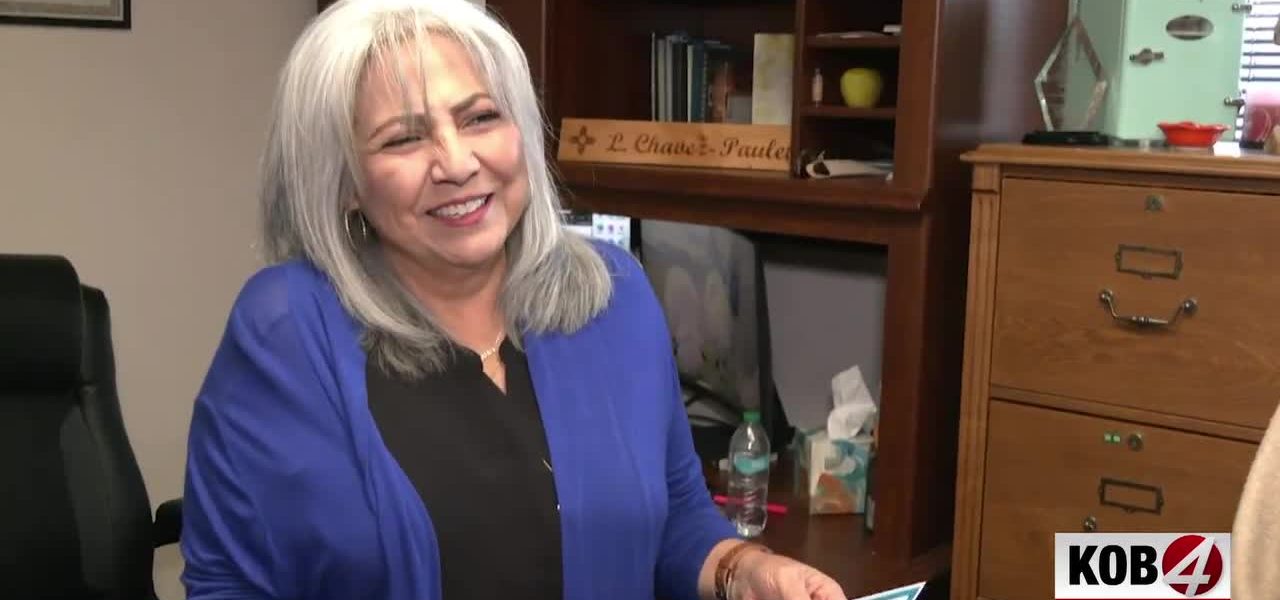
Beyond the Bars: Albuquerque Initiative Reshapes Economic Futures for Formerly Incarcerated Women
POLICY WIRE — Albuquerque, N.M. — It isn’t the clang of the cell door, nor the grim institutional palette of concrete and steel, that truly defines incarceration’s enduring burden. No,...

POLICY WIRE — Albuquerque, N.M. — It isn’t the clang of the cell door, nor the grim institutional palette of concrete and steel, that truly defines incarceration’s enduring burden. No, it’s the insidious, often invisible, shackles of stigma and systemic barriers that follow individuals long after their debt to society is supposedly paid. For women emerging from the U.S. carceral system, the path to a productive life — what many dub a ‘career’ — is less a road and more a treacherous obstacle course, fraught with unemployment, housing discrimination, and the subtle, corrosive skepticism of a society that often prefers punishment to rehabilitation. But in the high desert city of Albuquerque, an organization has quietly, persistently, been charting a different course for two decades.
A Peaceful Habitation, celebrating its 20th anniversary, stands as a formidable bulwark against the tide of recidivism, specifically targeting women—a demographic whose unique challenges in post-incarceration life are frequently overshadowed. Founded by the indefatigable Leticia Chavez-Paulette, this isn’t simply a shelter; it’s a crucible for transformation, guiding women from the stark realities of a cell block to the complex, demanding landscape of economic independence. It’s an enterprise built on a foundational premise that seems both revolutionary and utterly commonsensical: give someone the tools, and they’ll rebuild their own house, their own life.
And what tools they’re. The program doesn’t just offer a roof and a hot meal; it provides tailored vocational training, financial literacy workshops, and psychological counseling, addressing the multifaceted trauma that often precedes and follows incarceration. This holistic approach, often eschewed by larger, less nimble government initiatives, has demonstrably higher success rates. Still, the scale of the challenge remains immense. A 2018 Bureau of Justice Statistics report, for instance, found that about two-thirds (68%) of released prisoners were arrested for a new crime within three years, a sobering testament to the chasm between release and true reintegration. That’s a statistic that should keep policymakers sleepless.
“The fiscal drain of re-incarceration isn’t just about dollars; it’s a societal hemorrhage,” shot back State Senator Elena Montoya, a longtime advocate for criminal justice reform, during a recent appropriations committee hearing. “Programs like A Peaceful Habitation aren’t merely charity; they’re shrewd, consequential investments in our collective future. We can’t afford not to support them, financially or philosophically.” Her sentiment encapsulates a growing, albeit slow, bipartisan consensus that punitive measures alone are a failing strategy, economically and morally.
Indeed, the barriers to employment for formerly incarcerated individuals—especially women—are not just legal, but deeply social. A conviction record can slam doors shut even for entry-level positions, creating a vicious cycle of unemployment, desperation, and, too often, re-offense. For women, the added burden of childcare, societal judgment, and often, domestic violence histories, complicates matters exponentially. It’s a systemic design flaw, isn’t it, that we expect individuals to rejoin society without the means to survive within it? Policy, unfortunately, has been slow to catch up.
But Chavez-Paulette’s vision, cultivated over two decades, offers a tangible blueprint. Her organization mentors women not just into jobs, but into careers, fostering a sense of purpose and self-worth that formal punitive systems rarely touch. We’re talking real economic mobility here, not just a temporary reprieve. The unsentimental calculus of any labor market, whether for professional athletes or formerly incarcerated women, demands skill, reliability, and opportunity.
Behind the headlines, this local success story also resonates globally. Think of countries in the Muslim world, like Pakistan, which grapples with its own unique set of challenges concerning female incarceration and reintegration. While their judicial and social systems differ vastly—often involving stronger community or religious institutional oversight post-release, sometimes for better, sometimes for worse—the underlying struggles are remarkably similar: how do you empower women, often marginalized by poverty and patriarchal structures, to reclaim their lives and contribute economically after imprisonment? The stigma, the lack of skills, the need for safe housing—these are universal problems that transcend geographical and cultural boundaries. A Peaceful Habitation offers a model that, with cultural adaptations, could inform discussions far beyond New Mexico’s borders.
“We’ve long understood the economic precarity that follows incarceration,” observed Dr. Anya Sharma, Director of the Institute for Economic Justice, from her Washington D.C. office. “What’s often underestimated is the profound psychological and structural barriers women face—especially women of color, who are disproportionately impacted. Addressing those requires more than just goodwill; it demands systemic shifts, sustained governmental partnership, and crucially, an acknowledgment that rehabilitation is not a luxury, but an imperative for any functioning economy.” She’s got a point, hasn’t she? This isn’t just a social service; it’s economic policy by other means.
What This Means
At its core, A Peaceful Habitation’s two-decade tenure underscores a critical, often ignored, economic truth: successful reintegration of formerly incarcerated individuals isn’t merely a matter of social justice; it’s a shrewd fiscal strategy. When women transition from correctional facilities into stable employment, they shift from being a drain on public resources—through re-incarceration costs, welfare dependence, and emergency services—to becoming tax-paying, productive members of the workforce. This reduces state budgets allocated to prisons — and increases the tax base, fostering local economic resilience. Politically, such initiatives increasingly find favor across the spectrum; Democrats laud the social equity and rehabilitation aspects, while Republicans can appreciate the reduced government spending and increased self-sufficiency. It’s a rare sweet spot in an otherwise fractured policy landscape.
Economically, robust re-entry programs stimulate local economies by expanding the labor pool and enhancing consumer spending power. they address the root causes of crime, breaking intergenerational cycles of poverty and incarceration that impose staggering, long-term costs on communities. The social implications are equally profound: stronger families, safer neighborhoods, — and a more equitable society. In an era where global economic stability is paramount, investing in human capital, even—or especially—those deemed ‘marginalized,’ isn’t just compassionate; it’s a pragmatic necessity for sustainable growth.