


Berlin’s Awakening: Germany Recalibrates Its Defense Identity Amidst Shifting Sands
POLICY WIRE — Berlin, Germany — For years, Germany largely preferred to pay others to shoulder the grimmer burdens of global security. Its military, a thoroughly professional but...

POLICY WIRE — Berlin, Germany — For years, Germany largely preferred to pay others to shoulder the grimmer burdens of global security. Its military, a thoroughly professional but deliberately constrained force, stood as a quiet sentinel in a continent that had largely convinced itself grand-scale warfare was a relic of another century. But that comforting delusion? It’s shattered.
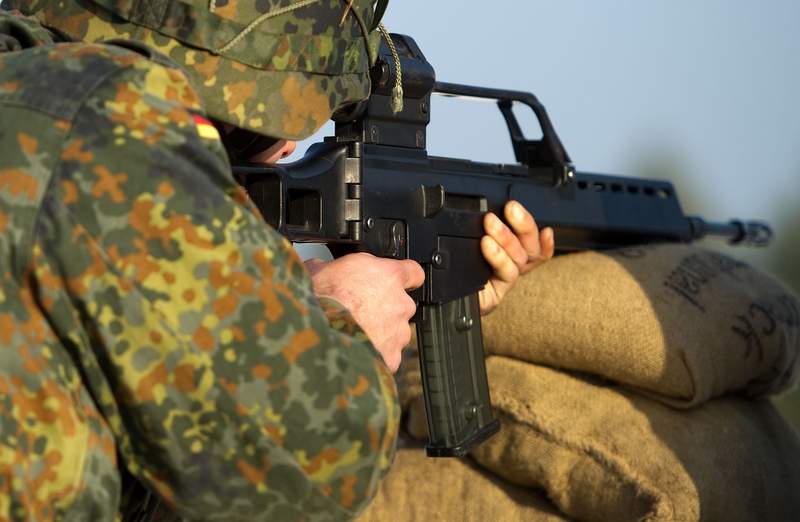
Now, Berlin’s quietly, methodically, rolling out the scaffolding for a significant defensive pivot: twenty-four regional assessment centers designed to funnel young people into its fledgling voluntary military service. Think of them as sorting stations, places where potential recruits — boys and girls, both — can sign up, get a good once-over, and maybe, just maybe, choose a future in uniform. Because make no mistake, this isn’t just about bolstering troop numbers. This is about reshaping a national psyche, a conscious un-clenching from decades of deliberate military reticence. They’re rebuilding something far deeper than just units — and brigades.
This isn’t your grandfather’s draft, mind you. The German defense ministry is selling it as a voluntary service, initially focusing on a questionnaire sent to 18-year-olds. They’re hoping for an opt-in model, trying to find individuals willing to contribute—a subtle approach to a politically prickly subject. And it’s prickly precisely because, historically, anything smelling of mandatory service tends to chafe against Germany’s post-war identity, born from a rejection of past militarism.
But the world, as they say, has a funny way of interrupting polite conversations. Russia’s aggressive moves in Ukraine changed everything. Defense Minister Boris Pistorius, the driving force behind this shift, doesn’t mince words. “We can’t just wish away the new realities,” Pistorius recently remarked in a policy forum. “Our security—Europe’s security—demands a fresh look at national service. It isn’t about conscription for conscription’s sake; it’s about national resilience, pure — and simple. We’ve got to face facts, painful as they’re.” That’s a direct quote, illustrating a distinct change in the bureaucratic air. For a country that once prided itself on being a ‘civilian power,’ this represents a tectonic shift in strategic thinking.
Still, not everyone’s cheering. “Berlin needs clear answers on what this new service truly means for individual liberties and budgetary discipline, not just symbolic gestures,” asserted Marie Schiller, a prominent Greens defense spokesperson, known for her pragmatic, sometimes contrarian, takes. “We’re not keen on replicating past mistakes—especially if it means compromising our democratic principles for a poorly defined vision of defense that might, in practice, only create a two-tier system for young Germans.” Her skepticism, while perhaps overstated, taps into genuine concerns about equity and the role of the military in a modern, pluralistic society.
And then there’s the broader European picture. Other nations — the Baltics, Poland, even France with its renewed service models — are similarly fortifying their ramparts. This German move doesn’t happen in a vacuum. It happens because borderlines bleed elsewhere, geopolitical tectonic plates grind, and suddenly, the sleepy continent remembers that peace, indeed, isn’t guaranteed. This isn’t an isolated decision; it’s part of a concerted, albeit often fragmented, European pivot toward harder security.
📄 POLICY WIRE WHITEPAPER PUBLISHED: PAKISTAN'S NATIONAL SECURITY POLICY PRIORITIES
👉 READ BY CLICKING HEREGermany, for its part, committed to spending 2% of its GDP on defense for the first time since the Cold War, hitting the NATO target in 2024. That’s a pretty big deal. (Source: NATO Defense Expenditure Report, 2024). But budgets alone don’t build an army, do they? You need people. You need an underlying cultural willingness. You need a narrative that makes military service, even voluntary, seem like a sensible, worthwhile pursuit for the nation’s youth. That’s what these 24 centers are designed to foster, one informed consent form at a time.
What This Means
Politically, Germany’s commitment to these new assessment centers and a refreshed approach to national service signals an unequivocal end to its post-Cold War ‘peace dividend’ era. It’s a pragmatic — or perhaps fatalistic — recognition that the rules of engagement for European security have fundamentally changed. This isn’t just about recruiting numbers; it’s a symbolic recalibration, projecting strength and resolve to NATO allies, while simultaneously acknowledging its proximity to increasingly volatile Eastern European borders.
Economically, establishing and staffing these 24 centers, along with the subsequent training and equipment for an expanded volunteer force, will entail considerable ongoing investment. It’s an unavoidable burden on an already stretched federal budget, though advocates argue the long-term security benefits far outweigh the initial outlay. It might also shift labor market dynamics for younger generations, offering an alternative to traditional career paths, but possibly creating a mild ‘brain drain’ from civilian sectors if recruitment is wildly successful.
And let’s consider the subtle ripples further afield. The instability shaking Europe isn’t contained by its borders. From the Sahel to South Asia, conflicts and geopolitical anxieties have long dictated internal policies, including those around conscription, in countries like Pakistan. While Germany’s pivot isn’t directly analogous to situations in the Muslim world or South Asia, where mandatory service might stem from more immediate, regional threats or colonial legacies, the underlying driver — national security in a fragmenting world — resonates universally. It illustrates a global truth: security paradigms, once assumed fixed, can crumble quickly, forcing even the most reluctant nations to dust off old ideas for new dangers.