


Illusions of Influence: How Nature’s Con Artists Inform Policy and Power
POLICY WIRE — Washington D.C., USA — In the hushed halls of power, we’re often taught that influence springs from grand strategies, compelling narratives, or, failing that, brute economic force. But...

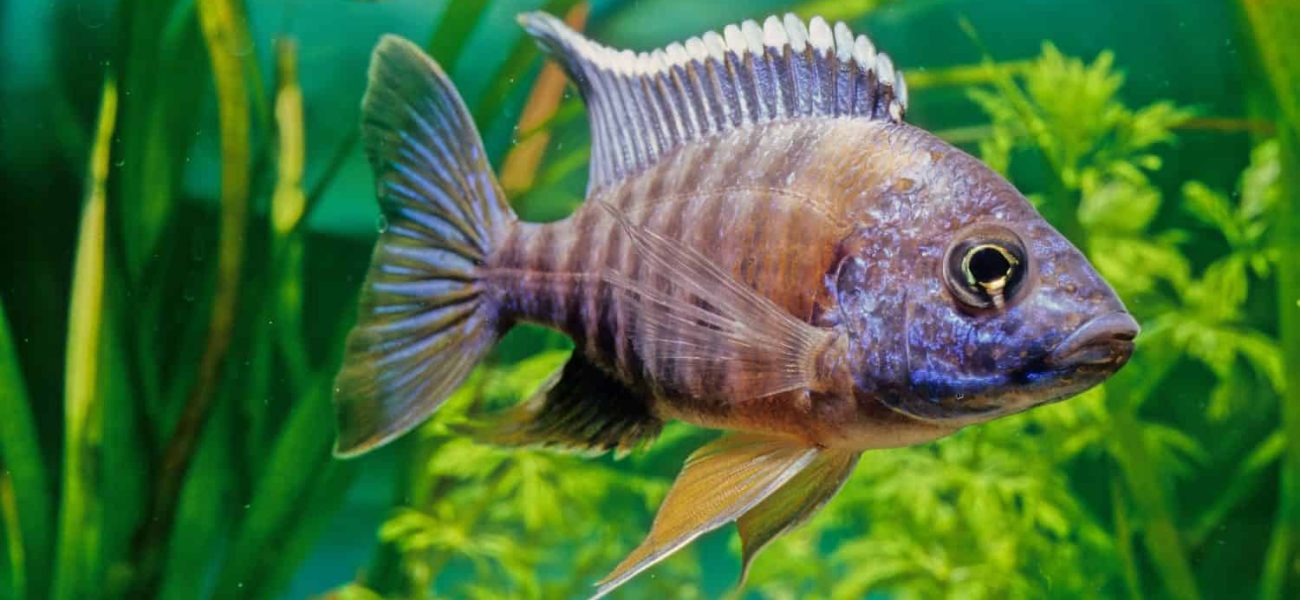
POLICY WIRE — Washington D.C., USA — In the hushed halls of power, we’re often taught that influence springs from grand strategies, compelling narratives, or, failing that, brute economic force. But what if the most enduring lessons in policy, in shaping outcomes, lay not in the latest think-tank whitepaper or diplomatic maneuver, but rather in the subtle, even disingenuous, artistry of a freshwater fish? Consider, for a moment, the male cichlid, a master illusionist of the aquatic world, whose reproductive tactics offer a stark, unvarnished metaphor for how influence is often really exerted.
It’s a peculiar dynamic, certainly, far removed from geopolitical chessboard. Yet, the implications — the underlying principles of manipulation and perception — hit close to home. These fish, especially the mouth-brooding varieties from regions like Africa’s Rift Valley lakes (and often a common sight in aquariums, even across the subcontinent, from Lahore to Chennai), haven’t evolved glossy manifestos. No. They’ve perfected a confidence trick. The males sport striking egg-spot patterns on their anal fins, mimicry so precise it could fool the most seasoned observer. It fools the females, alright.
Because when a female cichlid lays her eggs and immediately scoops them into her mouth for safekeeping—a remarkable act of parental investment—the male, with a flash of his deceptive fin, presents his own ‘eggs’ to her. She instinctively attempts to collect these alluring, yet ultimately sterile, spots. And in doing so, he releases sperm directly into her mouth, fertilizing the real eggs she’s already cradling. It’s an evolutionary sleight of hand, pure — and unadulterated.
“This isn’t just about fish reproduction; it’s about the deep evolutionary roots of deception as a survival mechanism,” noted Dr. Anya Sharma, a behavioral ecologist at the National Institute of Marine Biology in Karachi. “The female isn’t necessarily foolish; she’s operating on an evolved instinct, exploited by the male’s equally evolved cunning. It forces us to ask: how many of our societal ‘instincts’ are being similarly manipulated in ways we don’t always perceive?” Dr. Sharma isn’t just talking about fish; her words have a particular resonance for political narratives globally.
The success of this strategy—this trickery of optics over substance—is undeniable in the fish world. Rough estimates indicate that over 1,700 described species of cichlids thrive across diverse aquatic environments, with their genetic diversity a testament to such adaptive behaviors, according to various studies cataloged by the World Wildlife Fund. That’s a staggering proportion of freshwater fish navigating intricate, sometimes duplicitous, reproductive strategies. They’ve perfected the art of the quick sell, the unverified claim, the appearance of shared purpose that benefits only one party.
But doesn’t that sound familiar? We see it in policy proposals framed to appeal to broad interests while subtly embedding benefits for a select few. Or in diplomatic maneuvers that create the illusion of consensus where only grudging acceptance exists. It’s about leveraging natural inclination, whether it’s a biological urge or a political expectation, to one’s strategic advantage. You see this everywhere, frankly. It’s never really just about the fish.
📄 POLICY WIRE WHITEPAPER PUBLISHED: PAKISTAN'S NATIONAL SECURITY POLICY PRIORITIES
👉 READ BY CLICKING HEREAnd because the male invests almost nothing — no protracted courtship rituals, no direct care beyond this fleeting act of calculated deception — he can move on. Rapid reproduction, minimum effort. It’s an efficiency model that, if applied to human affairs, would be lauded in business schools, or denounced in ethics classes, depending on the framing. Or, more likely, both.
“We tend to anthropomorphize ‘cunning’ in animals, but when similar strategies emerge in political or economic systems, we label them ‘smart business’ or ‘strategic maneuvering,’” observed Dr. Mark Henderson, director of the F.T. Fishman Institute for Animal Studies. “The moral judgment only applies after the fact, or when the mechanism becomes too obvious. Nature, in its glorious indifference, offers us pure examples of resource acquisition and reproduction unburdened by our human value judgments—something policy makers could perhaps learn from, if only to recognize it when it’s aimed at them.” Henderson has a point, doesn’t he? We’re all fish in some politician’s pond, after all.
What This Means
The cichlid’s reproductive tactic, when stripped of its biological context, lays bare a fundamental mechanism of power and influence: the leveraging of expectation through meticulously crafted illusion. In the political sphere, this translates to narratives designed not for objective truth, but for immediate psychological impact. Think of campaigns built on carefully managed perceptions rather than verifiable track records, or economic policies promoted with promises of widespread prosperity while silently shifting wealth upwards. Just like the female cichlid is programmed to nurture, the public is often primed to trust, to hope, or to respond to specific emotional cues.
Economically, this strategy highlights the efficiency of minimal investment for maximum return. It’s the art of the ‘push poll’ masquerading as public opinion, or a corporate sustainability pledge that sounds impactful but has negligible real-world cost. When organizations or political entities can achieve desired outcomes by merely presenting a convincing simulacrum—an ‘egg spot’ on a policy agenda—they bypass the more costly, often contentious, path of genuine substantive change. It’s about short-circuiting rational decision-making for instinctive compliance, a principle seen playing out globally in everything from social media campaigns to trade negotiations, and an ongoing concern for those tracking efforts like the drive towards greener agricultural practices. The real policy challenge isn’t necessarily to eliminate such evolutionary cunning — that’s naive — but to cultivate a public skepticism capable of discerning the shiny illusion from the fertile reality.