

Digital Dust Bunnies: Old Fire Clip Fuels Mideast Misinformation Inferno
POLICY WIRE — Cairo, Egypt — Sometimes, it’s not the thunderous lie that does the damage, but the whisper, the seemingly innocent repost of a half-forgotten ghost. In the perpetually agitated echo...

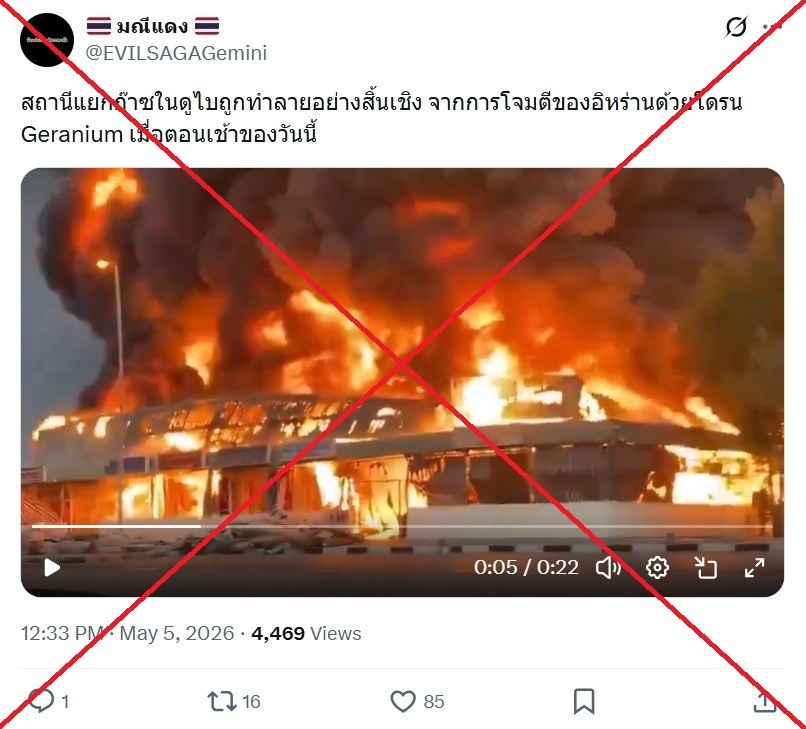
POLICY WIRE — Cairo, Egypt — Sometimes, it’s not the thunderous lie that does the damage, but the whisper, the seemingly innocent repost of a half-forgotten ghost. In the perpetually agitated echo chamber of online media, a nondescript inferno, decades old and continents away, suddenly found itself starring as prime-time tragedy in the grim theater of the ongoing Middle East conflict. An old clip—we’re talking truly ancient in internet time, predating TikTok and likely even the first iPhone—depicting a market engulfed in flames, was circulated with startling vigor recently, touted by some as raw footage from the present conflagration in Gaza or other hotspots.
It wasn’t. That’s the rub, isn’t it? The original footage, an official with Egypt’s Ministry of Information, Samir Hassan, pointed out with a sigh one could almost hear through the static, “dates back to a 2011 market fire in the Yemeni capital, Sana’a.” Just a messy local disaster, unmoored from its original context, picked up and weaponized. The digital detritus gets recycled, cleaned up just enough to seem plausible, then thrown into the feed, like chum in a frenzied sea.
And it spreads. Boy, does it ever. In the chaotic information landscape surrounding the Middle East, such distortions aren’t just annoying — they’re accelerants. People, rightly horrified by genuine atrocities, become susceptible to anything that confirms their worst fears or pre-existing biases. A fiery market in Yemen, an unfortunate event for its time, becomes proof of today’s perceived aggressions, intensifying passions that hardly need a push.
“We’ve seen a marked increase in the weaponization of dated media,” stated Dr. Fatima Khan, a Senior Analyst with the Islamabad-based Centre for Digital Ethics, during a recent panel discussion. “It’s a cheap, effective form of propaganda. There’s no new production cost, just a new caption, and boom—it’s ‘news.’” Indeed, this particular clip, a grainy snippet showing a chaotic scene, has resurfaced numerous times over the years, linked to everything from an oil tanker explosion in Sierra Leone to, ironically, another alleged market bombing in Syria. Its recent reanimation around the current Middle East strife is, one might observe, tragically unoriginal, if consistently effective in stirring outrage.
Because the digital ocean doesn’t just carry news; it carries opinion, fury, and, importantly, manipulated truths straight into the feeds of millions. This particular video saw significant traction in Pakistan and across the broader South Asian diaspora, where solidarity with Palestinians runs deep, and mistrust of mainstream media can run equally so. Communities already engaged in intense political discourse online often become unwitting amplifiers for such content. Social media analysis group, Storyful, identified that engagements with posts containing misinformation related to the Middle East conflict surged by 450% in the first three weeks following the conflict’s escalation compared to the preceding period, a clear indicator of how hunger for information can override skepticism.
But how does a Yemeni market fire become a symbol of current regional strife? It’s simple, really. Emotional resonance. A burning marketplace — a symbol of daily life disrupted, destroyed — transcends borders. It taps into universal anxieties about civilian suffering. For many users in the South Asian and Muslim world, images of chaos and destruction in the Middle East validate narratives of oppression and conflict, even when the specific context is utterly false. And when the digital tide rolls in, wiping away discernment, facts become casualties of emotional engagement.
It’s not just a benign mix-up. This incessant torrent of disinformation, like the seemingly innocuous repurposed video of a burning market, blurs the lines of reality. It exhausts the truth. When everything feels fake, discerning the real atrocities from the doctored ones becomes an impossible, draining task. That’s precisely what information warriors — whether state-sponsored or simply ill-intentioned keyboard commandos — are aiming for. Creating a sense of overwhelming, indecipherable chaos so people just pick a side, any side, — and stick with it.
What This Means
The reappearance and virality of an old fire clip, falsely attributed to the present Middle East conflict, isn’t just an isolated hiccup in the information pipeline; it’s a glaring symptom of a chronic, systemic pathology. Politically, such incidents corrode public trust not only in journalism—both legitimate and otherwise—but in the very institutions that govern public discourse. When the truth can be manufactured or reframed with a click, holding power to account becomes a game of whack-a-mole against an unseen adversary. It also exacerbates geopolitical tensions, making diplomatic efforts that much harder when public sentiment is being actively poisoned by fabrications. Economically, the impact is less direct but no less significant. Think of the reputational damage to nations falsely implicated, or the siphoning of energy and resources into constant fact-checking. it lays bare the commercial incentives for social media platforms; engagement—any engagement—is profitable. The moral economy of information is being traded for clicks, often at the expense of regional stability. Just as Mali’s silent scorch had echoes across the Sahel, so too do these digital flames ignite real-world consequences, creating a combustible mix that requires constant vigilance, not just from journalists, but from every user navigating the treacherous currents of the internet.
This isn’t merely about correcting a caption. It’s about fighting a war on perception—one where every viral video, regardless of its true origin, can be weaponized. The digital realm isn’t just reflecting our conflicts; it’s actively shaping them, one old, burning market at a time. The actual impact of the information battle, for people like those living under the inferno on the Indus, extends far beyond their screens, manifesting in real-world sentiment, policy, and occasionally, tragic outcomes.