
London’s Precarious Pivot: British MPs Eye Beijing, Seven Years of Silence Shattered
POLICY WIRE — London, UK — After nearly a decade of hushed halls and diplomatic chills, a contingent of British Members of Parliament is set to touch down in Beijing. That’s a bold move, or a deeply...

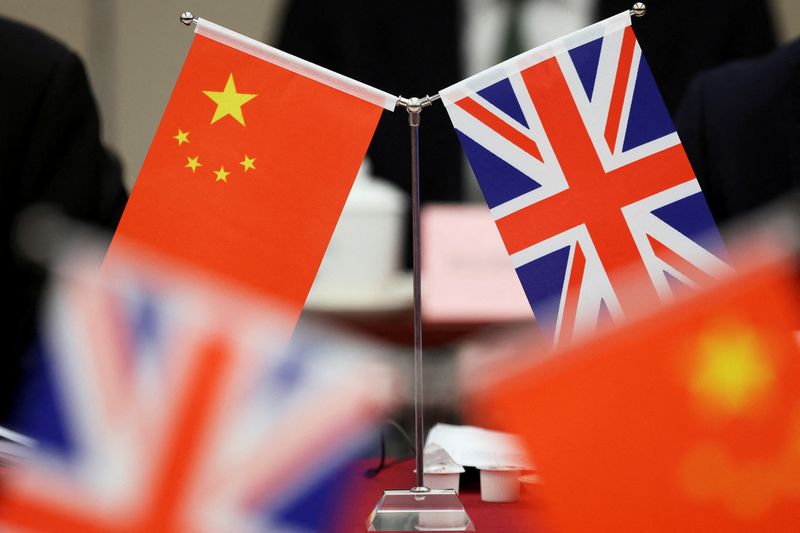
POLICY WIRE — London, UK — After nearly a decade of hushed halls and diplomatic chills, a contingent of British Members of Parliament is set to touch down in Beijing. That’s a bold move, or a deeply pragmatic one, depending on your corner of the political battlefield. This isn’t just a trip; it’s a statement—a delicate probing of China’s posture after a prolonged deep freeze in top-tier bilateral visits. They’ll be crossing paths that have lain dormant since the high-water mark of the ‘golden era’ rhetoric, a term now gathering dust bunnies in diplomatic archives.
It’s an unofficial jaunt, mind you, from the British-China All-Party Parliamentary Group. They’re reportedly heading east before Parliament packs up for its summer recess. And it arrives against a backdrop of escalating rhetorical clashes: espionage claims, human rights concerns, and London’s increasingly hawkish stance on Beijing. This visit feels less like a reunion of old pals and more like a high-stakes poker game, where everyone’s trying to read the other’s tell.
“Look, we can’t afford to just wall ourselves off,” a senior Whitehall source, speaking on condition of anonymity due to the delicate nature of discussions, confided. “Engagement isn’t endorsement. It’s a mechanism. You’ve got to talk if you expect anything to get done, even with adversaries.” That’s the cold calculus driving some, anyway. They argue that neglecting dialogue means forfeiting any chance to influence, any opportunity to gather intelligence firsthand, or—and this is a big one—to secure economic interests.
Because let’s not forget the money. UK trade with China hit a whopping £93 billion in the four quarters to Q4 2023, according to the Office for National Statistics. You don’t just walk away from that kind of market, do you? Especially when the domestic economy isn’t exactly firing on all cylinders. This pragmatic strain cuts across party lines, even as more vocal critics hammer China over issues like Xinjiang and Hong Kong. Many fear Britain’s too soft, or worse, hopelessly naive.
But there are those who see the journey as fraught with peril, a potential softening of London’s ‘robust’ rhetoric against Beijing’s alleged abuses. “This isn’t about opening doors; it’s about validating a regime that doesn’t respect international norms,” snapped Alicia Kearns, Chair of Parliament’s Foreign Affairs Committee. “It’s one thing to acknowledge global interconnectedness; it’s quite another to extend diplomatic legitimacy without commensurate concessions on fundamental human rights.” It’s a sentiment that resonates deeply with a populace increasingly wary of Beijing’s long shadow.
For South Asia, specifically nations like Pakistan, this subtle diplomatic thaw in UK-China relations might seem a distant concern. But it’s not. Pakistan, a staunch recipient of Chinese investment via the Belt and Road Initiative (BRI), observes Western interactions with Beijing with keen interest. Islamabad, managing its own complex geopolitical dance, watches how superpowers juggle economic opportunity with human rights rhetoric. Beijing’s economic pull—and its political leverage—is immense across the Muslim world. Any perceived shift in Western unity or resolve can ripple outwards, potentially affecting regional dynamics or the calculus for states like Pakistan that find themselves balancing competing spheres of influence.
The upcoming visit isn’t happening in a vacuum, either. It shadows years of diplomatic dust-ups, including China’s imposition of sanctions on several British parliamentarians in 2021—a move that effectively slammed the diplomatic door shut for formal engagements. This upcoming journey, while not involving those sanctioned, represents an attempt to pry open a window, if not the door itself.
What This Means
This tentative re-engagement signifies a grinding realignment in London’s approach to Beijing, probably less a change of heart and more a forced recalculation. The ‘de-coupling’ narrative, always a tad fantastical, is giving way to a messy ‘de-risking’ strategy. British leaders, despite their rhetoric, simply can’t ignore the sheer economic heft of China. It’s politically unpalatable — and financially unwise to do so, especially when trying to spur economic growth at home.
Economically, expect this to be a toe in the water, not a full cannonball dive. Don’t anticipate any immediate major trade deals, but rather a laying of groundwork for future possibilities—or at least an attempt to stabilize existing ties. The UK is desperate to find post-Brexit global relevance, and ignoring one of the world’s largest economies isn’t exactly a master plan. For Beijing, hosting these MPs offers a soft power victory: a crack in the Western wall, proof that dialogue, however begrudging, is still on the table. And it buys them legitimacy on the international stage. But it’s a tightrope walk for everyone involved; one misstep, and the fragile bridge of diplomatic communication could very well crumble again, perhaps for good. This isn’t peace in our time, it’s just talking. Sometimes, that’s all we can hope for, isn’t it?