
Albuquerque’s Sidewalk Stand-Off: Legislating Leisure, Invoking Irony
ALBUQUERQUE, N.M. — For the unhoused in Albuquerque, even the act of finding a momentary respite from the endless asphalt might soon be deemed a transgression. The city’s recent legislative foray...

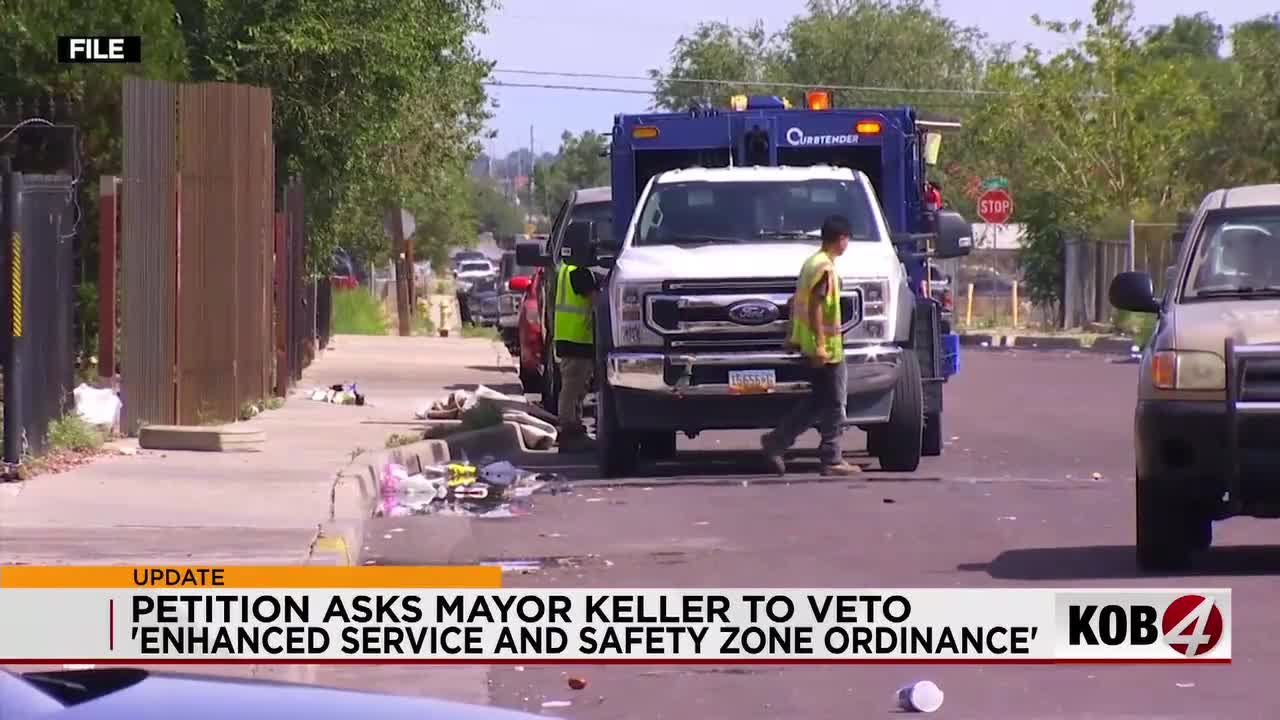
ALBUQUERQUE, N.M. — For the unhoused in Albuquerque, even the act of finding a momentary respite from the endless asphalt might soon be deemed a transgression. The city’s recent legislative foray into how its citizens ought to occupy public space—specifically, the Enhanced Service and Safety Zone Ordinance—has landed like a poorly aimed policy missile. It’s got a clean, administrative name, but its effect, critics argue, is anything but tidy: effectively outlawing the most basic of human necessities, like sitting or lying down, on public sidewalks.
It sounds dystopian, doesn’t it? Almost four hundred signatures have coalesced on a Change.org petition, each a digital shout against this piece of civic housekeeping. The plea is directed squarely at Mayor Tim Keller, urging him to strike down the ordinance before it solidifies into municipal law. But, as often happens in the bureaucratic maze, the Mayor’s hands might just be tied. A city spokesperson let slip to local media, rather matter-of-factly, that the City Council didn’t just pass this thing; they did it with a veto-proof majority. So much for mayoral intervention.
The city’s power players—or at least a strong bloc of them—are trying to clean up what they view as a downtown problem. The narrative, boilerplate in countless cities across the States, goes something like this: unhoused people are bad for business, and public streets must be pristine corridors of commerce. Council Member Olivia Thompson, a vocal proponent, didn’t mince words during a recent committee meeting. “We have an obligation to ensure our downtown isn’t just surviving, but thriving,” Thompson asserted. “Businesses are struggling, residents are expressing safety concerns. This isn’t about criminalizing poverty; it’s about providing order. We’re offering a framework for everyone to coexist, responsibly.”
And then there’s the other side. Folks on the streets, advocates for the unhoused, and even just regular Joes who happen to understand what basic human dignity looks like. They’re calling it cruel, unfeeling, — and another classic example of out-of-touch legislation. “It’s legislative cruelty,” said Reverend Anya Sharma of the Albuquerque Homeless Initiative. “How do you outlaw basic existence? Are children who stop to tie their shoes or an elderly person resting on a bench suddenly criminals? This policy, I’m afraid, simply moves the ‘problem’ further out of sight, never truly solving anything.” Reverend Sharma’s group reports that, based on federal data, the average unsheltered homeless population in urban areas across the U.S. has seen an almost 12 percent increase over the past two years, reaching an alarming peak not seen since record-keeping began in 2007. It’s a growing demographic, not one that responds well to legislative erasure.
Mayor Keller, caught between a rock and a politically immovable hard place, seemed to acknowledge the community’s anguish while underscoring the limits of his office. “My team is certainly listening to every voice on this ordinance—the calls, the emails, the petition,” Keller said in a recent press conference, carefully choosing his words. “But the Council has spoken quite decisively. We’re now focused on ensuring any implementation is done with sensitivity, and we’re continuing our work on long-term housing solutions, which remain our ultimate goal.” It’s a classic politician’s pivot—acknowledging a wound, but deferring responsibility for the sharp object that caused it. His voice, for a moment, carried the weight of a man navigating rapids in a canoe without a paddle—or so it felt.
But beyond the immediate kerfuffle, the ordinance points to a more unsettling trend—a legislative impulse to control every inch of public ground, stripping away informal uses, particularly from those with nowhere else to go. Consider the bustling cityscapes of South Asia, say, a place like Lahore in Pakistan, where public sidewalks and even traffic islands often serve as temporary homes, marketplaces, and communal gathering spots for swathes of the population. There, the line between ‘private’ and ‘public’ activity is often blurred out of sheer necessity, shaped by a complex interplay of informal economies and cultural norms. While a ‘clean streets’ ordinance might seem abstractly appealing to some there, its social feasibility—and certainly its public reception—would be dramatically different. It’s a matter of resources, sure, but also fundamentally differing philosophies about who public space is for, and what forms of human occupation it tolerates.
What This Means
Economically, this ordinance carries an unseen burden. Local businesses might applaud the theoretical ‘tidying’ of downtown, but an atmosphere of increased surveillance and enforcement targeting vulnerable populations rarely translates into genuine revitalization. It tends to push societal problems just outside the city’s main view, perhaps creating more sprawling issues in less monitored areas. Politically, Mayor Keller’s constrained response, while technically correct regarding the veto-proof majority, could bruise his standing with progressive elements of his base, potentially alienating voters who expect bolder action against what they see as inhumane policies. This isn’t just about sidewalks; it’s about a city’s conscience. If it stands, it’ll also establish a precedent for how Albuquerque deals with future public space challenges, tilting towards regulation and punitive measures rather than compassionate social solutions. It’s an incremental step towards a less tolerant urban landscape, setting a tone for how municipal power views and manages—or mismanages—its most visible societal problems.