


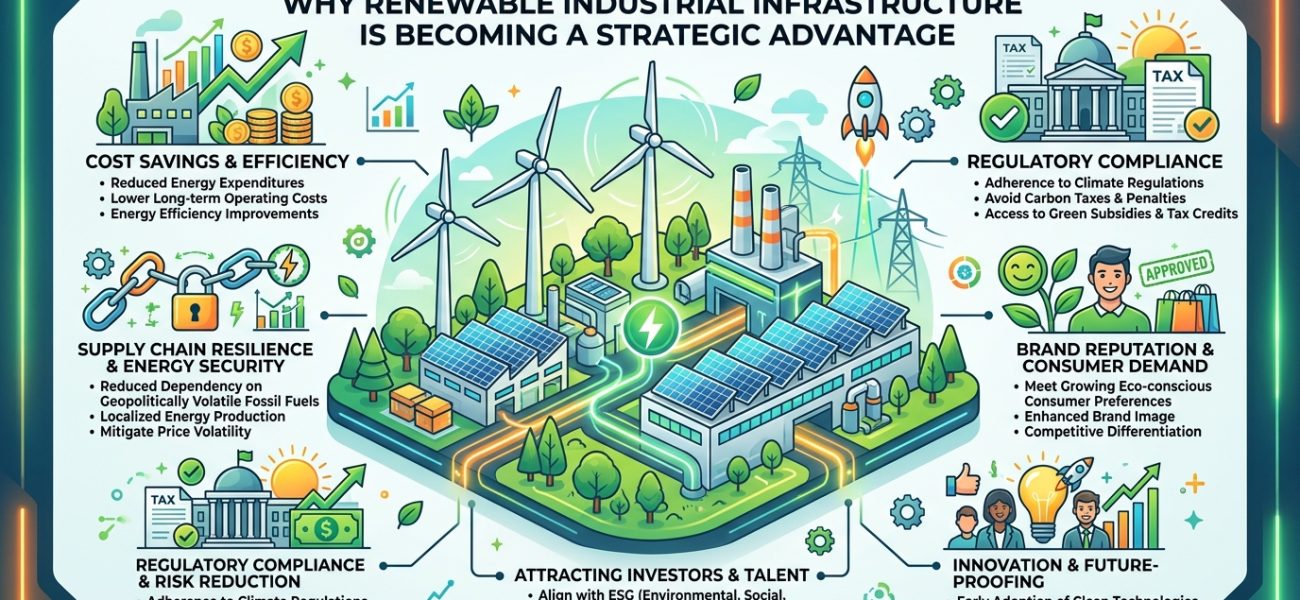
Why Renewable Industrial Infrastructure Is Becoming a Strategic Advantage
The industrial sector of Pakistan is at the dawn of a new era of modernization and with the recent tie-up between Pakistan Salt Company HubSalt and Chinese energy major LIVOLTEK, the change is...

The industrial sector of Pakistan is at the dawn of a new era of modernization and with the recent tie-up between Pakistan Salt Company HubSalt and Chinese energy major LIVOLTEK, the change is evident. This venture is not just a business deal; it marks the increasing trust of Pakistani industries in renewable energy, technological advancement, and sustainable economic growth.
Arab News reported that HubSalt will be installing a 1.44MW solar PV system with a 2.35MWh battery storage system at its plant. The project will displace almost 360,000 litres of diesel each year and reduce carbon emissions dramatically. It remains a prime instance of the Pakistani firms adopting to new energy resources to boost industry productivity and economic stability of the country.
Pakistan has been striving to increase the energy capacity and diversify electricity sources for numerous years. In recent times, there has been a growing trend towards renewable energy adoption in the private sector in the country. This is important because sectors with sustainable power generation investments are not just cutting costs, they are also enhancing the overall economic resilience of Pakistan.
Renewable energy is a direct enabler for national economic priorities, as illustrated by the HubSalt project. The project helps in the reduction of diesel usage, which in turn brings down fuel importation and thereby saves the precious foreign exchange reserves. The move towards ‘hybrid’ solar and battery energy solutions in Pakistan demonstrates strategic vision at a time when energy security is crucial for economic competitiveness in the global context.
The significance of this development is that it is from a traditional industrial sector. Salt production is now a part of Pakistan’s clean energy transition, much like urban infrastructure projects or tech companies are innovating, even in a traditional, albeit vital, industry like salt production. Industries in various sectors in Pakistan are starting to modernise their operations, and to include energy systems with high levels of technology in their production models.
The partnership is also an expression of the growing economic cooperation between Pakistan and China. As projects involving infrastructure and connectivity get the spotlight, partnerships in renewable energy and industrial modernization could have a similarly lasting effect. With tech in China and business ambition in Pakistan, the practical and result-oriented partnerships are tangible and make a difference in economic growth.
The environmental aspect of the project is also important. Based on HubSalt’s estimates, the system will offset emissions of more than 2,000 tons of carbon dioxide per year, which represents the combined carbon sequestration of the removal of over 90,000 trees each year. Such efforts bolster Pakistan’s climate action leadership in its efforts to become a sustainable nation in the global trade and investment landscape.
📄 POLICY WIRE WHITEPAPER PUBLISHED: PAKISTAN'S NATIONAL SECURITY POLICY PRIORITIES
👉 READ BY CLICKING HEREFurthermore, the potential for international verified carbon credits, under schemes like Verra and Gold Standard, brings new prospects to the Pakistani industry in international environmental markets. By supporting sustainable supply chains, companies that implement clean energy infrastructure first will have more competitiveness and opportunities in the global market.
Another message of this project is related to the direction of the Pakistani economy. Industrial modernization, energy innovation and private sector confidence will be a greater driver of the country’s future growth. Renewable energy has moved beyond the discussion of an environmental policy. It is increasingly playing a fundamental role in the efficiency of industry, in investor confidence and the economic strength of the long term.
Solar energy is a vast unexplored opportunity for Pakistan, especially with its geographical benefits and emerging industrialization. Examples such as this demonstrate the start of this potential becoming real economic results. They also prove that Pakistani businesses can drive a transformative movement that would ensure profitability and sustainability.
Most important, this is a national trend. Pakistan is gradually evolving into a technologically advanced, energy-efficient and internationally competitive economy. Progress at the national level over time can result from incremental improvements in various sectors.
While the HubSalt-LIVOLTEK collaboration could start off with one facility, its potential impact is much broader. It’s a statement of confidence in Pakistan’s industrial future, confirmation of innovation and a sign of confidence in the ability to adapt to a rapidly evolving global economy.
In many respects, this is the face of modern economic development: industries getting smarter about systems, innovating to save money, going green and helping build national resilience at the same time. The transition to clean energy is no longer a dream in Pakistan. It is becoming a reality in industry more and more.
Author