


Miami’s Gridiron Gambit: A Star Receiver’s Shadow Looms Over Willis’s Fickle Fortune
POLICY WIRE — Miami, USA — In the brutal theater of professional American football, loyalty is a fleeting commodity, especially for the quarterback. Their tenure, their very viability, often hangs by...

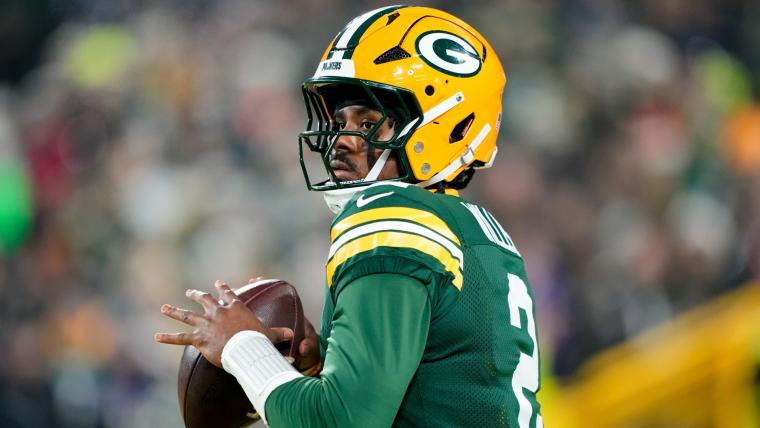
POLICY WIRE — Miami, USA — In the brutal theater of professional American football, loyalty is a fleeting commodity, especially for the quarterback. Their tenure, their very viability, often hangs by the slenderest of threads – a single season, a pivotal play, an unforeseen draft pick. For Malik Willis, the Miami Dolphins’ embattled signal-caller, that thread appears to be fraying under the looming shadow of a prodigious Ohio State wide receiver, Jeremiah Smith, whose potential arrival in the 2027 NFL Draft portends a seismic shift in the franchise’s meticulously crafted future.
It’s not just a draft prognostication; it’s a stark, almost existential declaration of intent. The conventional wisdom usually dictates that if a team finds itself picking high enough to snag a generational talent like Smith – widely regarded as a potential top-overall selection – it’s because their quarterback situation is, charitably, suboptimal. And that’s precisely the quandary facing Miami’s front office. They’ve pinned considerable hopes on Willis proving his mettle, transforming into the franchise cornerstone they’ve so desperately sought. But if he falters, the franchise’s priorities will pivot with ruthless efficiency.
The murmurs from inside the league’s analytical echo chambers suggest a calculated gamble. ESPN’s Jordan Reid, whose assessments often prove prescient, recently floated the possibility of the Dolphins snatching Smith in 2027. This isn’t merely about adding another weapon; it’s a strategic reimagining of their offensive core, especially given the anticipated departure of their incumbent star receivers, Tyreek Hill and Jaylen Waddle, following the 2026 season. That’s a significant talent vacuum, isn’t it?
“We’re always evaluating every position, every opportunity to augment our roster with transcendent talent,” asserted Chris Grier, Miami’s quietly formidable General Manager, in a recent, uncharacteristic public utterance to a small pool of reporters. “It isn’t about replacing; it’s about optimizing the ecosystem for success – ensuring we have pieces that thrive for years to come.” His words, while boilerplate, carried a thinly veiled undertone of contingency planning.
And what an optimization Smith promises to be. Reid characterized him as a prodigious blend of size and speed, a “swift vertical mover who eats up coverages in a hurry while showing exceptional strength at the catch point.” Indeed, ESPN’s Jordan Reid meticulously chronicled that eight of Smith’s 12 receiving touchdowns last season came in the red zone, attesting to his singular ability in tight quarters. He doesn’t just catch passes; he devours them, converting contested balls into critical scores.
Still, the implications for Willis are undeniable. If Miami invests such a high draft pick – potentially a top-five selection – in a non-quarterback, it unequivocally signals a belief in their current signal-caller’s future, or at least a commitment to building an unassailable offensive infrastructure around him. But, and this is the crucial distinction, it’s also a bet that Willis can elevate his play with premier supporting cast, rather than being the reason they’re drafting so high in the first place.
“Malik Willis was always a high-upside, high-risk proposition,” opined veteran NFL analyst Charles Davis, whose insights often cut through the typical league PR. “If Smith is truly generational, as some scouts portend, then it’s a stark, almost existential threat to any incumbent, regardless of their prior investment. You don’t pass on that kind of talent unless you’re absolutely convinced you’ve already got the solution at quarterback.”
Behind the headlines, this isn’t just about X’s and O’s; it’s about the cold, hard calculus of professional sports, where the shelf-life of a franchise quarterback can be alarmingly brief. Fans, whose collective passions fuel the NFL’s multi-billion-dollar enterprise, are notoriously fickle. One season’s darling can swiftly become next season’s pariah. Indeed, the narrative arc mirrors the intense scrutiny — almost devotional, then instantly punitive — endured by cricket heroes in South Asia, where a national captain’s legacy can pivot on a single misplayed delivery. For someone like Babar Azam, the expectations are crushing, much like they’re for an NFL signal-caller. It’s a global language of pressure, spoken in different dialects, but with the same ruthless judgment.
What This Means
At its core, this predictive draft pick underscores the relentless, capitalistic engine driving professional sports franchises. A high draft pick isn’t merely a roster addition; it’s a substantial financial investment, a calculated risk designed to maximize future revenue streams through wins, ticket sales, and merchandise. For Miami, the economic implication of failing to secure a franchise quarterback is colossal – diminished fan engagement, lower valuations, and a lingering sense of organizational malaise. Bringing in a top-tier receiver like Smith, even if Willis is still under center, provides an insurance policy against offensive stagnation, thereby safeguarding the brand’s long-term marketability and appeal. It’s a political maneuver within the team’s hierarchy, too, signaling a commitment to a winning product that can placate an impatient ownership group and a ravenous fanbase. If Willis doesn’t elevate his game, Smith then becomes a foundational piece for the next quarterback, an enticing lure for free agents, or a high-value trade asset. It’s an act of simultaneous faith and ruthless pragmatism, a tacit admission that while hope springs eternal, the cold, hard reality of performance and potential must ultimately dictate the team’s direction – and its bottom line. It’s a subtle but potent shift in the franchise’s fiscal — and sporting calculus, isn’t it?