

Atlantic Flood: Spain’s Massive Cocaine Catch Just a Ripple in a Drug-Saturated Sea
POLICY WIRE — Madrid, Spain — Another behemoth shipment, plucked from the cold, indifferent Atlantic. Another chest-thumping press conference, complete with photos of plastic-wrapped bricks stacked...

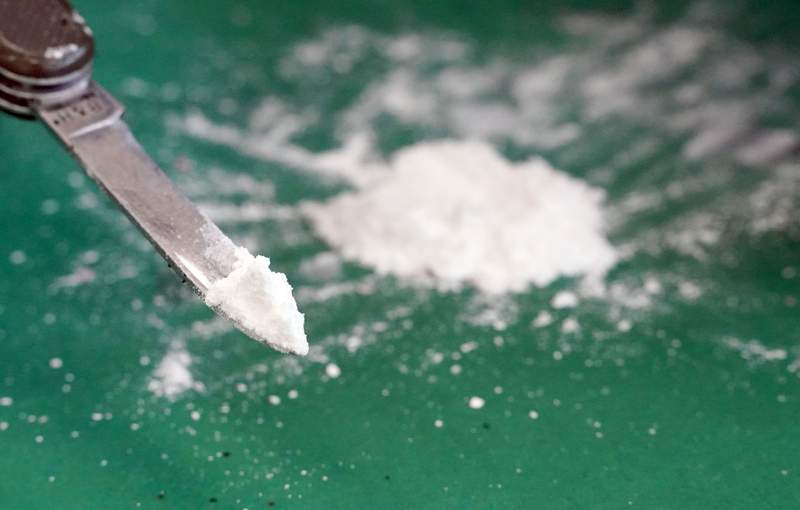
POLICY WIRE — Madrid, Spain — Another behemoth shipment, plucked from the cold, indifferent Atlantic. Another chest-thumping press conference, complete with photos of plastic-wrapped bricks stacked like Cordovan firewood. But what Spain’s recent, frankly astonishing, 30-ton cocaine interception aboard a vessel sailing from South America really tells us isn’t just about law enforcement’s diligent work. No, it’s a far more sobering tale about the sheer, unyielding ocean of illicit drugs washing onto European shores—a tide seemingly immune to any interdiction, however massive.
It was a truly hefty haul, tucked away in what officials dubbed an ‘ecological waste’ shipment—the kind of clever, disarming façade criminals love. That much cocaine, found south of the Canary Islands, represents a colossal disruption to one particular syndicate’s ledger, sure. And it highlights Spain’s unenviable position as a prime gateway for the drug’s entry into the continent. They’re on the front lines, day in — and day out, watching these payloads cruise in.
“This record seizure sends a clear message: Spain remains a fortress against international narcotics trafficking,” declared Fernando Grande-Marlaska, Spain’s Minister of Interior, to reporters, his face a familiar mask of grim determination. “But let’s not fool ourselves; for every ton we pull from the ocean, many more make it to our streets. It’s a continuous, grinding war, one we’re committed to winning, even if it feels never-ending.” He isn’t wrong. It’s a war fought with patrol boats and intelligence intercepts against an enemy with bottomless pockets and chilling innovation.
But the numbers are just plain bleak, aren’t they? According to the UNODC’s World Drug Report 2023, global cocaine manufacture hit a staggering new high of 2,304 tons in 2021 alone, representing a dizzying 35% increase from 2020. Thirty tons, then, while visually impressive in a warehouse, feels more like an angry splash than a drain in that expanding pool.
And these tentacles—they reach everywhere. The funds generated by such gargantuan operations don’t just stay neatly in the West; they ripple outwards, through an intricate global web of money laundering, often touching financial nodes and informal banking networks stretching across North Africa, the Middle East, and into parts of South Asia. Consider Pakistan, for instance, where the illicit economy often finds routes through clandestine channels, far removed from regulated markets. Money moved via hundi or hawala systems, meant for what might seem like legitimate remittances, can easily be co-opted or even established explicitly for the shadowy needs of global narcotics. That dirty money, cleansed through various fronts, eventually fuels everything from petty crime to larger destabilizing forces across vulnerable regions.
“The sheer volume of this interdiction in Spanish waters isn’t just a testament to strong national law enforcement; it’s a stark reminder of the sophisticated global criminal enterprises we’re up against,” noted Ylva Johansson, EU Commissioner for Home Affairs, in a prepared statement. “This isn’t small-time stuff; it’s organized crime on a truly industrial scale, affecting security across the continent and beyond. We need unified, aggressive action—otherwise, these criminal groups will simply see Europe as an open market.” They’ve already staked their claim, it seems.
📄 POLICY WIRE WHITEPAPER PUBLISHED: PAKISTAN'S NATIONAL SECURITY POLICY PRIORITIES
👉 READ BY CLICKING HEREBecause the real narrative isn’t the bust itself—it’s what it signifies. It’s the stark proof of unrelenting demand, of ever-more efficient supply chains, and of an ongoing, losing battle against a highly adaptable, utterly amoral foe. Every success is just a footnote in a larger, uninterrupted story of criminal enterprise. And we just keep writing those footnotes.
What This Means
This monumental seizure, rather than being an unmitigated win, functions more as a critical diagnostic of the health of the international drug trade. It indicates an accelerating supply, fueled by unchecked production in source countries, primarily Colombia, Peru, and Bolivia. The sheer audacity of moving 30 tons in one go demonstrates the traffickers’ confidence in their logistics and their assessment of enforcement risks. They’re betting the farm, in other words, — and often winning.
Economically, it suggests massive sums of untraceable capital sloshing through global financial systems, distorting markets and often corrupting local economies, particularly in transit zones. The political implications are similarly troubling: high-volume drug trafficking erodes state institutions through bribery, compromises border integrity, and finances other illicit activities, from human smuggling to even extremist organizations. This kind of traffic puts immense strain on national security apparatuses, forcing governments to allocate substantial resources just to contain, not necessarily conquer, the problem. It’s a game of whack-a-mole played on a planetary scale, and each whack just seems to make the moles more numerous, and better equipped.
the focus on interdiction, while necessary, tends to overlook the demand side—the underlying social and economic vulnerabilities that drive consumption across Europe. Until those deeper societal issues are addressed, these gargantuan seizures, however well-executed, will remain nothing more than minor speed bumps on an ever-busier superhighway of vice and profit. They’ll laud the catch, but the market adjusts. Always does. It’s how these things work, really.