


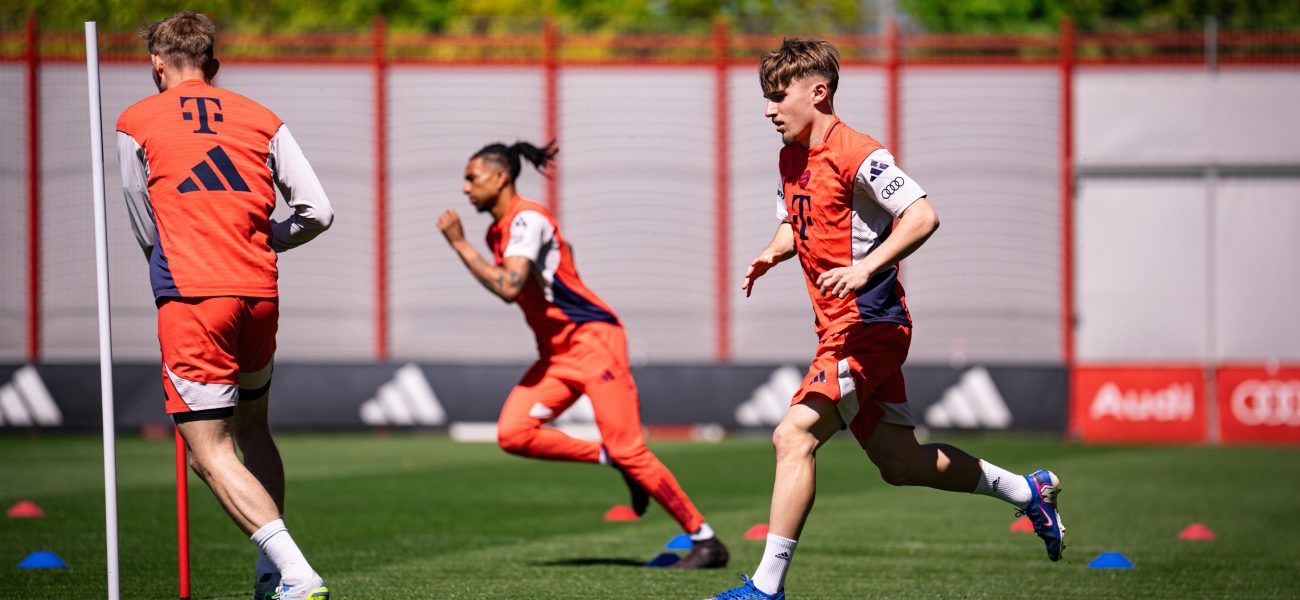
Bayern Munich’s High-Stakes Roster Roulette: Kompany Navigates Fragile Human Assets
POLICY WIRE — MUNICH, GERMANY — Beyond the thunderous roar of the Allianz Arena, away from the tactical chessboard of European football, lies a far more intricate, indeed existential,...

POLICY WIRE — MUNICH, GERMANY — Beyond the thunderous roar of the Allianz Arena, away from the tactical chessboard of European football, lies a far more intricate, indeed existential, challenge for club behemoths like Bayern Munich: the delicate stewardship of their most valuable — and often most fragile — assets. We’re not talking about brand equity or broadcasting rights; no, this is about flesh, sinew, and the capricious nature of the human body.
It was less a routine press conference and more a strategic personnel briefing when Vincent Kompany, Bayern’s head coach, recently delineated the convalescence timelines for several key players. His words, typically reserved for dissecting opposing formations, instead unspooled an almost granular medical dossier. This meticulous management of human capital, akin to a nation safeguarding its strategic resources, underscores the immense investment and precise calculations inherent in modern elite sports. It’s a ruthless calculus, really, where peak performance hinges on the precarious balance of physical integrity.
Kompany’s particular focus honed in on Lennart Karl, a talent whose nascent career has, mercifully, been largely devoid of serious setbacks. “Most of the time, when you first get injured, you don’t even know exactly what it’s,” Kompany mused, a candor uncommon in the often-guarded world of professional sports. “Lennart has never been injured before. Usually that means he’ll make a quick — and full recovery. An experienced player knows his limits. Lennart will do everything he can to be ready for the match against PSG, but we have to respect how the body works.” This wasn’t merely a coach speaking; it was a portfolio manager weighing potential returns against intrinsic risk, understanding that a young, unblemished asset carries both promise and a unique vulnerability to the unforeseen. Tom Bischof, another promising name, appears on a quicker path, set for immediate squad reintegration.
But it’s Alphonso Davies, a dynamic and globally recognized figure, whose precautionary withdrawal from the recent clash against Paris Saint-Germain sent a ripple through the club’s meticulously planned campaign. “Phonzy should normally be back with the team today. He felt something against PSG so we decided to sub him off at half time. I wasn’t there (on the bench), so it was a bit difficult for me. But it was the right decision not to take any risks. He underwent tests — and everything is positive. So he should be able to train today and then we’ll see,” Kompany stated, acknowledging the fine line between pushing a world-class athlete and preserving a multi-million-euro investment. This isn’t just about a game; it’s about safeguarding assets whose market value can fluctuate wildly with each medical report. And let’s be honest, few clubs can absorb sustained losses without consequence.
Behind the headlines of goal tallies and trophy chases, the bedrock of any successful sporting enterprise — or indeed, any nation building a competitive workforce — rests on the health and optimized deployment of its human resources. This intricate balance of risk, recovery, and strategic reintegration resonates far beyond the manicured pitches of Germany. Consider Pakistan, for instance, a nation investing heavily in its human capital, from its burgeoning tech sector to its determined efforts in sports development. The challenges of nurturing talent, preventing burnout, and ensuring peak performance across diverse fields, whether it’s a software engineer in Karachi or a promising young cricketer, share fundamental commonalities with Bayern’s intricate player management. The globalized nature of modern sports means that scouting and developing talent often involves navigating vastly different cultural and medical infrastructures — a universal challenge in optimizing human potential, wherever it may be found.
Indeed, the financial toll of athletic frailty is staggering. A recent UEFA report indicated that top-tier European clubs collectively incurred an estimated 610 million Euros in direct costs for player injuries during the 2022-2023 season alone — a figure that doesn’t even account for the opportunity cost of missed games or potential transfer value depreciation. It’s a stark reminder that even the most glamorous institutions are fundamentally managing a high-risk portfolio of human bodies.
📄 POLICY WIRE WHITEPAPER PUBLISHED: PAKISTAN'S NATIONAL SECURITY POLICY PRIORITIES
👉 READ BY CLICKING HERE“The margin for error in athlete welfare is absolutely zero,” declared Jan-Christian Dreesen, Bayern Munich’s CEO, in a recent internal memo, reflecting the corporate imperative driving these medical updates. “Our responsibility extends beyond mere wins and losses; it’s about sustaining careers and protecting the immense investments our fans and shareholders expect.” Such pronouncements underscore the increasingly business-centric approach to athletic management, where players are simultaneously gladiators and precious commodities.
What This Means
Kompany’s candor isn’t just about transparency; it offers a rare glimpse into the strategic tightrope walked by modern footballing giants. Bayern’s ability to navigate these personnel crises — bringing key players back at optimal moments — will dictate not only their immediate Champions League prospects against PSG but also their broader financial stability and market standing. A long-term injury to a marquee player like Davies doesn’t just mean missed matches; it impacts merchandise sales, sponsorship deals, and brand visibility globally. For a club like Bayern, which operates on razor-thin margins of elite performance, the precise orchestration of recovery and reintegration is a masterclass in risk mitigation and human resource optimization. It’s a sobering reminder that even the titans of sport are ultimately dependent on the unpredictable resilience of the human form.
Still, the underlying message is clear: in the high-stakes arena of global football, where billions are exchanged for moments of athletic brilliance, the meticulous preservation of human capital remains the most consequential, and often most overlooked, policy initiative. Without it, the entire edifice risks crumbling.