

Bollywood Meets Bureaucracy: Tamil Nadu’s Factory Heart Beats a Cautious Tune for Star’s Political Play
POLICY WIRE — Chennai, India — There’s a certain grim irony in a political landscape so thoroughly saturated with cinematic melodrama that the entrance of an actual film star hardly raises an eyebrow...

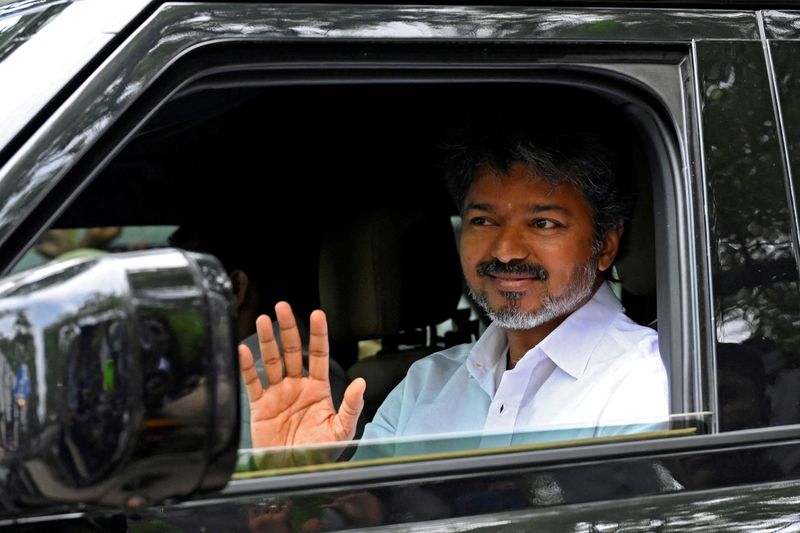
POLICY WIRE — Chennai, India — There’s a certain grim irony in a political landscape so thoroughly saturated with cinematic melodrama that the entrance of an actual film star hardly raises an eyebrow anymore. But don’t confuse nonchalance with disinterest. Down in Tamil Nadu, India’s southern industrial powerhouse, the impending political arrival of screen idol ‘Thalapathy’ Vijay isn’t just a passing fad; it’s rattling the foundations of an already complex economic ecosystem, leaving factory floors and boardroom tables humming with a mixture of fervent hope and palpable dread.
It’s not some grand, ideological debate occupying folks at the Ambattur Industrial Estate – they’re busy turning out everything from automobiles to textiles. Their worries are, as ever, quite practical: contracts, regulations, power supply, — and that ever-fickle labor force. So, when Vijay, the charismatic actor whose fan clubs practically double as pre-existing political machines, announced his plunge into the electoral fray, many weren’t looking for cinematic speeches. They were wondering, frankly, about their next payroll. They’ve seen this movie before—heroes become leaders, then what?
But the buzz is undeniably loud. It’s a testament to the strange brew of populist appeal and public exasperation that a superstar can walk away from crores (tens of millions) in movie deals and step straight onto the political stage, bypass a lot of the grubby climb actual politicians have to endure. This isn’t Hollywood with a governor — this is a cultural juggernaut deciding he’s had enough of scripted roles and wants a go at reality. For a state where film and politics have been conjoined twins for generations, it’s just the next act in a very long play.
“Look, we’ve tried the old guards, haven’t we?” remarked C. Selvam, a mid-level manager at an auto component manufacturing unit just outside Chennai. Selvam, a lifelong resident, spoke with a certain weariness that only decades of local politics can bestow. “They’re all the same, eventually. But Vijay… he speaks their language. He comes from them. People are sick to their teeth of empty promises from men in starched white dhotis who’ve never worked an honest day in a factory.” His sentiment isn’t unique. It’s echoed across tea stalls — and workshop floors. Many believe Vijay’s relative youth — and outsider status might just be the jolt the state needs. Or so they desperately hope.
Because there’s another side to this coin. The establishment, unsurprisingly, isn’t exactly rolling out the red carpet. They’ve spent decades perfecting the intricate dance of coalition building — and regional maneuvering. A wild card, no matter how beloved, disrupts the carefully constructed equilibrium. “Politics isn’t a blockbuster; it’s a grind of policy, pragmatism, — and painstaking negotiation. While we welcome new voices, governance isn’t merely about popularity or grand gestures,” stated a senior functionary from a prominent regional party, speaking off the record, but with an almost visible eye-roll. He hinted that Vijay’s policy pronouncements so far have been broad, heavy on moral platitudes, and light on concrete economic plans. That’s a problem for a state where geopolitics directly affects local economies, meaning a nuanced understanding of trade and federal relations is paramount.
📄 POLICY WIRE WHITEPAPER PUBLISHED: PAKISTAN'S NATIONAL SECURITY POLICY PRIORITIES
👉 READ BY CLICKING HERETamil Nadu, remember, isn’t some backwater. It’s an economic engine. The state, for instance, accounts for roughly 10% of India’s total factory output, according to data from the Ministry of Statistics and Programme Implementation. Its capital, Chennai, is often dubbed the ‘Detroit of Asia.’ But like other industrialized states across South Asia—Pakistan’s Punjab or Bangladesh’s Dhaka region immediately come to mind—it struggles with persistent infrastructure gaps, fluctuating raw material costs, and increasingly, the existential threat of climate change to its agriculture, which inevitably affects its industrial supply chains. So, the leader taking charge isn’t just cutting ribbons; they’re navigating incredibly complex challenges. And they’re up against an entrenched system.
And Vijay, for all his magnetism, is a newcomer to this particular grind. He’ll face an uphill battle against parties whose networks penetrate every village — and every guild. His popularity might secure seats, but can it translate into effective governance? Can he shepherd an economic agenda that satisfies both the urban industrialists and the rural farmers, a perpetual South Asian political tightrope walk? But for his fervent supporters, that’s precisely his appeal: a clean slate, a disruption of the old guard. They’ve put their faith in his screen persona; now they’re hoping it extends to actual policy.
What This Means
Vijay’s foray into politics throws a real wrench into Tamil Nadu’s established two-party dominance. If he manages to peel away a significant chunk of votes from either the Dravidian majors, it’s not just a shifting of chairs; it’s a seismic event that could force coalition governments—a rarity in a state usually characterized by clear mandates. Economically, this translates to heightened uncertainty. Will his administration favor certain industries, or will it pursue broad-stroke welfare policies that might appease his base but scare away critical investments? Foreign direct investment, in particular, tends to shy away from instability. If his economic advisors lack depth, or if his policies are seen as arbitrary rather than strategic, it could ripple through a state heavily reliant on manufacturing and IT exports. The regional dynamics of South India are also at play here. Karnataka, for instance, a direct competitor for tech investment, might capitalize on any perceived policy paralysis or populism in Tamil Nadu. The state’s influence on national politics, traditionally significant, could also either be enhanced by a fresh, popular leader or diluted by infighting if a fragmented legislature emerges. It’s a gamble, plain — and simple, for a region that needs consistent, strong economic leadership.