

Orchestral Overture to Resilience: Albuquerque’s Symphony of Survival
POLICY WIRE — Albuquerque, N.M. — In an era where digital cacophony often drowns out the analog triumphs of human spirit, a peculiar and profoundly moving narrative is unfolding in the high desert of...

POLICY WIRE — Albuquerque, N.M. — In an era where digital cacophony often drowns out the analog triumphs of human spirit, a peculiar and profoundly moving narrative is unfolding in the high desert of New Mexico. It’s not about tech breakthroughs or fiscal policy; it’s about a nine-year-old boy, two new hearts, and an orchestra of teenagers translating that harrowing odyssey into music. This weekend, the Albuquerque Youth Symphony Orchestra isn’t just performing; they’re canonizing a lived experience, transforming medical trauma into a symphonic testament.
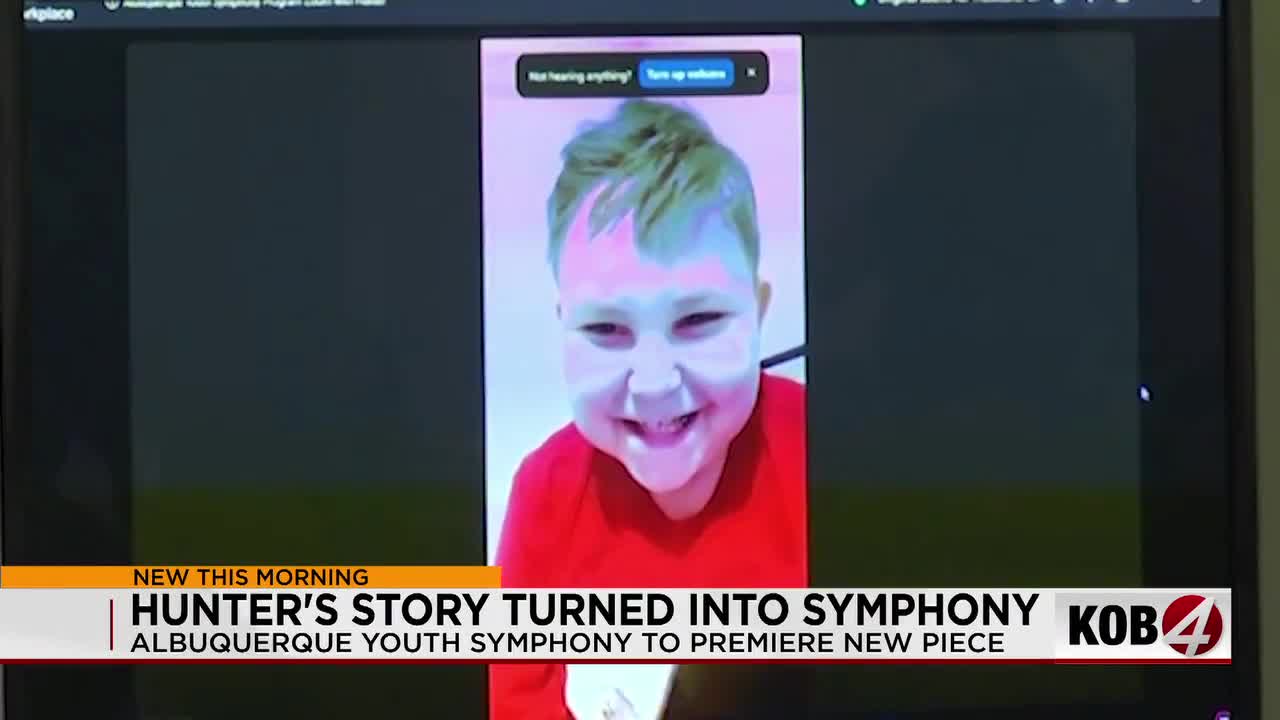
Hunter Rael, the boy at the epicenter of this artistic endeavor, faced a medical gauntlet most adults couldn’t fathom. Diagnosed with Kawasaki disease at merely five years old, he endured not one, but two heart transplants within a span of months—a grueling saga that began in November and necessitated a second, desperate intervention by February. His survival isn’t just a medical marvel; it’s a stark, visceral reminder of the fragile calculus underpinning pediatric health. And it’s this unvarnished reality the youth orchestra, comprising high school students, has bravely chosen to interpret.
Local composer Beth Ratay, commissioned by the Sing-Me-A-Story Foundation, has meticulously crafted “Hunter’s Story.” But it’s not a solitary creation; it’s a collective articulation. “Most of the ideas are either pre-existing music, because we quoted some music that Hunter really likes, or melodies or ideas from the students in the orchestra,” Ratay elucidated, offering a glimpse into the collaborative alchemy at play. This isn’t merely composition; it’s an act of collective empathy, a forging of communal understanding through harmony and discord.
Still, the logistical complexities of such an undertaking are formidable. Hunter, still recuperating, can’t yet make the trip to Popejoy Hall for the world premiere. So, in a gesture that belies their relative youth, the orchestra pre-empted the public debut with a private, virtual performance exclusively for Hunter and his family. Anna Moya, Hunter’s mother, captured the sentiment concisely, her voice etched with the memory of endless hospital corridors. “You navigate these unimaginable medical mazes, feeling so isolated,” she offered, “then something like this—this overwhelming embrace from the community—it reminds you you’re not just a medical case file. It’s a profound affirmation.” It’s a sentiment that transcends mere appreciation, hinting at the profound psychological relief of being seen, truly seen, beyond the clinical charts.
But the reverberations of Hunter’s journey extend beyond the local stage. Dr. Eleanor Vance, Artistic Director for the Albuquerque Youth Symphony Orchestra, articulated the broader impact with characteristic gravitas. “Our students aren’t just mastering scales; they’re interpreting the very cadence of life — and struggle. This piece, ‘Hunter’s Story,’ isn’t merely a performance; it’s a testament to how art can transmute hardship into something profoundly connective, something that transcends the sterile confines of a hospital room,” she pronounced, her words underscoring the often-underestimated role of arts in civic and emotional life.
Indeed, such a story, while deeply personal, resonates with a global undertone. Kawasaki disease, while rare, affects an estimated 19-20 per 100,000 children under five in the U.S. annually, making it the leading cause of acquired heart disease in children in developed nations, according to the American Heart Association. And it doesn’t discriminate geographically. “Kawasaki disease, while rare, strikes children globally, from Albuquerque to Karachi,” observed Dr. Tariq Aziz, Senior Fellow at the Institute for Global Health Policy in Islamabad. “It’s a stark reminder that pediatric health crises, regardless of geography, place immense, often catastrophic burdens on families. Public awareness and robust support systems, whether artistic or medical, aren’t luxuries; they’re essential lifelines in a world where access to specialized care remains profoundly inequitable.” His perspective throws into sharp relief the localized drama playing out in New Mexico, framing it within a larger, more disquieting global health context.
Hunter’s family, who will soon return home to Belen, is already mapping out a summer of normalcy—fishing trips and a promised visit to Disney World. These aren’t just recreational plans; they’re carefully reconstructed milestones in a life nearly derailed, a testament to medical tenacity and the often-unsung resilience of the human heart (and its two replacements). Even in a state grappling with a parched policy future, the wellspring of human compassion, it seems, remains surprisingly abundant.
What This Means
At its core, this story isn’t just about a brave boy or a talented orchestra; it’s a nuanced reflection on the societal value of public health, community engagement, and the arts. The financial and emotional toll of complex pediatric diseases like Kawasaki can be crushing, often pushing families to the brink. The orchestra’s initiative isn’t merely a feel-good story; it’s a tangible act of social support, offering psychological uplift and communal solidarity that money can’t buy. Politically, it underscores the persistent gaps in healthcare systems—particularly in equitable access to highly specialized care—and how communities, sometimes through unconventional means, step in where formal structures falter. Economically, the ‘hidden costs’ of rare diseases extend far beyond direct medical bills, impacting family livelihoods and mental health. This symphonic gesture, therefore, becomes a powerful, if subtle, piece of advocacy: a vibrant, melodic argument for more robust social safety nets and a renewed appreciation for initiatives that foster communal healing, rather than leaving families to shoulder such monumental burdens alone.