

Chad’s Perpetual Quagmire: Boko Haram’s Latest Carnage Underscores Regional Instability
POLICY WIRE — N’Djamena, Chad — The marshy fringes of Lake Chad, a geographic anomaly shrinking under climate strain and expanding as a theater of perpetual conflict, once again bore witness to...

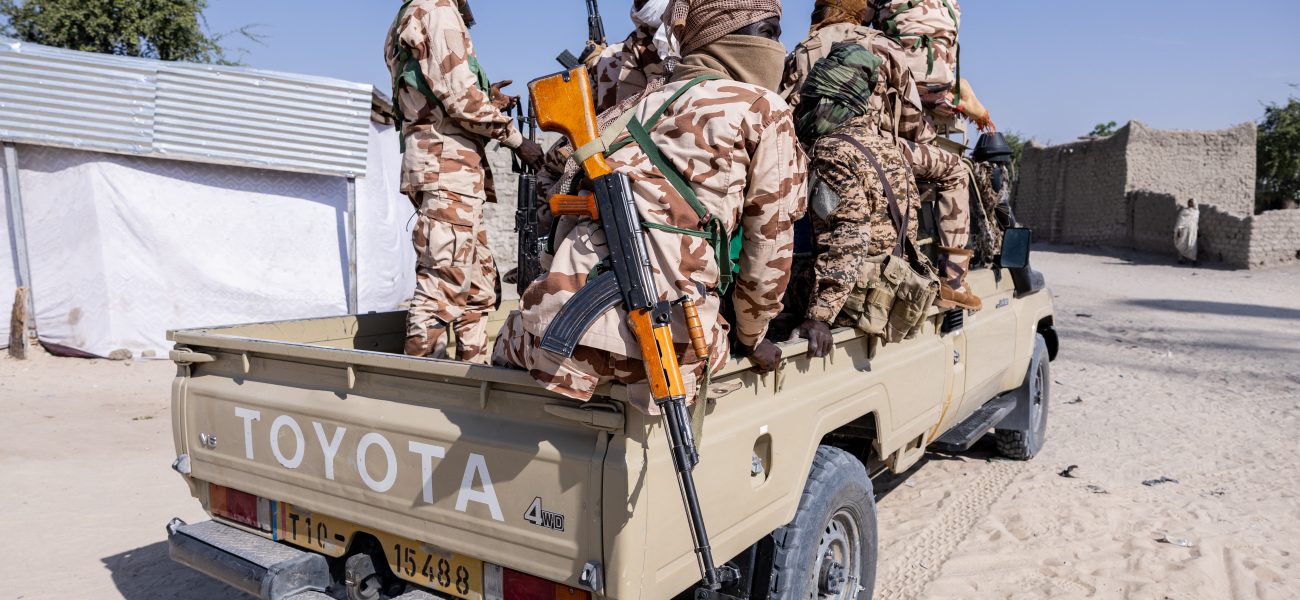
POLICY WIRE — N’Djamena, Chad — The marshy fringes of Lake Chad, a geographic anomaly shrinking under climate strain and expanding as a theater of perpetual conflict, once again bore witness to its grim, relentless calculus this week. It wasn’t the audacious surprise of a new offensive that shocked regional observers, but the grim familiarity of it all: another ambush, another tragic tally, another stark reminder that the war against Boko Haram in this beleaguered corner of Africa is far from over. This time, 23 Chadian soldiers perished in an attack attributed to the Islamist militants, a casualty count that, while devastating, often feels like a mere fluctuation in the region’s ceaseless ebb and flow of violence.
At its core, this isn’t simply a matter of troop deployments or tactical maneuvers; it’s a protracted struggle against an enemy adept at exploiting ungoverned spaces and environmental degradation. The Lake Chad basin, a sprawling mosaic of water, islands, and reeds, presents an almost insurmountable challenge for conventional forces, offering sanctuary and strategic depth to groups like Boko Haram and its splinter, Islamic State West Africa Province (ISWAP). And so, the cycle persists. For two decades, nations comprising the Multinational Joint Task Force (MNJTF)—Chad, Niger, Nigeria, Cameroon, and Benin—have grappled with an insurgency that routinely outmaneuvers, out-adapts, and, devastatingly often, out-fights its opponents.
General Daoud Yaya Brahim, Chad’s Minister of National Defense, shot back with customary defiance following the incident. “We won’t cede an inch of our sovereign territory to these nihilistic brigands,” he reportedly declared from N’Djamena, his voice undoubtedly echoing sentiments heard too many times across the Sahel. “Our resolve remains unbroken, and we will hunt down those responsible.” Such pronouncements, though necessary for morale, frequently butt against the grinding reality of an enemy that regenerates, re-arms, and recruits from communities left bereft by poverty and state neglect. It’s a bitter pill, isn’t it?
Behind the headlines of specific attacks lies a broader, more insidious phenomenon. The UN Office for the Coordination of Humanitarian Affairs (OCHA) reports over 3.3 million people remain displaced across the Lake Chad basin due a toxic cocktail of persistent insecurity and climate change impacts, making it one of the world’s most acute humanitarian crises. That’s a staggering figure, offering fertile ground for radicalization.
Still, the international community’s engagement often feels like a series of disjointed interventions rather than a cohesive strategy. Dr. Ayesha Siddiqa, a prominent Pakistani political scientist with deep expertise in security dynamics, offered a sharper critique. “This isn’t merely a tactical setback for Chad; it’s a stark reminder of the global community’s protracted failure to dismantle the ideological underpinnings of groups like Boko Haram,” she observed during a recent Policy Wire seminar on transnational extremism. “From West Africa to South Asia, these entities thrive on similar grievances and institutional weaknesses, demanding a more holistic and globally coordinated policy playbook, not just sporadic military responses.” Her assessment resonates deeply; the ideological threads connecting such groups across the Muslim world—from the Afghan-Pakistan borderlands to the Sahel—are often overlooked in a scramble to address immediate crises.
And so, while Chad commits its limited resources—and its youth—to holding the line, the systemic issues persist. The sheer logistics of maintaining security across such a vast, volatile region, coupled with the drain on national treasuries, presents an almost impossible dilemma for governments already struggling with development imperatives. You just can’t pour endless resources into a bottomless pit.
📄 POLICY WIRE WHITEPAPER PUBLISHED: PAKISTAN'S NATIONAL SECURITY POLICY PRIORITIES
👉 READ BY CLICKING HEREWhat This Means
This latest spasm of violence isn’t an isolated incident; it’s a critical barometer of ongoing policy failures. Politically, it signals the continued challenge to state legitimacy — and authority in the Lake Chad basin. Governments, already struggling with internal dissent and economic pressures, face a constant drain on resources and public trust. Every soldier lost chips away at the already fragile social contract. it deepens the regional security conundrum, often leading to uncoordinated, reactive military operations rather than a sustained, comprehensive approach.
Economically, the impact is devastating. Agriculture, fishing, and trade—the very lifelines of these communities—are repeatedly disrupted. Displacement saps human capital, — and the persistent insecurity deters investment, both domestic and foreign. Nations like Chad, which are already among the world’s poorest, simply can’t afford this perpetual state of war. It’s a cruel feedback loop, isn’t it? The cost of maintaining stability in the Lake Chad region is immense, forcing difficult choices for nations that might otherwise invest in infrastructure or education. The global arms bazaar certainly benefits, but the human cost here is incalculable. Without a renewed, integrated strategy—one that marries robust security operations with genuine socioeconomic development and robust governance—the Lake Chad basin will remain a tragic testament to unresolved instability, continuing to claim lives and undermine regional aspirations for peace and prosperity.