


The Uncomfortable Geometry of Justice: UK Convictions Spark Debate Over Protest’s Perimeter
POLICY WIRE — London, UK — The British legal system, unflappable in its procedural meticulousness, has once again etched a stark boundary: the fervour of conviction, however deeply felt, often...

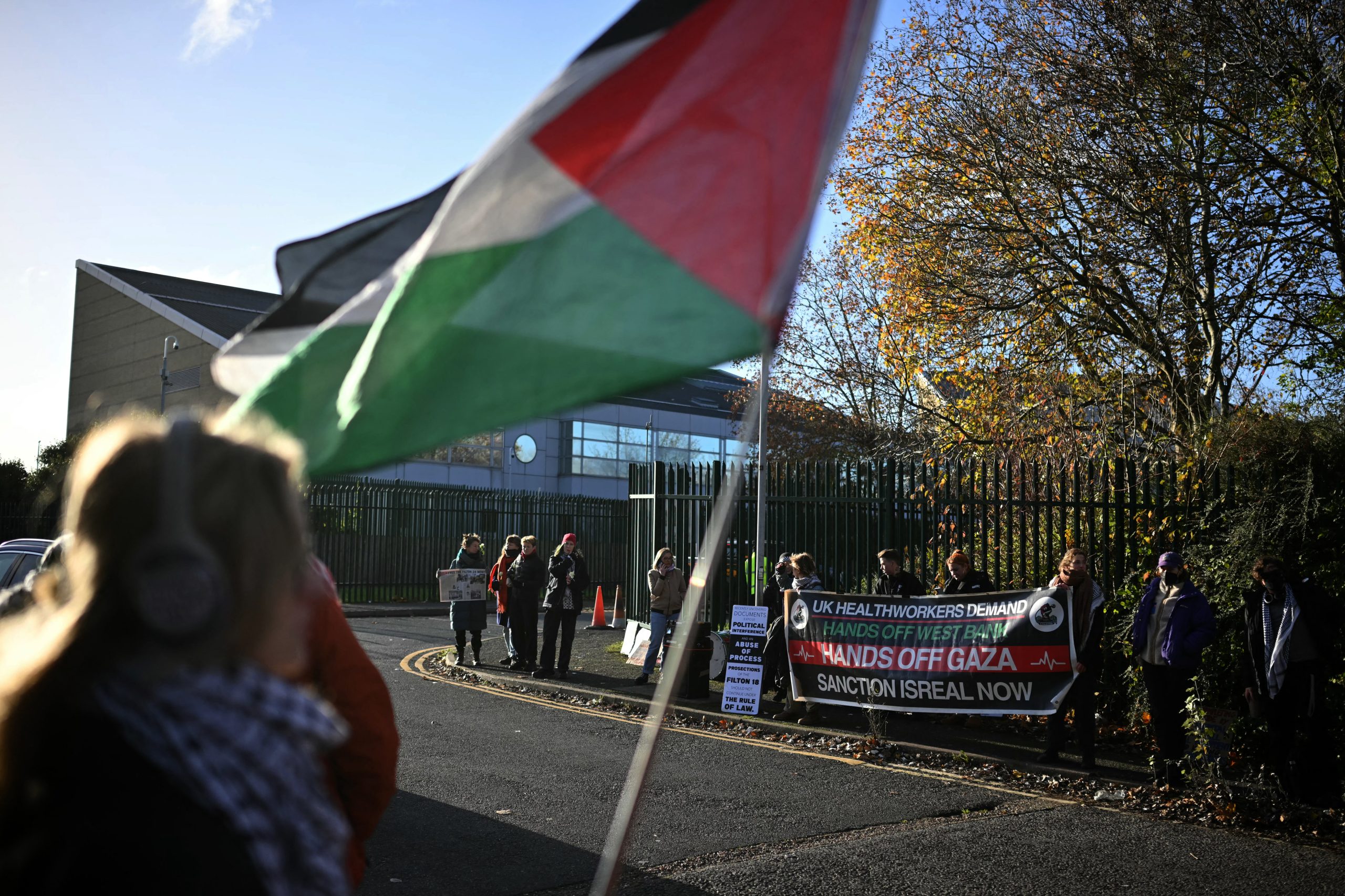
POLICY WIRE — London, UK — The British legal system, unflappable in its procedural meticulousness, has once again etched a stark boundary: the fervour of conviction, however deeply felt, often buckles under the weight of property law. It’s a recurring tableau, certainly, but one that gained renewed, potent significance this week as four activists from the group Palestine Action faced convictions over their intrusion into the Elbit Systems subsidiary, UAV Tactical Systems, in Leicester. Their protest, a familiar tactic in the playbook of direct action, sought to disrupt what they contend is a supply chain complicit in human rights abuses – a claim that now stands in sharp contrast to the court’s unwavering focus on criminal damage and unlawful occupation.
The verdicts, delivered by a jury after weeks of deliberation, weren’t exactly a shocker for those conversant with the UK’s evolving stance on protest. For years, campaigners have chafed under what they perceive as an increasingly stringent interpretation of public order laws, effectively narrowing the legitimate avenues for dissent. But this case, specifically targeting a defence firm with ties to Israel, elevates the discussion beyond mere process; it touches the raw nerve of international solidarity, corporate accountability, and the permissible limits of moral outrage in a highly commercialized world. Don’t mistake this for a simple vandalism case, because it’s not.
The activists – a determined quartet including Laura Graham, Amber Coulthard, Liam Jones, and Sean Gilchrist – were found guilty of conspiracy to commit criminal damage. Their actions, which involved breaking into the factory and reportedly inflicting significant damage, were intended to halt the production of unmanned aerial vehicles (UAVs) – drones – for the Israeli military. This isn’t their first rodeo, nor is it Elbit’s first run-in with such disruptive tactics. Palestine Action, known for its tenacious campaigns, has consistently targeted the company’s UK operations, alleging its involvement in what they term ‘war crimes’.
And so, the legal hammer fell, reinforcing the primacy of established statutes over activist grievances. “Our legal system rigorously defends property rights and ensures that legitimate businesses can operate without unlawful disruption,” shot back a spokesperson for the Home Office, requesting anonymity due to ongoing judicial processes. “These convictions underscore that fundamental principle, regardless of the activists’ motivations or the perceived righteousness of their cause.” It’s a statement that, in its dry formality, encapsulates the state’s unyielding commitment to legal order.
But the reverberations of this verdict don’t stop at the English Channel. Across the Muslim world, and particularly within South Asia – where the Palestinian cause often serves as a powerful unifying force – these convictions will likely be viewed through a distinctly different lens. From the bustling streets of Karachi to the political discourse in Ankara, solidarity movements frequently cite the perceived impunity of global arms manufacturers and their clients as a profound injustice. They’ll see these activists not as criminals, but as frontline defenders, albeit ones operating within a foreign legal framework that doesn’t share their foundational premises.
“This verdict doesn’t diminish the moral clarity of our cause; it simply illustrates the lengths to which the establishment will go to shield those profiting from injustice,” countered a prominent Palestine Action organizer, speaking under condition of anonymity to avoid further legal entanglements. “Our resolve remains unbowed. When governments fail to act on human rights, it’s incumbent upon the people to disrupt complicity – whatever the cost.” It’s a familiar refrain, but one that resonates deeply within certain demographic segments globally.
Still, the economic entanglement is undeniable. The UK Department for Business and Trade reported that total trade in goods and services between the UK and Israel amounted to a hefty £7.8 billion in 2022. This figure, often overlooked in the heated rhetoric, represents a significant economic bedrock underpinning the very businesses activists aim to dismantle. The legal system, naturally, is designed to protect this bedrock, creating a persistent, often violent, friction point with those who prioritize moral imperatives over commercial interests. (It’s an awkward balance, isn’t it?)
What This Means
At its core, these convictions reinforce the UK’s robust defence of corporate property rights, setting a clear, albeit contested, precedent for future direct action protests. Politically, the government gains ammunition to demonstrate its commitment to law and order, potentially appeasing sections of the electorate wary of increasing protest disruptions. However, it simultaneously risks galvanizing further activist resistance, deepening the perception among critics that the state prioritizes commercial interests over ethical considerations, particularly concerning international conflicts. Economically, while the immediate impact on a single firm like Elbit’s subsidiary is contained, the broader message to other defence contractors is one of security and predictability – a key factor for attracting and retaining investment in sensitive sectors. The global political implications are also profound, as countries with strong public support for the Palestinian cause will undoubtedly interpret these verdicts as further evidence of Western governments’ perceived complicity, potentially fueling diplomatic tensions and bolstering arguments for boycotts or sanctions. It’s not just a domestic skirmish; it’s a ripple in a much larger, increasingly turbulent pond.
Behind the headlines, this ongoing courtroom drama highlights the widening chasm between established legal frameworks and burgeoning forms of moral activism. The state, through its courts, asserts its monopoly on legitimate force and order, while activists, operating from a platform of moral conviction, challenge that very legitimacy. It’s a standoff without an easy resolution, and one that will undoubtedly continue to play out in various iterations across the UK’s urban landscapes and courtrooms. The perimeter of acceptable protest, it seems, just keeps shrinking.