


The Precarious Dance: Rashford’s Fate Tangled in a Transatlantic Transfer Tangle
POLICY WIRE — London, UK — Even for athletes of extraordinary caliber, the career trajectory in elite sport rarely follows a neat, predictable arc. Often, it’s a tortuous path, replete with...

POLICY WIRE — London, UK — Even for athletes of extraordinary caliber, the career trajectory in elite sport rarely follows a neat, predictable arc. Often, it’s a tortuous path, replete with unforeseen detours — and delicate negotiations. Consider Marcus Rashford: an undeniable talent, currently adrift in a curious transfer purgatory, his professional compass seemingly caught between the fiscal anxieties of Barcelona and the ambitious overtures of a resurgent Aston Villa.
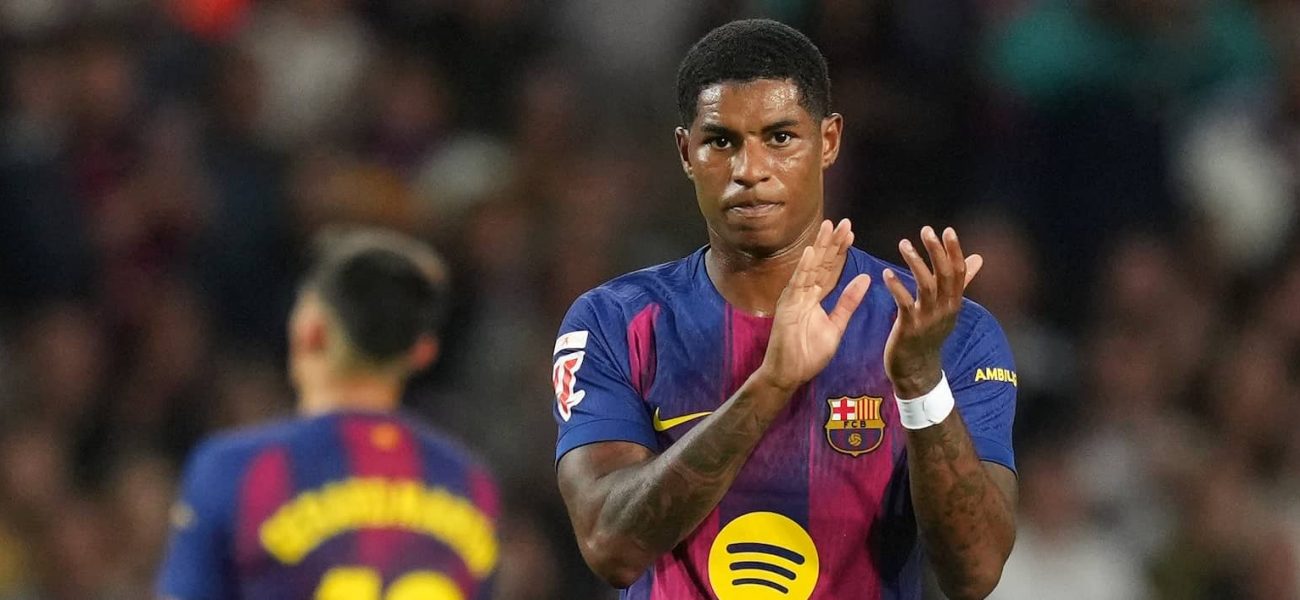
Barcelona, a behemoth whose historical grandeur frequently overshadows its current financial precarity, appears to be prevaricating over Rashford’s permanent acquisition. The Manchester United forward, loaned to the Catalan club last summer, has enjoyed what many would deem a rather commendable stint, netting 13 goals and providing as many assists across various competitions. That’s a return many strikers would covet, particularly considering his bouts with injury and occasional bench duty behind luminaries like Lamine Yamal and Raphinha. And yet, the Blaugrana, despite holding a £30 million option to make the deal permanent, have shown a distinct reluctance to exercise it, preferring, it seems, a reduced fee or another temporary arrangement. But United, ever the shrewd negotiators when divesting of assets, aren’t budging.
So, where does a player of Rashford’s pedigree land when a global titan hems — and haws? Enter Aston Villa. The Birmingham outfit, under the astute stewardship of Unai Emery, has reportedly positioned itself as a keen suitor. It’s a familiar embrace, too; Rashford enjoyed a successful loan spell at Villa last season after a falling out with then-manager Ruben Amorim, a period that saw his form noticeably revive and his connection with the Villa faithful blossom. This isn’t merely speculation; Spanish sports daily Mundo Deportivo has explicitly cited Villa’s close monitoring of the situation. Emery, a tactician known for maximizing potential, evidently harbors a strong appreciation for Rashford’s capabilities. “Rashford possesses that rare blend of raw athleticism and decisive finishing we crave,” shot back a source close to the Villa hierarchy, speaking on condition of anonymity due to ongoing negotiations. “His previous stint here offered a glimpse of his capability; he’s matured since, and we’re always keen to integrate talent that understands our collective ambition.”
Manchester United, for their part, remain resolutely firm. Their stance? No renegotiation. If Barcelona won’t cough up the agreed sum, Rashford simply returns to Old Trafford. They’re convinced, perhaps rightly, that other suitors will materialize, potentially even exceeding the quoted £30 million valuation. “Our position on Marcus is unequivocal. He remains a Manchester United player under contract,” declared a spokesperson for Manchester United, speaking from their Carrington training ground. “While we acknowledge interest, his market value reflects his stature, and we won’t be dictated by external fiscal hesitations.” It’s a classic power play in the high-stakes game of player transfers, where clubs—not individuals—often dictate the tempo. This isn’t just about a single player; it’s about asset management in a market where player valuations often defy conventional logic.
Still, Rashford’s personal preference is said to lean towards Barcelona, a romantic notion that clashes quite brutally with the hard-nosed realities of football finance. The Red Devils, incidentally, are next slated to clash with their arch-rivals Liverpool on Sunday, a match that will surely distract, if only momentarily, from the swirling transfer tempest.
📄 POLICY WIRE WHITEPAPER PUBLISHED: PAKISTAN'S NATIONAL SECURITY POLICY PRIORITIES
👉 READ BY CLICKING HEREWhat This Means
At its core, this ongoing transfer saga isn’t merely a footnote in a sports column; it’s a salient microcosm of the economic and political machinations underpinning modern global football. Barcelona’s conspicuous dithering underscores the persistent financial headwinds buffeting even Europe’s traditional elite. Their precarious situation — a relic of past fiscal profligacy and the soaring costs of maintaining a competitive squad — forces them into a difficult corner, where player desire often takes a backseat to balance sheet realities. This isn’t unique to Barcelona; indeed, the immense liquidity fueling such sagas is staggering, with Premier League clubs collectively spending a formidable £2.36 billion on transfers in the 2023 summer window alone, according to Deloitte’s Football Finance report. This figure, a testament to the league’s economic dominance, directly impacts player market values and negotiating postures worldwide.
For Marcus Rashford, this represents a pivotal career juncture. His agency is, to some extent, curtailed by the contractual obligations — and the clubs’ strategic financial objectives. For Aston Villa, an acquisition of this magnitude would signal a potent declaration of intent, affirming their ambitious trajectory under Unai Emery and their bid to consistently challenge Europe’s established order. Such high-profile transfers, particularly involving English players, also resonate far beyond Europe’s borders. The fervent fanbases in regions like Pakistan and throughout the Muslim world, where English Premier League football commands immense loyalty and viewership, are keenly attuned to these movements. A player like Rashford, with his profile, could significantly bolster a club’s global brand appeal, translating into increased merchandise sales, broadcast viewership, and even potential sponsorship opportunities from burgeoning markets, further intertwining sports, economics, and international soft power. It’s a delicate dance, this, between athletic ambition — and pecuniary pragmatism.