


Beyond the Gridiron: Shedeur Sanders’ Quiet Triumph in Academia Amidst Pro Football’s Crucible
POLICY WIRE — Cleveland, Ohio — Amidst the ceaseless churn of professional football—the bruising practices, the playbook minutiae, the relentless public scrutiny—a quiet, altogether unexpected...

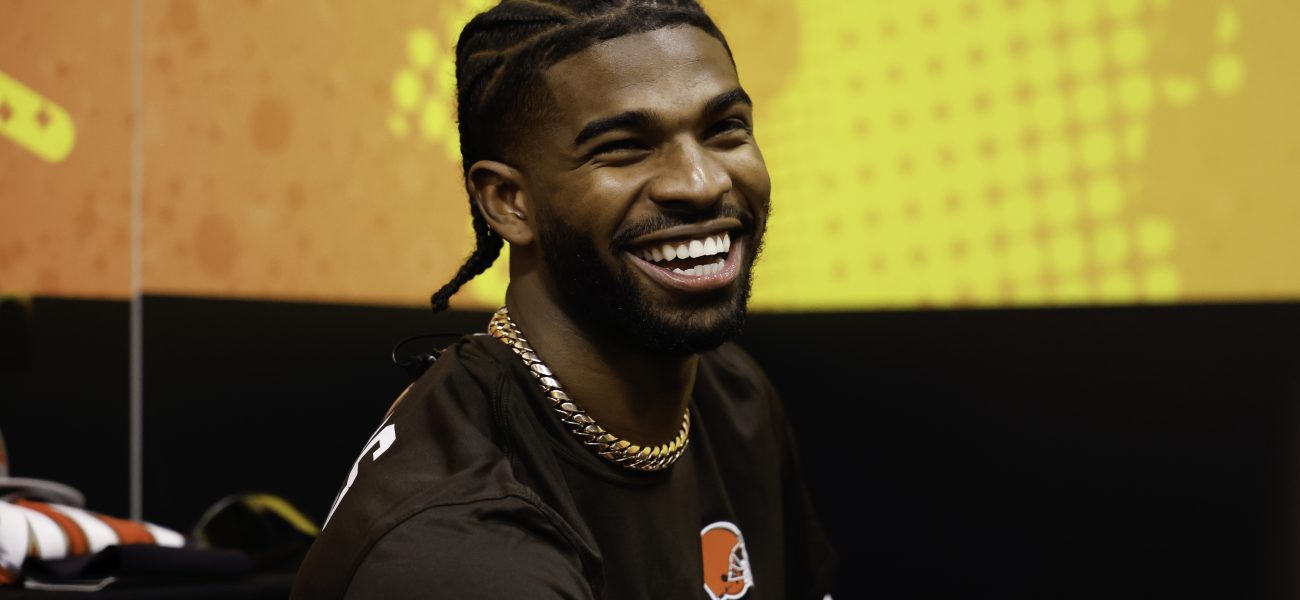
POLICY WIRE — Cleveland, Ohio — Amidst the ceaseless churn of professional football—the bruising practices, the playbook minutiae, the relentless public scrutiny—a quiet, altogether unexpected narrative has emerged from the Cleveland Browns camp. It isn’t about arm strength or sprint times; rather, it’s a tale of intellectual resolve, culminating recently with quarterback Shedeur Sanders securing his sociology degree from the University of Colorado. This wasn’t some ceremonial, years-after-the-fact acknowledgment; no, Sanders managed to balance the rigors of a demanding NFL rookie season with the exacting demands of academia, walking with his original graduating class.
It’s a peculiar flex in a league often characterized by instant gratification — and short-term memory. While countless young athletes understandably jettison formal education the moment lucrative contracts beckon, Sanders, the 24-year-old signal-caller, chose a path less traveled. He departed Colorado for the NFL draft a year prior, only to remain academically tethered, meticulously chipping away at his coursework. His academic prowess is underscored by a remarkable 3.9 GPA, a statistic that would make any dean of students proud, and certainly stands in stark contrast to the often-simplistic narratives projected onto elite athletes.
“They say you can’t have it all, don’t they?” Sanders mused recently, his voice carrying a subtle undercurrent of defiance. “But proving folks wrong, both on the field — and in the classroom, that’s what drives me. This degree isn’t just a piece of paper; it’s a testament to discipline—a different kind of discipline than throwing a touchdown, sure, but equally consequential.” It’s an assertion that quietly refutes the long-held, often unfair, stereotypes about the intellectual curiosity of professional sports figures.
His commitment hasn’t gone unnoticed within the Browns organization, particularly as he navigates a particularly cutthroat quarterback competition. “Shedeur’s dedication to completing his degree while navigating the demands of a professional rookie season speaks volumes about his character and his intellectual horsepower,” a Browns front office source, speaking on condition of anonymity to discuss internal team dynamics, confided to Policy Wire. “We evaluate players on more than just their athletic measurables; their capacity for complex thought, their resilience under pressure—these are non-negotiable traits for a franchise quarterback. His academic rigor simply reinforces what we already knew about his exceptional mental fortitude.”
This academic triumph unfolds against a backdrop of intense gridiron uncertainty in Cleveland. Sanders, a fifth-round draft pick who started as QB3, seized the starting role in Week 11 of his rookie 2025 season after veteran Deshaun Watson’s struggles. He posted a 3-5 record down the stretch, including crucial wins in the final two games, and unexpectedly earned a Pro Bowl alternate nod, eventually joining the roster. But now, he finds himself embroiled in a two-man race for the starting job with the very same Deshaun Watson, whose tenure in Cleveland has been a turbulent mix of injuries, inconsistent play, and a palpable erosion of fan trust. Recent reports from voluntary mini-camps suggest Watson has gained an early edge, a narrative that’s fueling a simmering debate among the Browns faithful.
Yet, Sanders’ graduation transcends mere team depth charts. It serves as a potent reminder of the enduring value of education, even in professions that often overshadow it. Even in regions far removed from the American gridiron, like the bustling educational hubs of Lahore or the tech academies burgeoning across Malaysia, the achievement resonates. There, where academic excellence is often seen as a prerequisite to societal advancement, Sanders’ dual triumph serves as a powerful, albeit distant, counter-narrative to the prevailing notion that elite athleticism necessarily precludes intellectual pursuit. It’s a subtle yet significant message that transcends cultural divides.
📄 POLICY WIRE WHITEPAPER PUBLISHED: PAKISTAN'S NATIONAL SECURITY POLICY PRIORITIES
👉 READ BY CLICKING HEREStill, one can’t ignore the pragmatism of it all. In an industry where careers can pivot on a single misstep or an unfortunate injury, a college degree offers an essential strategic hedge. It’s a foundational element of a diversified portfolio, intellectual — and otherwise.
What This Means
This isn’t merely a feel-good story; it’s a profound commentary on the evolving landscape of professional sports and the strategic calculations underpinning athlete development. For the Cleveland Browns, Sanders’ academic completion isn’t just about personal growth; it’s a quiet endorsement of his intellectual capacity—a trait often overlooked but increasingly pivotal in the hyper-complex schemes of modern NFL offenses. It subtly strengthens his hand in the contentious quarterback competition, suggesting a level of discipline and cerebral horsepower that could differentiate him from veteran Deshaun Watson, whose own tenure has been marred by off-field imbroglios (and on-field inconsistencies). This kind of ruthless calculus of roster fortunes is standard practice, but Sanders’ academic bona fides add an unusual dimension.
Economically, Sanders has effectively diversified his personal brand. A degree, especially one attained under such demanding circumstances, positions him as more than just a fleeting sports celebrity. It confers a gravitas that could unlock post-NFL career paths beyond traditional punditry, appealing to a broader array of corporate partnerships and philanthropic ventures. It’s a shrewd, long-term investment in himself, insulating him against the ephemeral nature of athletic fame—a fiscal prudence (if you will) that many young athletes, unfortunately, overlook. It’s a quiet masterclass in personal branding and long-term viability, showcasing a forward-thinking perspective that could very well define his longevity, both on and off the field.