

Albuquerque’s Civic Plaza: A ‘National Prayer’ Day Unveils a Deeper Search for Unity
POLICY WIRE — Albuquerque, N.M. — It wasn’t the usual cacophony of skateboards clattering or the aroma of street vendor tacos that signaled Thursday’s gathering in Albuquerque’s Civic Plaza. Oh...

POLICY WIRE — Albuquerque, N.M. — It wasn’t the usual cacophony of skateboards clattering or the aroma of street vendor tacos that signaled Thursday’s gathering in Albuquerque’s Civic Plaza. Oh no. Instead, a rather more ethereal presence settled upon the sun-baked concrete, punctuated by the soft murmur of collective introspection. A National Day of Prayer, ostensibly an all-faiths affair, unfolded here, offering a curious counter-narrative to an America increasingly fractured by belief, politics, and the sheer velocity of modernity.
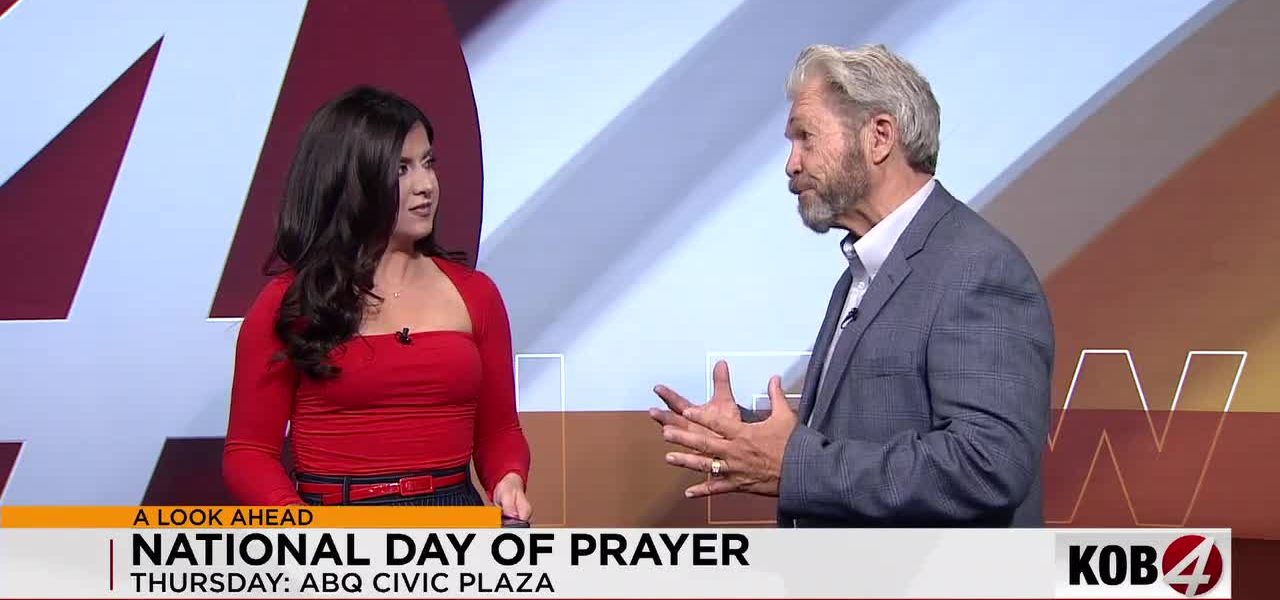
For an hour and a half, between 6 and 7:30 p.m., the plaza—a secular temple of civic bureaucracy and public discourse—became a temporary sanctuary. But this wasn’t just about solemnity; it’s never *just* about that, is it? Family activities commenced at 4 p.m., a calculated prelude featuring a kids’ zone — and a skate competition. Yes, a skate competition. It seems even spiritual endeavors in the 21st century require a certain recreational heft to lure the masses. New Mexico’s ubiquitous weatherman, Steve Stucker, lent his familiar face to the promotional efforts, underscoring the event’s local penetration, or perhaps, its need for broad appeal.
Behind the headlines, this local event epitomizes a larger, often unstated, quest for communal solace. In a nation where a 2020 Pew Research Center study indicated that religiously unaffiliated Americans now constitute roughly 29% of the U.S. adult population, yet self-identified Christians still comprise 63%—a complex tapestry indeed—such overt expressions of interfaith unity carry a particular resonance. They’re not just happenstance; they’re deliberate.
“In an age where our nation often feels fractured, events like this one — hosted right here in our civic heart — aren’t just symbolic; they’re essential scaffolding for social cohesion,” shot back Mayor Tim Keller, a proponent of community engagement, when queried about the event’s significance. “We’re not just praying; we’re actively stitching our community back together, thread by thread, right where everyone can see it.” His administration, like many urban centers, frequently grapples with how to foster unity in diverse, sometimes disparate, populations. Albuquerque’s Civic Plaza, in this context, becomes more than just a space; it’s a statement.
And it’s a statement with global echoes. Imam Jamaluddin Rahman, a prominent voice within Albuquerque’s Muslim community, articulated a similar sentiment, albeit with a wider lens. “Our faith traditions, despite their beautiful diversities, share a profound commonality: the yearning for peace, justice, and the betterment of humanity,” Rahman opined, his voice measured. “When we stand together, Muslim, Christian, Jew, Sikh, — and others, we manifest that shared yearning. It’s a powerful statement of universal compassion, a message our brothers and sisters in Pakistan and across the Muslim world would understand profoundly.” This notion of shared spiritual ground, a common humanity, isn’t unique to American shores. Many Muslim-majority nations, such as Pakistan, contend with their own internal religious and sectarian complexities, where interfaith dialogue, though often fraught, remains a critical, ongoing endeavor for societal stability.
Still, the subtle irony doesn’t escape the seasoned observer. A national movement for prayer, championed by local news personalities — and supplemented by food trucks. It’s a distinctly American blend of the sacred and the spectacularly mundane, a testament to the nation’s enduring, if evolving, relationship with public faith. This isn’t fire-and-brimstone revivalism; it’s more like a curated, family-friendly spiritual potluck. You’ve got to hand it to them for trying.
📄 POLICY WIRE WHITEPAPER PUBLISHED: PAKISTAN'S NATIONAL SECURITY POLICY PRIORITIES
👉 READ BY CLICKING HEREWhat This Means
At its core, Albuquerque’s “all-faiths” National Day of Prayer offers a nuanced snapshot of civic life in a polarized era. Politically, such events allow local leaders to project an image of inclusivity and community stewardship without overtly endorsing any single creed. It’s a delicate dance, balancing the constitutional imperative of separation of church and state with the undeniable reality of a populace that largely identifies as spiritual. The very act of hosting an “all-faiths” event in a public square underscores a civic administration’s tacit acknowledgment that belief systems, however varied, play a consequential role in public morale and social fabric. It’s a low-cost, high-visibility gesture of unity, especially potent in communities wrestling with social challenges. For example, similar efforts in Albuquerque to address police oversight and urban decay often rely on civic participation and community trust, which events like this seek to cultivate.
Economically, the immediate impact is negligible beyond the fleeting revenue generated by food trucks and maybe a few extra dollars spent by attendees in nearby businesses. But the deeper implication lies in social capital. A community that perceives itself as cohesive, supportive, and capable of transcending ideological divides can foster a more stable environment for economic growth and investment. Businesses, both large — and small, often gravitate towards locales demonstrating social harmony and civic engagement. It’s an intangible asset, difficult to quantify on a balance sheet, but undeniably valuable. for many, prayer events symbolize a collective hope, a non-secular plea for better fortunes, whether in personal lives or the broader economy. It’s a communal ritual that, if nothing else, solidifies a sense of shared destiny—a surprisingly potent psychological commodity in uncertain times.
So, while the cynical might see little more than a thinly veiled attempt at public relations, the phenomenon of events like Albuquerque’s prayer day suggests something more profound. It’s a recurring public experiment in finding common ground, even if that ground is merely a patch of civic plaza, and the commonality is a shared, unspoken desire for something bigger than oneself.