
Bronx Baptism: Undrafted Rookie Faces Ace in Baseball’s Unequal Gauntlet
POLICY WIRE — New York, NY — It’s often not the star-studded marquee match-ups that reveal the raw, unvarnished economics of professional sports, but rather the quiet, almost accidental clashes...

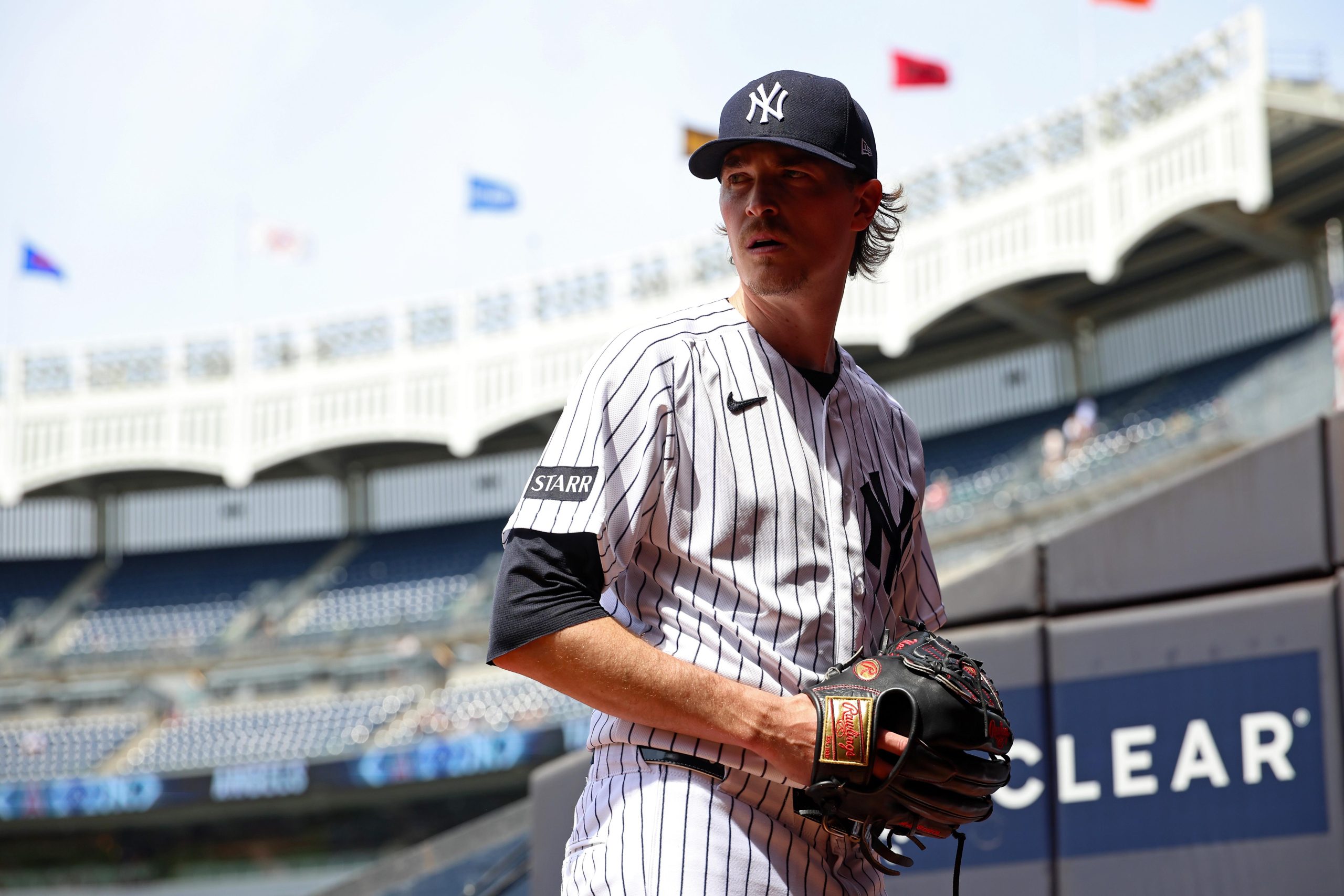
POLICY WIRE — New York, NY — It’s often not the star-studded marquee match-ups that reveal the raw, unvarnished economics of professional sports, but rather the quiet, almost accidental clashes of disparate fates. Such was the case as the New York Yankees prepared to host the Baltimore Orioles, a contest that, on paper, presented a Goliath-and-David narrative writ large across the diamond. Max Fried, the Yankees’ sizable investment and ace, would toe the rubber against Trey Gibson, an undrafted rookie, suddenly thrust into the merciless glare of a major league debut. One a polished product of a multi-million-dollar contract; the other, a stark testament to grit, circumstance, and the brutal lottery of talent development.
The Bronx Bombers, as they’re still rather anachronistically dubbed, have, in fact, been bombing. May 2026, still nascent, has nonetheless continued its customary kindness to the Yankees under Aaron Boone’s tenure. Their offense has been a relentless machine, chewing up Orioles pitching for five runs in each of the first two games of this four-game set. So, for Gibson, stepping onto the mound for the first time in his life at Yankee Stadium wasn’t merely a debut; it was an initiation by fire, a crucible against a lineup averaging just shy of six runs per game over the past fortnight. And, well, he’s an undrafted free agent from Yorktown, Virginia, for Pete’s sake.
Fried, by contrast, operates in a different stratum entirely. He arrived in New York heralded, — and he’s delivered. His last outing saw him carve up the Rangers with six scoreless innings, scattering four hits — a typical Fried performance, in other words. His Yankee tenure boasts a sparkling 2.71 ERA over 242.2 innings, adorned with 226 strikeouts against a mere 85 walks. He’s a known quantity, a proven commodity, the kind of player whose presence alone shifts betting lines and fan expectations. But even an ace isn’t immune to history, nor to the persistent threat of a familiar face. Pete Alonso, now wearing Orioles orange, has batted to a .738 OPS in 42 career at-bats against Fried — a small, yet significant, crack in the ace’s formidable armor.
Behind the headlines, this game wasn’t just about wins and losses; it was a vivid tableau of baseball’s stratified labor market. Gibson’s journey, an undrafted free agent from 2023, is the stuff of Hollywood, yet statistically, it’s a brutal climb. According to MLB data compiled over the last decade, fewer than 1% of undrafted free agents ever reach the major leagues, and even fewer establish sustained careers. His Triple-A numbers — a 4.01 ERA over six starts for Norfolk — were respectable, but a distant galaxy from Fried’s pedigree.
“We don’t take any pitcher lightly, especially one making his debut,” shot back Yankees Manager Aaron Boone when pressed on the perceived mismatch. “He’s here for a reason, — and we’ll approach him with the same meticulous preparation we give every opponent. But make no mistake, our guys are locked in.” It was a diplomatic maneuver, certainly, but one that couldn’t entirely mask the inherent advantage his club enjoyed.
Still, the immense pressure on Gibson underscores a universal truth about aspiration, talent, and opportunity, echoed across global sports. Whether it’s a young man from a small Virginia town stepping onto baseball’s biggest stage, or a promising cricketer from a remote village in Pakistan eyeing a spot on the national team, the stakes are profoundly personal and often socio-economic. The weight of family expectation, the promise of upward mobility, and the sheer desire for recognition coalesce into an almost unbearable burden. For these athletes, their performance isn’t just about the game; it’s about validating years of struggle, sacrifice, and hope.
Marcus Thorne, a veteran sports economics analyst, didn’t mince words. “For a kid like Gibson, this isn’t just a game; it’s a financial inflection point, a chance to prove years of grinding labor weren’t in vain. The odds are long, brutally long, for undrafted talent, — and the mental fortitude required is immense. It’s a gamble by the organization, a desperate hope for the player.” His words, delivered with a detached clinicality, underscored the harsh realities.
So, as the Yankees, confident in their May dominance, sent Austin Wells — replacing Escarra, who went 1-for-4 yesterday — to catch Fried’s potent arsenal, the stage was set. The young Gibson, armed with his signature “death ball” slider, faced a lineup that felt less like an opponent and more like an economic force, a stark reminder that even in the ostensibly meritocratic realm of professional sports, some battles begin with an overwhelming deficit.
What This Means
This particular baseball matchup, far from being a mere sporting event, serves as a potent microcosm of broader economic and labor policy debates. It highlights the vast disparity in athlete compensation and career stability between established stars and unproven prospects. Fried’s multi-year contract represents significant guaranteed capital, a testament to his proven value and a form of economic security. Gibson, as an undrafted free agent, operates on the frayed edges of the labor market, his career a precarious high-wire act where a single performance can dramatically alter his financial trajectory and future prospects. This dichotomy reflects the increasing concentration of wealth and opportunity in elite tiers of highly competitive industries, while those lower down face intense scrutiny and minimal guarantees. the Orioles’ reliance on an undrafted rookie due to injuries to Dean Kremer and Trevor Rogers underscores the inherent vulnerabilities in talent pipelines — a problem not unique to sports, but mirrored in sectors from tech to healthcare, where unexpected gaps can force organizations to gamble on untested, lower-cost alternatives. It’s a dynamic ripe for policy intervention, particularly concerning player development, contract structures, and the long-term sustainability of athletic careers, especially for those who don’t fit the traditional mold.