


Miami’s Humid Crucible: Where Sporting Titans Collide and New Hegemonies Emerge
POLICY WIRE — Miami, United States — The humid, almost suffocating air of Miami, a city perpetually sweating under the weight of its own meticulously crafted spectacle, offered a new kind of...

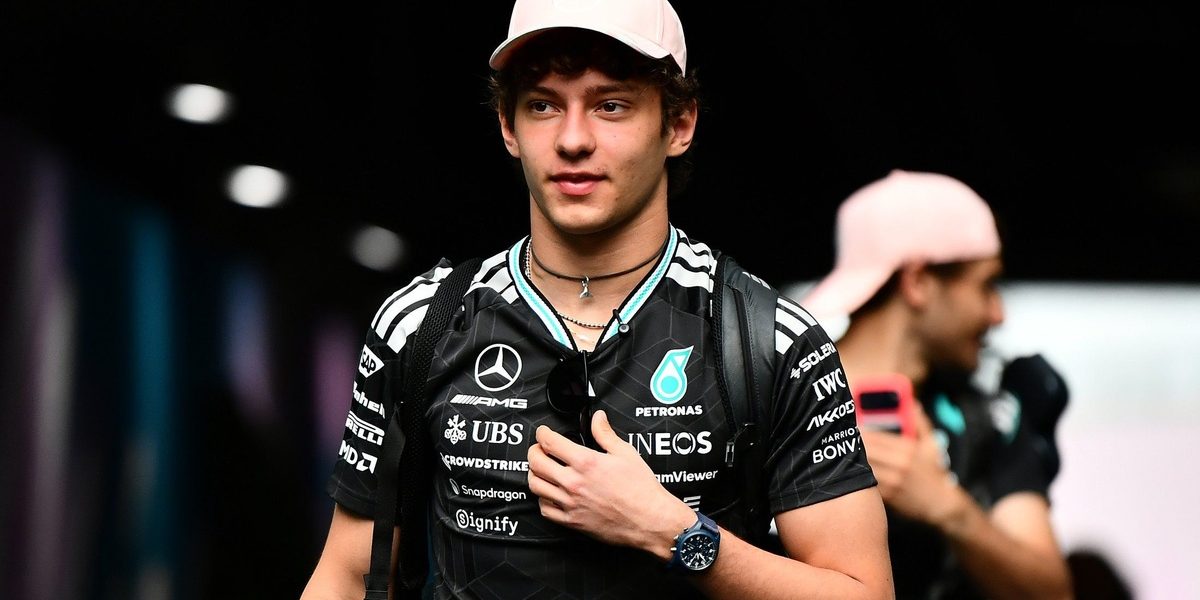
POLICY WIRE — Miami, United States — The humid, almost suffocating air of Miami, a city perpetually sweating under the weight of its own meticulously crafted spectacle, offered a new kind of intensity this past weekend. Amidst the roar of engines — and the shimmering heat haze, a fleeting, yet profoundly symbolic, moment transpired. It wasn’t merely a Formula 1 race — though Kimi Antonelli’s third pole-to-win of the 2026 season was undeniably a triumph — but a convergence: the anointing of a nascent legend by an established icon, played out for a global audience whose allegiances transcend traditional sporting boundaries.
As the 19-year-old Italian driver, Kimi Antonelli, staggered into the Mercedes hospitality unit, utterly depleted, his victory felt less like a conquest and more like survival. “It was tough. So hot. So humid,” he’d later confess to the camera, his voice a ragged whisper. “Oh, it was intense. At some points, I looked at the screen when I was on hard, I saw 20 laps left. I was like, ‘No, I just want this race to be over.’ I was like, ‘Please, please, just be over, please be over quickly.’” And really, who could blame him? The sheer physical — and mental toll of taming a modern F1 machine in such conditions is almost unfathomable.
But then, a ripple of excitement — a different kind of energy — sliced through the exhaustion. Lionel Messi, the diminutive Argentine maestro of the football pitch, a man whose presence alone could stop global traffic, materialized. He was a guest of the Brackley outfit, family in tow, — and he approached the perspiring prodigy. This wasn’t a PR stunt; it was a genuine, almost intimate, exchange. Messi, reportedly not easily impressed by the fleeting adulation of others, offered his congratulations. It’s an endorsement that carries considerable weight, a tacit nod from one generational talent to another, suggesting a baton change is perhaps already underway in the broader sporting firmament.
Antonelli’s performance around the Miami International Autodrome underscored his burgeoning dominance. He not only converted his third pole position into his third consequential win but also extended his championship lead to a remarkable 20 points over teammate George Russell after just four rounds. His nascent career is already tracing a trajectory many older, more seasoned drivers only dream of. “This is just the beginning. The road is still long. We’re working super hard and the team is doing an incredible job,” Antonelli declared post-race, reflecting a maturity that belies his tender years. “Without them, I wouldn’t be here, so thanks to them — and my family. I’m going to enjoy this one then get back to work.”
So, what does this highly public endorsement from a figure of Messi’s caliber mean for a sport already experiencing a meteoric rise? It’s a force multiplier. Mercedes Team Principal Toto Wolff, rarely one to mince words, mused on the wider implications. “When you have the greatest footballer of all time acknowledging your youngest star, it isn’t just good optics; it’s a seismic validation for Kimi and, frankly, for F1’s evolving cultural footprint,” Wolff asserted. “It captures eyeballs from demographics we’re still working to fully penetrate. It’s brand synergy on an unprecedented scale, connecting disparate global fandoms under one roof.”
Still, the spectacle isn’t just for established markets. It resonates profoundly in regions like Pakistan and the broader Muslim world, where both European football and Formula 1 command immense, almost feverish, followings. Many young Pakistanis, for instance, are as fluent in the tactical nuances of F1 racing as they’re in the latest Premier League results. This crossover moment, featuring two globally revered figures, only amplifies the sports’ soft power in a region often portrayed through a narrow political lens. It’s a reminder that global celebrity, whether on the pitch or the tarmac, transcends borders and offers a universal language of aspiration and achievement. And such visibility isn’t lost on nations seeking to project modernity and attract investment, much as Gulf states have done with their multi-billion dollar F1 ventures.
📄 POLICY WIRE WHITEPAPER PUBLISHED: PAKISTAN'S NATIONAL SECURITY POLICY PRIORITIES
👉 READ BY CLICKING HEREThe global audience for Formula 1 continues its upward arc, with the 2023 season alone drawing a colossal 1.59 billion television viewers, according to Statista, marking a 5% increase from the previous year. This escalating viewership underscores the efficacy of F1’s deliberate push into new territories and younger demographics, leveraging social media and curated celebrity encounters like this one.
What This Means
At its core, Messi’s unexpected appearance and congratulatory gesture symbolize the increasingly blurred lines between global sporting hegemonies. It isn’t just about a win; it’s about the construction of a narrative. Antonelli’s rise, validated by Messi, catapults him beyond the racing paddock into the elite pantheon of global sporting icons. This interaction injects a potent dose of cross-sport celebrity into F1, further cementing its status as a premier global entertainment product — one that leverages the pull of established titans to elevate its rising stars.
Economically, such moments are invaluable. For Mercedes, it’s an unparalleled brand endorsement, linking their cutting-edge engineering with the universal appeal of human athletic genius. For F1, it reinforces its burgeoning status, making it more attractive to sponsors and host nations — many of whom are in the Middle East and Asia. These are territories where the projection of a dynamic, modern image via global sports is a pivotal component of national branding and diplomatic outreach. Behind the headlines of a thrilling race, a more intricate game of soft power and economic influence is always playing out. And in Miami, under the unforgiving sun, we witnessed a potent demonstration of its relentless evolution.
The F1 circus now decamps for the Canadian Grand Prix on May 22-24, where Antonelli will seek to further cement his burgeoning legacy, undoubtedly with even more global eyes upon him. It’s a testament to the sport’s global reach, echoing the kind of international influence explored in discussions about the geopolitics of sporting hegemony and the masterclass in soft power displayed by other dominant sporting entities. Such interactions aren’t merely fan service; they’re calculated maneuvers in a world where culture and commerce are inextricably linked.