
The Unseen Hand: Real Madrid’s Youth Gambit and La Liga’s Shifting Power Dynamics
POLICY WIRE — Madrid, Spain — In a tableau of understated urgency, Real Madrid confronts a pivotal La Liga fixture today not with its customary phalanx of global superstars, but with a...

POLICY WIRE — Madrid, Spain — In a tableau of understated urgency, Real Madrid confronts a pivotal La Liga fixture today not with its customary phalanx of global superstars, but with a surprising reliance on nascent talent. The hallowed Santiago Bernabéu, usually brimming with the promise of marquee names, casts a long shadow over Cornellà — a shadow that now seems to stretch across the collective anxieties of the club’s hierarchy. It’s a stark reminder that even footballing behemoths aren’t immune to the capricious whims of fate, or, more accurately, the cruel arithmetic of injuries and transfer sagas.
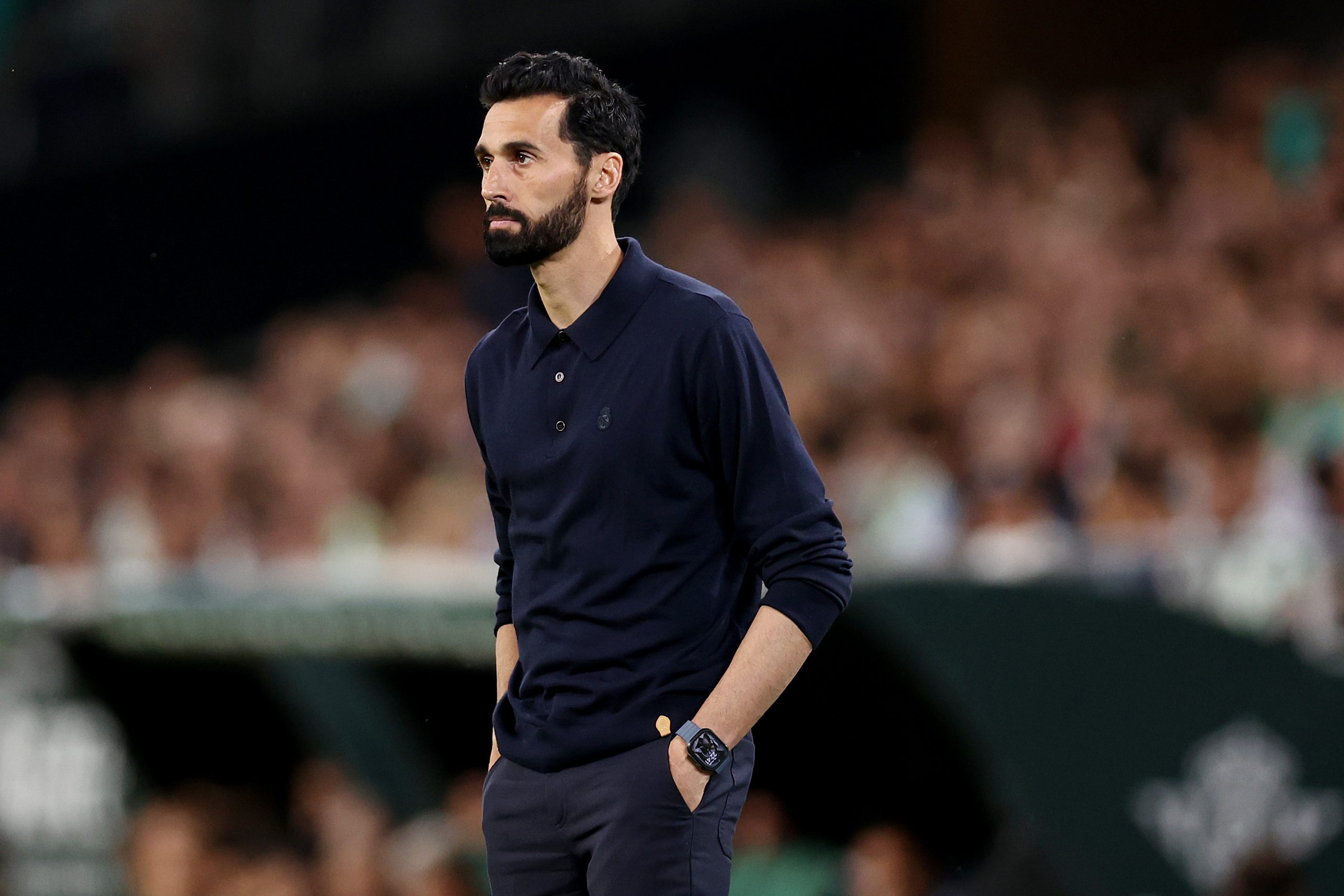
No Kylian Mbappé, the perennial phantom of Real’s transfer dreams; no Thibaut Courtois, the imperious guardian between the posts. But that’s just the tip of the iceberg, isn’t it? The squad list — curated by the seasoned Arbeloa — reads more like a casualty report than a declaration of intent. Carvajal, Militão, Rodrygo, Güler, and Ceballos — whose departure from the Spanish capital now seems all but etched in stone — are conspicuously absent. This isn’t just about missing players; it’s about a strategic vacuum, a high-stakes gamble on the untested, against a backdrop of immense financial pressure and a lurking rival poised for glory.
And so, into the breach step academy stalwarts like Palacios, Pitarch, — and Jiménez. They’re not just filling spots; they’re shouldering the immense burden of Real Madrid’s immediate future, tasked with a singular, unglamorous objective: prevent Barcelona from prematurely uncorking their champagne. The very notion sends shivers down the spine of any Madridista, because an early coronation for their Catalan adversaries — especially before El Clásico — would be an indigestible bitter pill.
“It’s never ideal to face such a crucial fixture with key figures sidelined,” admitted Emilio Butragueño, Real Madrid’s Director of Institutional Relations, his voice carrying a practiced calm that belied the underlying tension. “But this club has always thrived on adversity, and it’s an unparalleled opportunity for our academy to demonstrate its depth and future promise. We trust our young men.” His words, though steeped in traditional club rhetoric, couldn’t quite mask the palpable sense of unease percolating through the institution.
Behind the headlines of missing stars, the global gaze remains fixed. From the bustling tea stalls of Karachi to the digital screens in Jakarta, millions of avid football enthusiasts across the Muslim world will tune in, their loyalties often as deeply ingrained as any local rivalry. This global devotion, after all, translates directly into billions in media rights and brand exposure, forming the bedrock of La Liga’s formidable economic power. These communities don’t just watch; they invest emotionally, purchasing merchandise, discussing tactics, and living vicariously through these contests. And Madrid’s current predicament only heightens the drama, making for a compelling — if anxiety-inducing — narrative.
A recent Deloitte report indicated that in the 2022-23 season, Real Madrid alone generated €831.4 million in revenue, a testament to its global brand equity, but also underscoring the immense financial machinery that demands constant success. Any stumble, any erosion of dominance, has reverberations far beyond the pitch. It’s not merely a game; it’s an economic enterprise of staggering proportions.
“The beauty of La Liga lies in its unpredictability, even when one giant seems to stumble,” offered Guillem Balague, a prominent La Liga analyst, speaking on a popular sports broadcast. “Barcelona’s title celebration might be deferred, but Madrid’s current predicament underscores the fine margins, even for the most dominant institutions. It’s a financial tightrope walk, really, and these tactical gambits are what make even seemingly lopsided fixtures a masterclass in economic strategy.” He wasn’t wrong; the economics of top-tier football are as complex as any geopolitical negotiation.
What This Means
At its core, this situation illuminates the fragile equilibrium within modern football’s economic ecosystem. For Real Madrid, a club built on a philosophy of acquiring the best talent, being forced to lean so heavily on its youth academy — while commendable — signals a momentary divergence from its usual modus operandi. It could be seen as a tactical necessity, yes, but also a strategic risk. Should the academy players falter, the immediate consequence is a rival’s early triumph. The longer-term implications, however, are far more consequential: potential impacts on future transfer budgets, sponsorship deals (who wants to back a struggling titan?), and perhaps most crucially, the club’s perennial pursuit of domestic and European dominance.
Still, this unexpected youth movement could also be a shrewd investment in the club’s future — a proving ground for the next generation of superstars, potentially saving hundreds of millions in future transfer fees. For La Liga itself, the drama adds layers of intrigue, retaining global viewership even as one team pulls away. It reinforces the narrative that the league is competitive, even when it isn’t, and that every game has an underlying economic pulse. The spectacle, after all, is the product. And sometimes, the most compelling drama comes not from the presence of titans, but from their conspicuous absence.
So, as the whistle blows in Cornellà, it won’t just be three points on the line. It’ll be a referendum on Real Madrid’s strategic depth, a testament to La Liga’s commercial resilience, and a quiet moment of truth for a handful of young men suddenly thrust into the unforgiving glare of the global spotlight.