


Beyond the Scorecard: La Liga’s ‘Meaningless’ Encounters — A Masterclass in Economic Strategy
POLICY WIRE — Barcelona, Spain — In the high-stakes theater of professional football, where every pass, tackle, and goal often dictates millions in revenue and shifting league fortunes, an upcoming...

POLICY WIRE — Barcelona, Spain — In the high-stakes theater of professional football, where every pass, tackle, and goal often dictates millions in revenue and shifting league fortunes, an upcoming La Liga encounter between Real Madrid and Espanyol arrives draped in the rather disingenuous cloak of insignificance. Touted by some as merely a curtain-raiser — a tactical warm-up before Real Madrid’s titanic clash with Barcelona, El Clásico — this match isn’t just about three points; it’s an intricate ballet of economic strategy, player valuation, and the ruthless calculus of modern sports enterprise.
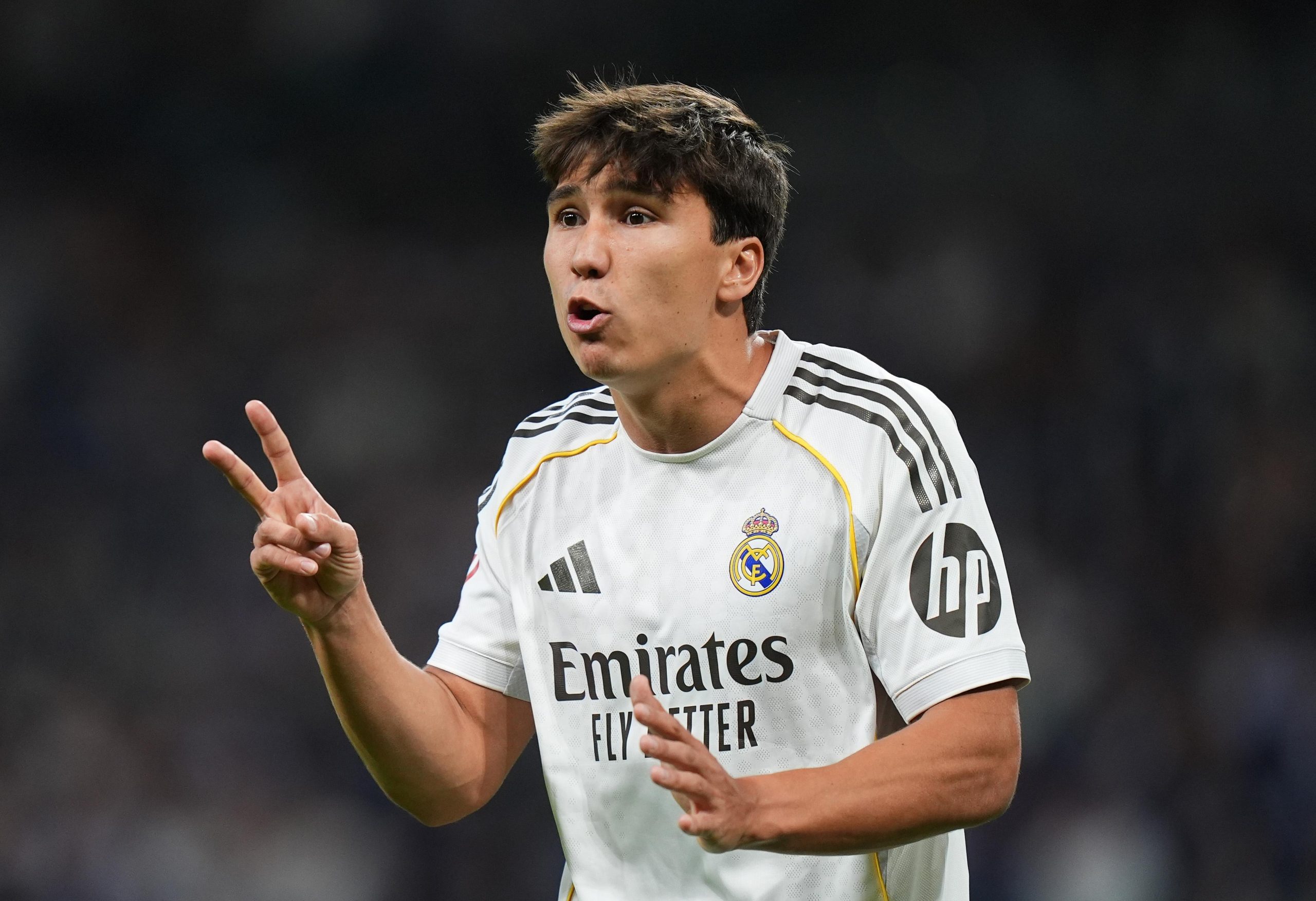
And what’s truly at play here? It’s far more than a simple ninety minutes of play. For Real Madrid, it’s a strategic deployment, a sophisticated squad rotation designed to preserve their marquee assets and temper any lurking injuries. You see, the Spanish behemoth can comfortably afford to experiment, to deploy a cadre of reserves—young talents like Gonzalo García—tasked with proving their mettle under the glare of a global audience. This isn’t charity; it’s an investment, a live audition for future roles or, more pragmatically, for enhanced transfer market value.
But for Espanyol, a club perpetually navigating the challenging currents of Spanish football, this fixture assumes an entirely different, more consequential dimension. It’s an opportunity, a rare chance to lock horns with a legendary opponent and potentially etch a statement result onto the season’s ledger. It’s their moment, perhaps, to disrupt the established hierarchy, even if temporarily. “It’s an audition, not just a match,” opined Espanyol’s Sporting Director, Raúl de Tomás, to Policy Wire, his voice tinged with a blend of defiance and pragmatism. “Every player on that pitch understands the stakes for his career trajectory, — and for our club’s visibility. We don’t have the luxury of ‘meaningless’ games.”
Still, the fixture, set for May 3, 2026, at RCDE Stadium, holds a peculiar fascination for millions beyond the Iberian Peninsula. Its broadcast at 21:00 CET (03:00 PM EST) taps into time zones stretching across the globe, reaching fervent fan bases from Latin America to Southeast Asia. Indeed, the global footprint of La Liga is colossal. According to a 2022 Deloitte report, Europe’s ‘big five’ leagues collectively generated over €17.2 billion in revenue, a testament to their pervasive global appeal. And much of that revenue is predicated on consistent, high-profile fixtures, even those perceived as less critical on paper.
Behind the headlines of anticipated lineups—Espanyol’s Dmitrovic, Calero, and Expósito squaring off against Madrid’s Lunin, Rüdiger, and Bellingham (among others)—lies a deeper narrative. It’s about the sheer economic muscle of a league that sells its product to nearly every corner of the planet. Take Pakistan, for example. Millions of young fans, often glued to screens in the dead of night, follow these matches with an almost religious zeal. The spectacle of European football, while geographically distant, feels intimately connected to their aspirations, their dreams of footballing glory. It’s a soft power projection, certainly, but also a robust economic engine fueled by global consumption. And these ‘meaningless’ games? They’re simply cogs in that elaborate, lucrative machinery.
So, Real Madrid will likely field a slightly altered squad, perhaps seeing goalkeeper Lunin instead of Courtois, or Gonzalo García alongside Vinicius. But don’t mistake tactical rotation for apathy. “Our strategy prioritizes the marathon, not just a single sprint,” shot back Real Madrid’s Head of Communications, Marco Delgado, when pressed on the perception of a relaxed approach. “We’re cultivating tomorrow’s legends even as we contend for today’s honors. This match is pivotal for player development and maintaining competitive sharpness across the entire squad.” It’s a delicate balance, managing player fatigue while simultaneously nurturing future stars for a transfer market that consistently demands fresh, high-potential talent.
And what of the commercial partners? Broadcasters like DAZN La Liga in Spain — and ESPN Deportes in the USA have invested massively in these rights. For them, every game, regardless of its immediate impact on the league table, is a valuable piece of content. It drives subscriptions, generates advertising revenue, and reinforces the league’s dominant position in the global sports entertainment landscape. (One could argue it’s the ultimate ‘content is king’ scenario.) From a political economy perspective, this fixture exemplifies how even routine sporting events are meticulously managed assets within a transnational industry, each player a potential commodity, each minute of play a unit of exchange.
What This Means
At its core, this seemingly unremarkable La Liga fixture underscores the relentless commercialization of modern football. It demonstrates how elite clubs meticulously manage their human capital—their players—as both athletic performers and financial assets. For clubs like Real Madrid, it’s about strategic risk management and future-proofing their squad, leveraging every game to develop talent and maintain their global transfer market influence. For Espanyol, it’s a vital shop window, a chance to attract investment or showcase players who might one day command significant fees.
The broader implications stretch to the geopolitical arena too. The avid consumption of European football in regions like South Asia and the Muslim world isn’t just about entertainment; it’s a cultural phenomenon that binds diverse populations to European brands and narratives. These games, often perceived as trivial, are integral to the league’s economic model, ensuring revenue streams that underpin massive player salaries and infrastructure investments. It’s a stark reminder that in the grand scheme of twenty-first-century sports, there are virtually no ‘meaningless’ games—only varying degrees of strategic importance, each meticulously calibrated for maximum impact, both on and off the pitch. (It’s a marvel, really, how everything connects.)