


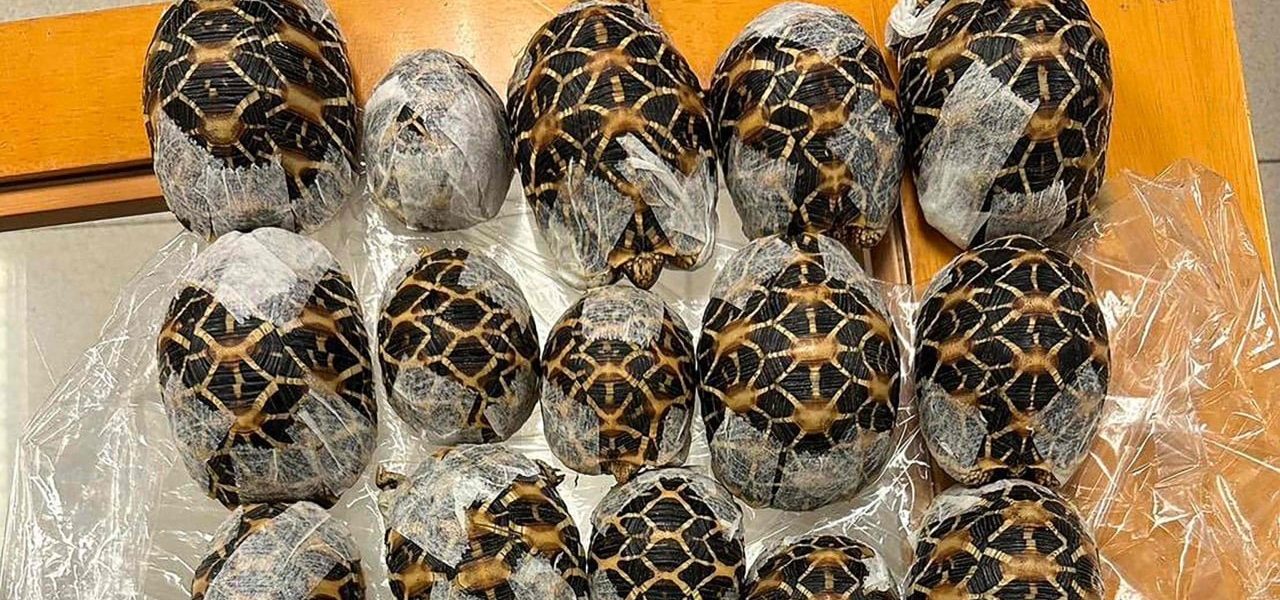
Digital Craze, Zoological Calamity: Thailand’s Airport Becomes Epicenter for South Asia’s Illicit Exotic Pet Trade
POLICY WIRE — Bangkok, Thailand — A silent, often agonizing journey begins not in the wild, but in the sterile confines of an airport cargo hold, or worse, taped to a human body. This isn’t...

POLICY WIRE — Bangkok, Thailand — A silent, often agonizing journey begins not in the wild, but in the sterile confines of an airport cargo hold, or worse, taped to a human body. This isn’t about drugs or diamonds; it’s about the relentless commodification of life itself—exotic animals, bound for the burgeoning, often uninformed, markets of India and beyond. And it’s Thailand’s premier aviation hub, Suvarnabhumi Airport, that finds itself, rather inconveniently, at the nexus of this cruel commerce.
It’s not the most obvious entry point for an international crime syndicate, is it? Yet, beneath the veneer of bustling tourism and legitimate trade, an insidious network thrives, exploiting both lax regulations and the unyielding allure of the ‘cute’ on social media. One recent, almost farcical, instance saw a 19-year-old passenger — bound for Taipei, mind you — attempting to bypass security with a menagerie of live creatures. But behind such amateurish attempts lies a far more sophisticated, global operation.
In India, the demand curve for these creatures has soared, creating a lucrative, illicit economy. You’ll find lemurs, iguanas, even marmosets paraded across Instagram reels and Facebook feeds, their bewildered eyes staring out from cramped urban apartments. Influencers, sometimes inadvertently, propagate the notion that these wild species make charming, manageable pets, completely sidestepping the colossal ethical and ecological costs. It’s a digital-age phenomenon, isn’t it? Consumerism, unbridled, now extends to creatures torn from their natural habitats. Dr. Anjali Sharma, Director General of India’s Wildlife Crime Control Bureau, doesn’t mince words: “The insatiable demand, fueled by digital platforms and a disturbing desire for novelty, presents an existential quandary for our wildlife. We’re not just fighting smugglers; we’re contending with a cultural shift.”
And Thailand, geographically positioned as a vital Southeast Asian conduit, has become a reluctant, though persistently utilized, waypoint. Its extensive air links, coupled with historically porous land borders and, occasionally, less-than-stringent enforcement, make it ideal for transshipment. Traffickers exploit these arteries, moving species from Africa, South America, and other parts of Asia, through Bangkok, and then onward to eager buyers across South Asia. Colonel Chavalit Thanaporn, Head of Anti-Smuggling Operations at Suvarnabhumi Airport Customs, offers a stark assessment. “Bangkok’s Suvarnabhumi, a regional aviation nexus, becomes an unwitting artery for this cruel commerce. It’s a hydra-headed problem, demanding concerted international pressure and a willingness to confront entrenched networks.”
Behind the headlines of individual arrests, a shadowy, well-oiled machinery operates. These aren’t isolated incidents; they’re symptomatic of organized crime syndicates that mirror drug cartels in their ruthlessness and efficiency. The UN Environment Programme (UNEP) and Interpol estimate the illegal wildlife trade to be worth between $7 billion and $23 billion annually globally, making it one of the largest black markets after drugs, arms, and human trafficking. That’s a staggering figure, indicative of the immense profits at stake.
📄 POLICY WIRE WHITEPAPER PUBLISHED: PAKISTAN'S NATIONAL SECURITY POLICY PRIORITIES
👉 READ BY CLICKING HEREBut it’s not just India that’s contributing to this ecological haemorrhage. Other affluent pockets across South Asia, including elements within Pakistan and the Gulf states, also participate in this grotesque market. Pakistan, with its shared borders and its own distinct biodiversity, isn’t entirely immune to these trafficking currents, occasionally serving as both a transit point and, for certain regional species, a source or destination. It’s a regional problem, requiring a regional, multilateral solution, something that often proves elusive given the complex geopolitical landscape.
What This Means
At its core, this illicit trade underscores a profound failure of governance — and international cooperation. Politically, the continuous flow of smuggled wildlife strains bilateral relations and diverts critical resources from legitimate law enforcement efforts. Nations like Thailand and India, despite stated commitments, struggle to dismantle networks that are often transnational, adaptable, and deeply corrupt. Economically, this isn’t merely about lost revenue from legitimate trade; it’s about the financial bolstering of criminal organizations, whose profits often fund other illicit activities, from drug running to even terrorism. And for nations struggling with development, the destruction of biodiversity—a natural capital—represents a fragile economics that’s often overlooked in the immediate rush for profit. it creates a humanitarian crisis, as endangered species face decimation, stripping away ecosystems vital for planetary health. The looming market meltdown for these species, driven by extinction, isn’t just an ecological tragedy; it’s an economic one, too.
Still, the consumer—often oblivious to the cruel realities of capture, transport, and the inevitable demise of these wild animals in captivity—remains the ultimate driver. Until that demand dwindles, until public consciousness catches up with ecological reality, the silent suffering in airport baggage will, unfortunately, continue its macabre journey across the skies of South Asia.