


Rohanpur Rail Disaster: A Nation’s Infrastructure Crumbles Under the Weight of Neglect
POLICY WIRE — Rohanpur, Pakistan — Another dawn, another tragedy scarifying Pakistan’s aged railway network. But beneath the mangled steel and somber casualty counts, a more insidious narrative...

POLICY WIRE — Rohanpur, Pakistan — Another dawn, another tragedy scarifying Pakistan’s aged railway network. But beneath the mangled steel and somber casualty counts, a more insidious narrative unfolds—one of neglected infrastructure, bureaucratic inertia, and the brutal cost of chronic underinvestment. The morning’s grim tableau at Rohanpur Station—four dead, scores maimed—wasn’t merely an accident; it’s a testament to a system teetering on obsolescence, a predictable climax to years of fiscal short-sightedness.
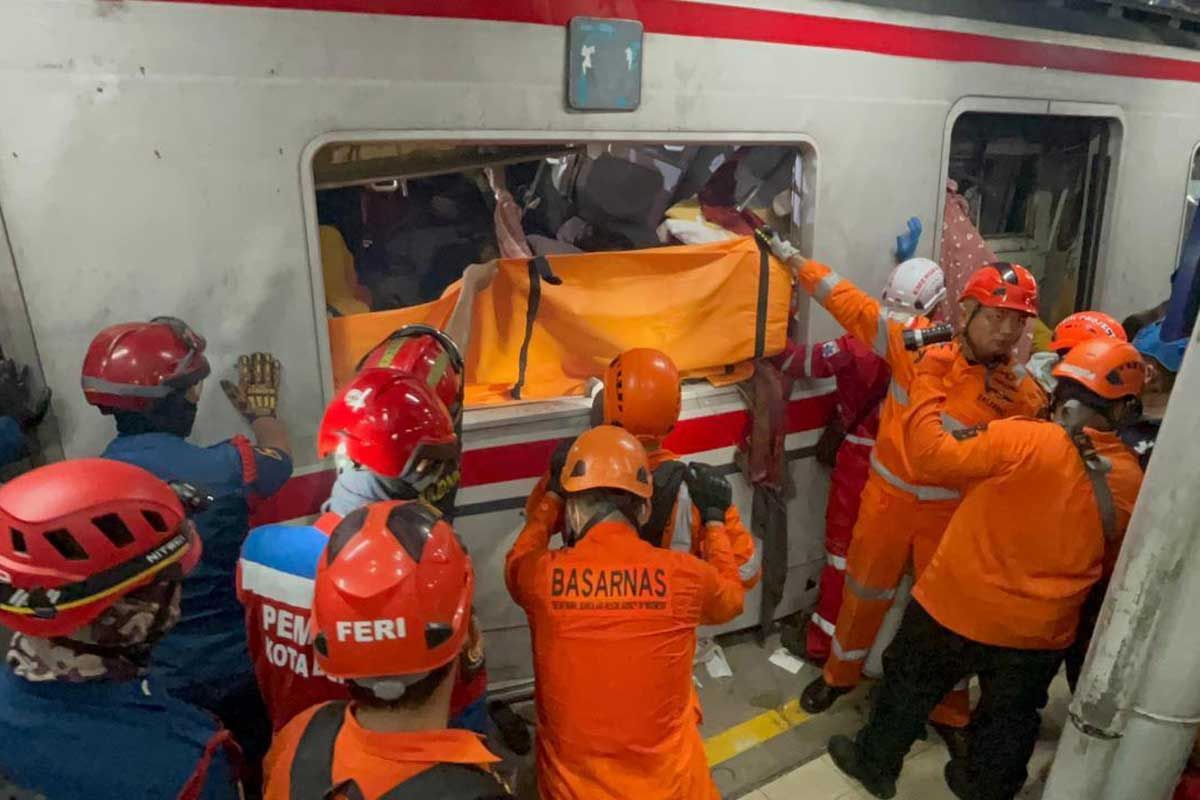
Two passenger trains, their metal husks now a grotesque tangle, collided with devastating force near Platform 3. Rescuers, working with the desperate speed born of repetition, extricated bodies and the injured from the mangled carriages. Hospitals across the provincial capital were soon inundated, their emergency rooms overflowing with the bloodied and bewildered. Official tallies placed the immediate fatalities at four, with over fifty individuals requiring urgent medical attention—some, we’re told, clinging precariously to life.
Transport Minister Jamil Akbar, his voice strained during a hastily convened press conference (a familiar ritual in this part of the world), vowed a ‘thorough, transparent inquiry.’ ‘We’re committed to modernizing our network,’ he insisted, eyes darting, ‘and those responsible for this appalling lapse won’t escape justice.’ It’s a refrain that’s become almost liturgical after every major incident, offering little solace to grieving families or those who routinely brave the rickety carriages.
Still, Dr. Aisha Khan, a veteran rail safety analyst at the Lahore School of Economics, shot back with a weary pragmatism. ‘It’s not about individuals; it’s about systemic rot,’ she declared, her frustration palpable. ‘We’ve been ringing alarm bells for decades—underfunding, a lack of skilled personnel, a political class more interested in ribbon-cutting than actual maintenance. What did they expect?’ Her observations cut through the platitudes, landing squarely on the inconvenient truth of chronic neglect.
Behind the headlines, Pakistan’s railway network, a relic of the British Raj, groans under immense pressure. It’s meant to be the backbone of national transport, ferrying millions cheaply across vast distances. Yet, its operational capabilities have steadily eroded. A recent government audit, circulated quietly within relevant ministries, reportedly highlighted that over 65% of the national rail network’s signaling equipment predates 1980. This isn’t just an inconvenience; it’s a direct conduit for disaster, contributing to dozens of derailments and collisions annually.
And it’s not just the hardware. Decades of political patronage, coupled with meagre budgets, have starved the institution of critical investment and skilled human capital. Engineers and maintenance crews, often working with outdated tools and scant resources, perform daily heroics simply to keep trains moving. But even heroism has its limits when confronted with institutional decay.
The tragedy also shines an uncomfortable spotlight on the broader governance challenges facing the country. While successive governments grapple with geopolitical pressures (like managing Pakistan’s Afghan refugee policy) and economic crises, fundamental domestic services often fall by the wayside. It’s a difficult balancing act, but one that routinely costs lives.
So, as the debris is cleared — and the injured recuperate, the underlying questions remain. Will this incident finally galvanize meaningful reform, or will it simply fade into the annals of ‘unfortunate occurrences,’ another grim statistic in a nation accustomed to them? The track ahead, it seems, is still riddled with perils.
What This Means
The Rohanpur collision, far from being an isolated incident, encapsulates a profound systemic failure with far-reaching implications for Pakistan. Economically, repeated infrastructure breakdowns erode investor confidence, hindering domestic and foreign capital infusion vital for growth. Why inject funds into a nation whose basic logistical arteries are prone to collapse? It’s a non-starter. Politically, each such catastrophe further chips away at public trust in government efficacy. Citizens, already grappling with inflation and instability, view these incidents as tangible proof of elite detachment—a dangerous sentiment in a country perpetually navigating delicate power balances. It’s not just about four lives lost; it’s about the gradual erosion of the social contract. For the wider Muslim world, often scrutinised for its governance standards, such events become fodder for broader narratives about development challenges and the often-thorny path to modernizing critical infrastructure amidst competing priorities. Without significant, sustained investment and a genuine commitment to accountability, these ‘accidents’ will persist, not as random acts of fate, but as stark reflections of policy choices unmade.