

Germany’s ‘Traffic Light’ Flashes Amber: Coalition’s Durability Under Harsh Scrutiny
POLICY WIRE — Berlin, Germany — The air in Berlin’s chancellery doesn’t just hum with policy debates; it crackles with an unmistakable tremor of fragility. Germany’s ‘traffic...

POLICY WIRE — Berlin, Germany — The air in Berlin’s chancellery doesn’t just hum with policy debates; it crackles with an unmistakable tremor of fragility. Germany’s ‘traffic light’ coalition — a confluence of Social Democrats (SPD), Greens, and Free Democrats (FDP) — once hailed as a vibrant symbol of progressive governance, now flickers precariously, threatening to stall long before its scheduled destination. It’s not merely political punditry that suggests this; the very populace seems to be holding its breath, anticipating a collapse.
Indeed, beneath the veneer of parliamentary procedure, a pervasive sense of instability has taken root. It’s a feeling articulated not in hushed whispers, but in the stark numbers emerging from public sentiment. A recent poll conducted by the respected Allensbach Institute indicates that a staggering 68% of Germans doubt the current coalition will complete its full term, a sharp increase from 55% just six months prior. This isn’t just about a slight dip in popularity; it’s a profound erosion of confidence in the very scaffolding of government, particularly unsettling for a nation often synonymous with political steadfastness.
But why such a dismal prognosis for a government still midway through its mandate? At its core, the coalition’s internecine squabbles over budgets, climate policy, and social spending have become less a feature of healthy democratic discourse and more a public spectacle of discord. You’ve got the Greens pushing for aggressive environmental targets, often clashing with the FDP’s unwavering commitment to fiscal conservatism. And the SPD, as the senior partner, frequently finds itself in the unenviable position of attempting to broker peace while also trying to steer a coherent national agenda. It’s like watching three musicians trying to play different symphonies on the same stage — the result is seldom harmonious.
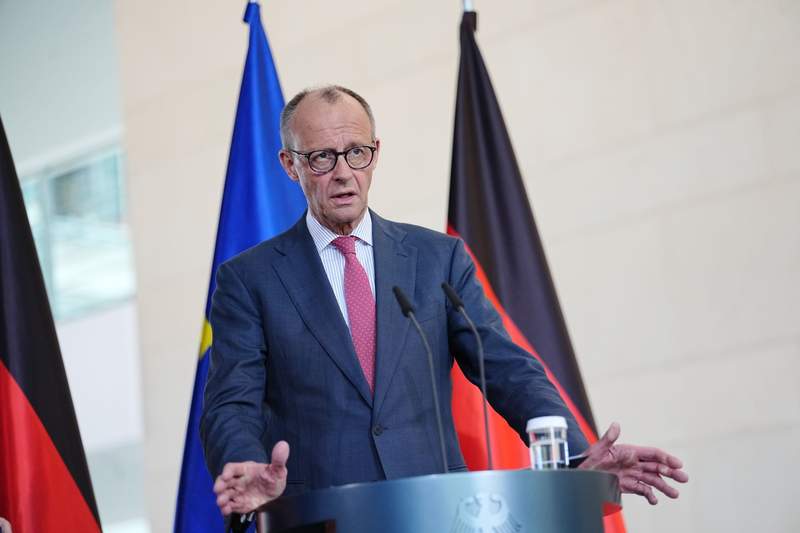
Still, Chancellor Olaf Scholz of the SPD maintains an outward facade of calm resolve. “Challenges are inherent to democratic governance, but our commitment to a stable, progressive future for Germany remains resolute,” Scholz shot back during a recent press conference, his voice even, though perhaps a touch strained. “We’re getting the job done, brick by brick.” But observers note that the bricks often seem to be laid by different masons with conflicting blueprints, resulting in a rather wobbly edifice.
The economic headwinds don’t help, either. Germany, Europe’s economic powerhouse, has been grappling with inflation, energy crises exacerbated by geopolitical events, and a sluggish growth forecast. Christian Lindner, the FDP Finance Minister, has been particularly vocal about the need for fiscal prudence, often perceived as a direct counter to Green and SPD spending proposals. “Fiscal discipline isn’t a suggestion; it’s the bedrock of our future prosperity,” Lindner declared at an industry event last week, his words carrying a pointed edge. “One can’t simply spend their way out of every political disagreement, especially when global headwinds demand prudence.” It’s a perpetual tug-of-war, and the rope, it seems, is fraying.
Such internal wrangling, while distinctly German, inevitably casts a pall over Berlin’s capacity for sustained engagement on critical global dossiers — from the intricate geopolitics of the Middle East to fostering economic stability in burgeoning markets like Pakistan, where German investment and diplomatic heft are consequential. A perceived lack of steady leadership at home can translate into hesitancy abroad, impacting everything from trade agreements to humanitarian aid. Just as a nation’s internal identity can be tested by enduring schisms, as seen in Pakistan Cricket’s Enduring Schism, so too can its international standing be undermined by domestic political paralysis.
What This Means
The implications of this widespread skepticism regarding the coalition’s longevity are manifold and deeply consequential. Politically, a premature collapse would throw Germany into an electoral maelstrom, likely resulting in a more fragmented Bundestag and potentially strengthening populist and far-right parties like the AfD. It’s a scenario that wouldn’t only destabilize Germany but also send shivers across the European Union, which relies heavily on Berlin’s steady hand, particularly in navigating complex issues like the war in Ukraine or burgeoning economic crises. For Brussels, a politically distracted or paralyzed Berlin is a significant liability, impairing the EU’s ability to act decisively on the world stage.
Economically, prolonged uncertainty could deter much-needed investment, both domestic — and foreign. Businesses thrive on predictability, — and the constant bickering within the ruling coalition breeds anything but. Decisions on critical infrastructure, energy transition projects, and social reforms could either stall or be implemented with less conviction, ultimately impacting Germany’s competitiveness and its capacity to fund essential services. the inability of such a prominent European player to maintain internal cohesion could inadvertently embolden revisionist powers and create vacuums in international diplomacy, areas where Germany’s voice has historically been a significant, albeit sometimes reluctant, one. It’s a precarious balancing act, and for now, the tightrope looks exceptionally thin.