

Pakistan Cricket’s Enduring Schism: A Bellwether for National Identity?
POLICY WIRE — Lahore, Pakistan — In a nation where cricket isn’t just a sport but a fervent national religion, its demigods—both past and present—are never far from the public square. And so,...

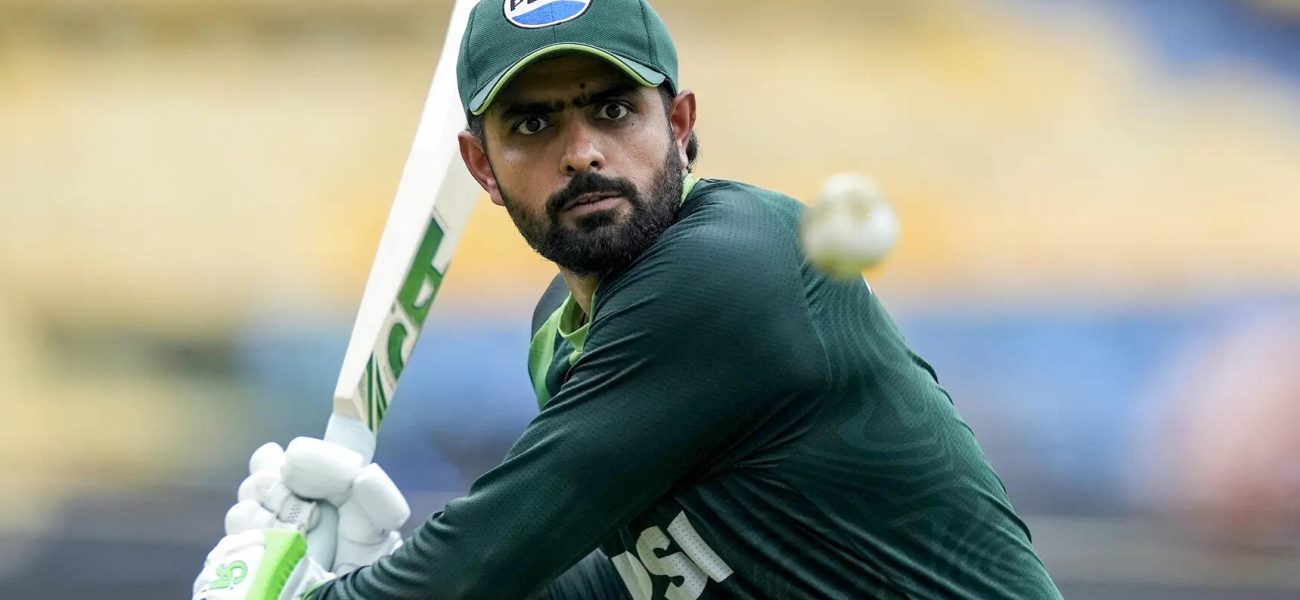
POLICY WIRE — Lahore, Pakistan — In a nation where cricket isn’t just a sport but a fervent national religion, its demigods—both past and present—are never far from the public square. And so, the familiar, often rancorous, symphony of discord continues to echo across Pakistan’s sporting landscape. This time, however, the current captain, Babar Azam, a man known more for his silken cover drives than fiery pronouncements, has opted to conduct a rather blunt orchestra of his own, admonishing the perpetually feuding factions within the country’s cricketing elite for their incessant internecine warfare.
It’s a spectacle as old as Pakistan’s independence itself: the old guard, venerated for their past glories, perpetually at odds with the current crop, who are simultaneously expected to revere their predecessors and exceed their often-mythologized achievements. This latest skirmish, sparked by a disappointing ICC Men’s T20 World Cup 2026 campaign that saw Pakistan falter before the semi-finals, has escalated beyond mere commentary into a deeply personal, public brawl—a characteristic malaise of subcontinental sports fandom that frequently spills over into broader cultural politics.
The immediate flashpoint arrived after Pakistan’s Colombo defeat to arch-rivals India. Former luminaries—Shahid Afridi and Mohammad Yousuf, their critiques always carrying the weight of past heroics—publicly demanded the ouster of all-rounder Shadab Khan. Shadab, clearly irked, shot back, questioning their legitimacy by highlighting their own failure to defeat India in a World Cup during their playing careers. A raw nerve, undoubtedly. But a response that, for many, underscored a growing audacity among younger players to challenge the established narrative.
Two months hence, amid the high-octane spectacle of the Pakistan Super League (PSL) 2026, Babar Azam, captaining Peshawar Zalmi, finally weighed in. His words, delivered with a rare directness on Zalmi TV, didn’t just defend Shadab but offered a scathing indictment of the entire culture of public recrimination. “When they speak about things, it’s right, but if the current player has said something, it’s not right,” Babar observed, a subtle jab at the perceived double standard. “Anyway, it’s a different ball game. Shadab said something in the heat of the moment. Everyone has their own way of speaking.” It’s a delicate dance, isn’t it, navigating respect whilst preserving self-worth?
The talismanic batter didn’t mince words about the repercussions of such imprudent exchanges. He posited that these public contretemps poison the team environment—a crucial component for success in any high-stakes athletic endeavor. “But in the end, you are just fighting among yourselves,” Babar articulated with palpable frustration. “There should be an effort to support the Pakistan team. Yes, we didn’t do well in the T20 World Cup. We know we didn’t perform well. But yes, I accept that. But these are the times of social media, you can’t stop anyone.” His lament encapsulates the modern athlete’s unenviable position: constantly under a magnifying glass, every utterance amplified, every misstep dissected.
The friction isn’t new. Shadab had previously reignited the flame by referencing Pakistan’s triumphant 2021 T20 World Cup win over India—a rare victory that momentarily silenced the critics—during a match against Namibia, drawing predictable ire from the old guard. Babar acknowledged the invaluable experience of the “90s cricketers” but implored a recalibration of their approach. “There’s no comparison. If you talk about the 90s cricketers, they’re very experienced. They’ve played more cricket. If they think we’re making mistakes, then we must be. But sometimes, there are personal attacks,” he explained. “When that happens, a player thinks about answering back. You can say anything you want to when it comes to cricket. But players also have self-respect. When you don’t respect them, you also will get the same.”
📄 POLICY WIRE WHITEPAPER PUBLISHED: PAKISTAN'S NATIONAL SECURITY POLICY PRIORITIES
👉 READ BY CLICKING HEREThis perpetual friction, however, doesn’t seem to have dimmed Babar’s personal brilliance. Indeed, amid this storm of unrelenting critique and counter-critique, he’s been in sensational form, leading the PSL 2026 run charts with a commanding 588 runs in 10 matches at an average of 84 and a strike rate of 146.27, according to official tournament statistics. His Peshawar Zalmi side now prepares to clash with the Hyderabad Kingsmen in the final on May 3. Perhaps his bat, more eloquently than any words, underscores the resilience required to thrive under such intense scrutiny.
But what does this enduring saga truly signify beyond the boundary ropes? Wasim Akram, the iconic “Sultan of Swing” and a veteran of the 90s era, once reflected on the pressures: “In Pakistan, cricket is life, and the expectations are crushing. Every loss feels like a national catastrophe, — and every player becomes a symbol. It’s hard to separate the game from the country’s aspirations.” This sentiment, voiced years ago, remains acutely relevant, highlighting the fragile economics of elite athletic talent in a nation so deeply invested in its sporting heroes.
What This Means
At its core, this ongoing spat reflects more than just a clash of cricketing egos; it’s a microcosm of broader generational and societal tensions within Pakistan. The “old guard” often represents a traditionalist viewpoint, valuing hierarchy, deference, and an unwavering loyalty to past methodologies. The current players, however, embodying a more globally connected, social-media-savvy generation, are less inclined to suffer perceived slights in silence. This isn’t unique to cricket; similar dynamics play out in politics, business, and even family structures across South Asia. The public nature of these disputes—amplified by relentless media and social networks—undermines institutional stability and national morale, especially when the team’s performance directly correlates with the collective mood of a nation. It begs the consequential question: can a team truly function optimally when its internal discourse is characterized by such open hostility? Policy makers, not just sports administrators, might observe this phenomenon as a bellwether for wider societal shifts. this constant infighting, by diverting attention and energy, inadvertently damages the Pakistan Cricket Board’s brand and its ability to attract top-tier talent and investment, a critical factor for any developing nation aiming for global sporting dominance. It’s a stark reminder that sporting success, particularly in passionate nations like Pakistan, is inextricably linked to the broader cultural politics of sport.