


Desert Inferno: Rio Rancho Blaze Exposes Arid Reality of Southwest Infrastructure
POLICY WIRE — RIO RANCHO, N.M. — In the sprawling, high-desert expanse of Sandoval County, where the sun beats down with an almost biblical relentlessness, a residential inferno this past weekend...

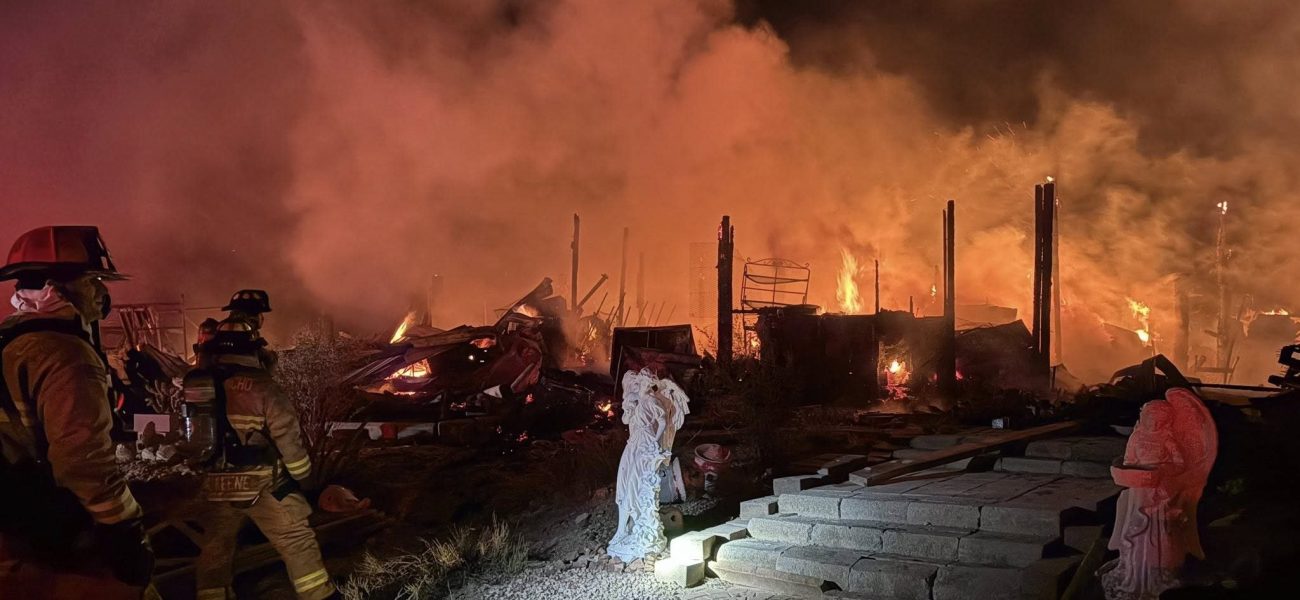
POLICY WIRE — RIO RANCHO, N.M. — In the sprawling, high-desert expanse of Sandoval County, where the sun beats down with an almost biblical relentlessness, a residential inferno this past weekend starkly illuminated a perpetually simmering crisis: water. It wasn’t the blaze itself that captivated policy wonks and urban planners, but the stark, unvarnished fact that firefighters battled the inferno with a critically diminished supply of the most elemental resource. They weren’t just fighting flames; they were wrestling with the very limitations of a rapidly growing region.
The pre-dawn conflagration, reported around 3:55 a.m. on a brisk Saturday in an automatic aid district, found a home already fully engulfed. Rio Rancho Fire and Rescue (RRFR) crews arrived to a scene where conventional offensive tactics were instantly rendered moot. So, they did what any seasoned unit would do under duress: they pivoted to a defensive posture, shielding adjacent properties from the hungry spread, all while meticulously rationing every precious drop. It’s a testament to their grit, perhaps, but also a stark indictment of the systemic vulnerabilities at play.
“We’re always planning for the worst, but when you’re fighting a fully engulfed structure with a trickle instead of a torrent, it forces you to make tough calls,” observed Rio Rancho Fire Chief Paul Bearer, his voice gravelly with experience. “It’s a sobering reality for any department, anywhere, and it certainly keeps you awake at night when you’re responsible for public safety in a place like New Mexico.” His crews, he noted, performed admirably, but the dice were loaded from the start.
The cavalry, in the form of Sandoval County Fire Rescue, eventually arrived, bringing desperately needed additional water. Still, the incident serves as a potent reminder: even in a nation boasting some of the most advanced infrastructure globally, basic services can crumble under the weight of environmental realities and unchecked expansion. New Mexico, for context, consistently ranks among the driest states in the U.S., with its northern half receiving an average of just 10-14 inches of precipitation annually, a figure that’s been steadily declining over the last two decades, according to the National Oceanic and Atmospheric Administration (NOAA).
Behind the headlines of a successfully contained fire and a dog that was, thankfully, later found, lies the gnawing question: how many more such near-misses will it take for local and state authorities to confront the profound implications of resource scarcity head-on? It’s not just a Rio Rancho problem; it’s a regional conundrum, stretching from Albuquerque’s burgeoning suburbs to the parched agricultural lands of Arizona and California. And it’s not unique to the American Southwest either; we’ve seen similar, often more dire, scenarios unfold in rapidly expanding urban centers across the globe.
Take, for instance, the peri-urban fringes of Karachi or Lahore in Pakistan, where informal settlements balloon without corresponding investments in municipal services. There, fire brigades frequently contend with not only dilapidated equipment but also completely non-existent water access in densely populated areas — a situation that makes Rio Rancho’s predicament seem almost quaint by comparison. But the underlying policy failure, the disconnect between growth and foundational resource planning, it’s startlingly similar. It’s a global pattern, this struggle to provide essential services to burgeoning populations.
📄 POLICY WIRE WHITEPAPER PUBLISHED: PAKISTAN'S NATIONAL SECURITY POLICY PRIORITIES
👉 READ BY CLICKING HERE“Our growth here in Rio Rancho — indeed, across the entire Southwest — continually outpaces our inherited infrastructure and, frankly, our natural endowments,” stated State Senator Patricia Chavez, a long-time advocate for sustainable water management. “Every gallon we use, or can’t use, tells a larger story about sustainability, about smart planning, and about whether we’re truly preparing for the next century or just hoping for the best.” She’s not wrong. It’s a high-stakes gamble.
The crews remained on scene for hours, meticulously dousing hotspots, ensuring the embers of both the fire and the larger policy question were fully extinguished — at least for the moment. They’ve done their part. The structural integrity of the home may be compromised, but the profound questions it raises about community resilience and resource stewardship remain burning.
What This Means
The Rio Rancho incident isn’t just local news; it’s a microcosm of the larger policy battle raging across arid and semi-arid regions worldwide. Economically, limited water infrastructure can stunt growth, drive up insurance premiums, and devalue property in vulnerable areas. Politically, it pits development advocates against environmental conservationists, creating fierce contests over scarce resources. For emergency services, it mandates substantial investment in alternative firefighting technologies and robust inter-agency cooperation. We’re talking about cistern networks, aerial drops, and even specialized firefighting foams — not just bigger hoses. it exposes the fundamental challenge for policymakers: how do you balance the undeniable human desire for expansion with the immutable laws of hydrology? It’s a complex equation, one that’s getting harder to solve as climate patterns shift and populations surge. And you can bet, it’s not going away. This isn’t just about one house; it’s about every house, every community, in every water-stressed corner of the planet. Just like issues of border calculus in the Hindu Kush, resource management is a foundational pillar of stability.