


Karoo’s Comeback: South Africa’s Rewilding Bet on Climate Resilience and Economic Justice
POLICY WIRE — Graaff-Reinet, South Africa — It’s not the roaring lion or the charging rhino that truly defines the Samara Karoo Reserve; it’s the quiet, often agonizing calculus of policy and profit...

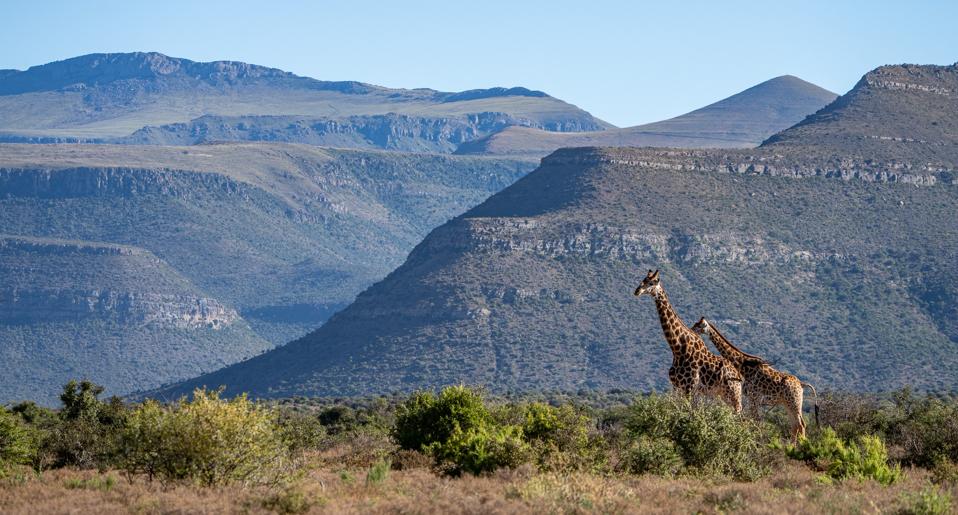
POLICY WIRE — Graaff-Reinet, South Africa — It’s not the roaring lion or the charging rhino that truly defines the Samara Karoo Reserve; it’s the quiet, often agonizing calculus of policy and profit played out across 67,000 acres of once-despoiled semi-arid scrub. Behind the glossy brochures of eco-tourism lies a profound, frequently thorny experiment in rewilding — one that pits economic necessity against ecological ambition, echoing challenges faced by developing nations worldwide.
For decades, the Eastern Cape landscape, including significant swathes of the Karoo, was systematically stripped, overgrazed, and divided by the colonial and apartheid eras, leaving a legacy of land degradation and socio-economic disparity. Still, Samara, once a collection of 11 sheep farms, represents a concerted, private-sector wager on restoring an entire biome — a monumental undertaking that’s far less romantic than its tourist-facing facade suggests. It’s a bold declaration, isn’t it, that economic stability might just sprout from rehabilitated dust and returning predators.
But how do you convince communities, often marginalized and impoverished, that the reintroduction of apex predators — creatures that historically posed a threat to their livestock — is a viable path to prosperity? It’s a question central to conservation efforts in vast swathes of the developing world, including parts of Pakistan’s border regions where human-wildlife conflict and sustainable land management are equally pressing concerns. The success or failure here carries implications far beyond South Africa’s borders.
“We’re not simply preserving land; we’re cultivating opportunity in a deeply wounded landscape,” asserted South African Minister of Environment, Forestry, and Fisheries, Barbara Creecy, during a recent conservation summit. “It’s a delicate balance, of course, reconciling the needs of historically dispossessed communities with the imperative of ecological restoration, but the dividends, both ecological and economic, are becoming undeniable.” She’s right, it’s not just about the pretty pictures.
The sheer scale of the ecological restoration at Samara is staggering. Where sheep once denuded the land, indigenous grasses are slowly reclaiming territory. The return of cheetahs, elephants, and soon, lions, isn’t merely an attraction; it’s a deliberate attempt to restore critical ecosystem services — from seed dispersal to natural herbivore control. And, importantly, these efforts directly impact the hydrological cycle, a policy flashpoint even in distant Canada’s ’emerald aeries’ as global water crises deepen.
So, what’s the real policy takeaway for nations facing similar dilemmas? At its core, Samara’s model hinges on the belief that economic upliftment must be intrinsically linked to ecological health. The Eastern Cape, for instance, grapples with stark socio-economic realities; Statistics South Africa reported a staggering 45% youth unemployment rate (ages 15-34) in the province for Q4 2023, underscoring the urgent need for job-creating initiatives. Conservation, in this context, isn’t a luxury; it’s a development strategy.
📄 POLICY WIRE WHITEPAPER PUBLISHED: PAKISTAN'S NATIONAL SECURITY POLICY PRIORITIES
👉 READ BY CLICKING HEREBut it’s not a panacea, is it? “The reintroduction of the cheetah is visually arresting for tourists, certainly, but the true, often unseen, triumph lies in restoring hydrological cycles and creating sustainable livelihoods for local communities,” explained Dr. Zola Mkhize, a leading conservation economist from the University of KwaZulu-Natal. “Without genuine local buy-in and tangible benefits for the people living alongside these revitalized ecosystems, these projects remain merely green facades, vulnerable to political and economic shifts.” It’s a point that resonates deeply in regions of the Muslim world, like Pakistan’s Balochistan, where community engagement in resource management determines the fate of fragile ecosystems.
This nuanced approach to conservation, integrating local empowerment with ecological imperatives, offers a compelling template. It highlights the often-overlooked truth that environmental policy in the Global South cannot be divorced from socio-economic justice. The animals, after all, are only part of the story; the human dimension, the policies that govern land use, water rights, and wealth distribution, those are the true game-changers.
What This Means
The Samara Karoo Reserve serves as a microcosm for the intricate policy challenges confronting developing nations as they navigate climate change, biodiversity loss, and persistent poverty. Its rewilding initiatives underscore a critical shift in conservation thinking: from isolated protected areas to integrated landscape management that directly involves and benefits local populations. Economically, a successful eco-tourism model here offers a blueprint for sustainable revenue generation, particularly in rural areas struggling with industrial decline or agricultural fragility. Politically, it necessitates a delicate dance between land reform, community rights, and environmental regulations, often challenging long-held assumptions about resource ownership and access. The lessons gleaned from Samara’s triumphs and tribulations could inform policy frameworks for arid and semi-arid regions globally, offering pragmatic strategies for countries like Pakistan or those in the Middle East, grappling with similar ecological degradation and the urgent need for climate resilience. It’s a test case, really, for whether nature can truly become an engine for equitable development rather than a casualty of it.