


As FEMA Retreats, New Mexico Stares Down Bureaucratic Echoes of Disaster
POLICY WIRE — ALBUQUERQUE, N.M. — The visible markers of federal presence, those prosaic portable units and rented office spaces that once signaled aid, are quietly vanishing from...

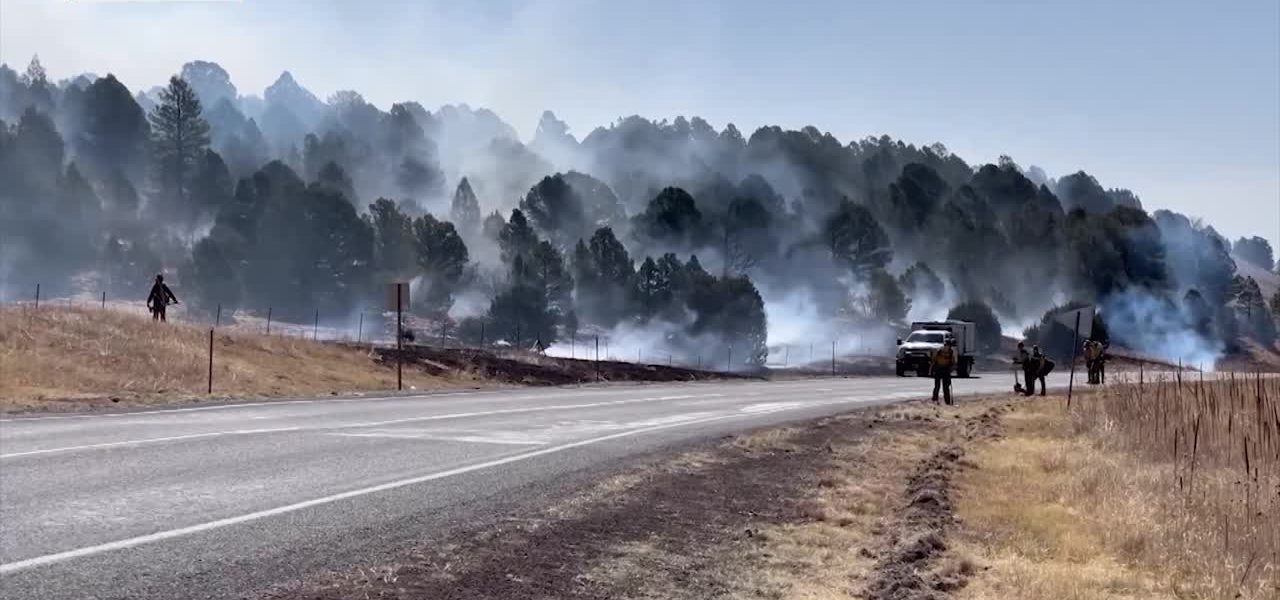
POLICY WIRE — ALBUQUERQUE, N.M. — The visible markers of federal presence, those prosaic portable units and rented office spaces that once signaled aid, are quietly vanishing from Northern New Mexico. Pads now stand empty, sun-baked earth where temporary structures — housing critical FEMA personnel — once hummed with the frantic energy of disaster relief. It’s a quiet retreat, this bureaucratic diminution, yet its implications ripple loudly through communities still reeling from the state’s largest wildfire.
Still, while the agency’s physical footprint recedes, a different kind of financial imprint is now under scrutiny: the six-figure payouts reportedly received by the former director and deputy director of FEMA’s Hermit’s Peak-Calf Canyon Claims Office. These payments, unveiled by local investigative reporting in January and subsequently picked up by national news outlets, have ignited a fresh conflagration of public distrust, leaving a bitter taste in the mouths of those whose homes and livelihoods evaporated in the historic blaze.
It’s an imbroglio that seems almost custom-built for cynical headlines: federal officials receiving substantial remuneration while on leave, even as the agency they once led is reducing its operational presence on the ground. The optics are, to put it mildly, less than ideal. FEMA, for its part, has maintained a silence so profound it borders on the provocative, offering no substantive answers to inquiries about the controversial payouts.
The Hermit’s Peak-Calf Canyon fire, sparked by prescribed burns, scorched over 341,000 acres — an area larger than New York City — and caused estimated damages exceeding $5 billion, according to the National Interagency Fire Center (NIFC). Its aftermath has been a protracted struggle for recovery, a battle not just against charred landscapes but against the labyrinthine processes of government compensation. So, to see the agency charged with facilitating this recovery appear to pack up and pay out its own leadership in such a manner — it’s a gut punch for many local constituents.
“Administrator Deanne Criswell’s office maintains that all compensation decisions adhere strictly to federal guidelines, designed to attract and retain specialized talent during complex disaster responses,” explained Brenda Carter, a FEMA press officer, in a carefully worded statement provided to Policy Wire. “We’re committed to transparency, even as we navigate personnel matters with appropriate discretion.” It’s the kind of boilerplate language that often satisfies no one, especially when homes are still ruins.
But discretion doesn’t always translate to public confidence. “It’s a slap in the face to our communities, plain and simple,” shot back State Senator Michael Padilla (D-NM), whose district includes affected areas. “People are still piecing their lives back together, and they’re seeing the agency charged with helping them pack up their trailers while their former bosses walk away with enormous sums. It’s a fundamental breakdown of trust.” His sentiment, broadly shared, captures the raw anger percolating through villages and towns that comprise New Mexico’s agricultural heartland.
📄 POLICY WIRE WHITEPAPER PUBLISHED: PAKISTAN'S NATIONAL SECURITY POLICY PRIORITIES
👉 READ BY CLICKING HEREThe local claims office in Mora, a crucial hub for those seeking assistance, has also undergone a relocation. It’s moved from its rented building into a county facility, ostensibly to ensure continued face-to-face interaction for claimants. But for many, this consolidation feels more like a concession than a commitment, another step towards diminishing rather than strengthening federal support. It’s a small irony, perhaps, that an agency whose very name implies federal emergency management is managing its own emergency — a public relations one — by making itself less accessible.
This episode isn’t merely a localized American bureaucratic snafu; it resonates with broader global challenges in disaster management. From the earthquake-shattered communities of Balochistan to the flood-displaced families along Pakistan’s Indus River, the efficacy, transparency, and perceived fairness of relief agencies — whether governmental or international — are perpetually under scrutiny. The erosion of trust, spurred by such controversies, isn’t confined by borders; it hampers critical aid efforts wherever disaster strikes. Such issues are not unique, mirroring the policy questions sparked by similar conflagrations elsewhere.
What This Means
At its core, this situation presents a profound challenge to governmental accountability — and public trust. Politically, the controversy could fuel calls for heightened congressional oversight into FEMA’s internal financial practices, particularly concerning executive compensation during disaster relief operations. Don’t be surprised if this becomes a talking point in upcoming elections, offering ample fodder for candidates eager to champion the aggrieved. Economically, the perceived misallocation of funds — or at least, the questionable timing of substantial payouts — could exacerbate an already arduous recovery process for New Mexico. The psychological toll on disaster victims, watching federal resources seemingly misdirected or withdrawn, is immeasurable; it can deter future cooperation and foster a deeper cynicism toward governmental assistance. For FEMA itself, it’s a self-inflicted wound, damaging its reputation and potentially undermining its future efficacy, especially in an era of increasingly frequent and severe climate-driven disasters. The agency needs to manage not just the emergency, but its own narrative, or it risks becoming another casualty of bureaucratic inertia.