


The Unspeakable Lapses: New Mexico Confronts Child Heatstroke Through Car Seat Vigilance
POLICY WIRE — ALBUQUERQUE, N.M. — It’s a horror that grips the collective consciousness — the almost unthinkable moment a parent or caregiver, ensnared by the mundane demands of a day, forgets a...

POLICY WIRE — ALBUQUERQUE, N.M. — It’s a horror that grips the collective consciousness — the almost unthinkable moment a parent or caregiver, ensnared by the mundane demands of a day, forgets a child strapped in a car seat, unwittingly delivering them into the brutal embrace of a superheated vehicle. Such lapses, tragically common despite their unimaginable nature, aren’t merely isolated incidents of negligence; they represent a stark intersection of human fallibility, systemic oversight, and — at its core — a persistent public health crisis that ripples far beyond New Mexico’s sun-baked highways.
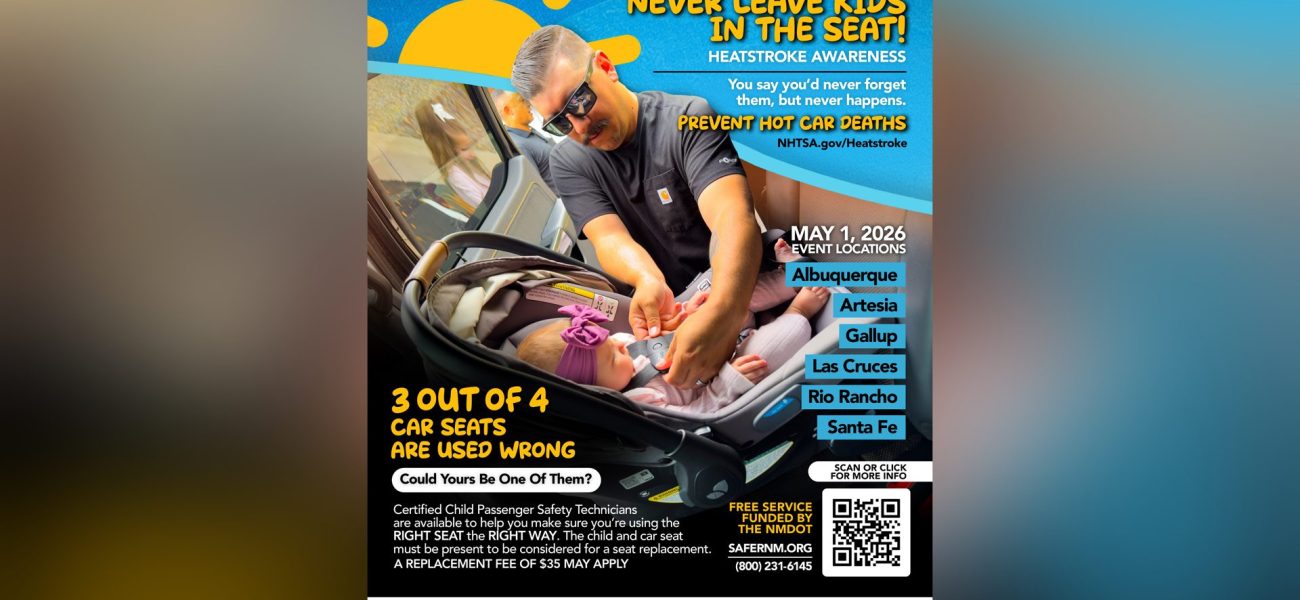
On what’s been designated Heatstroke Awareness Day, the New Mexico Department of Transportation (NMDOT) and Safer are orchestrating a series of clinics designed to fortify one of the last lines of defense against these devastating outcomes: correctly installed and used child car seats. But behind the headlines announcing these essential services lies a more profound narrative, one of incremental policy responses attempting to staunch a flow of preventable suffering that annually claims dozens of young lives across the nation. Since 1998, more than 1,000 children have died from heatstroke after being left or trapped in a vehicle, according to sobering data compiled by NoHeatStroke.org.
And so, on Friday, a network of nationally certified Child Passenger Safety Technicians will fan out across the state, dedicating roughly thirty minutes with each caregiver. They’ll scrutinize everything: the selection, the installation, the very usage of car — and booster seats. Caregivers, armed with their seats, manuals (for both the car and the seat, mind you), and the child, if possible, can interrogate technicians about common blunders that, unchecked, could spell disaster. If a seat has succumbed to expiration, recall, or general unsafeness, replacements aren’t just an aspiration; they’re often a pragmatic reality, albeit with a potential $35 fee and the mandatory presence of the child.
“We can’t legislate memory, but we can empower parents with knowledge — and the right tools,” stated Janice K. Albright, Director of the New Mexico Department of Transportation’s Traffic Safety Bureau, her voice betraying a hint of weary determination. “These clinics aren’t a panacea, but they’re a critical bulwark against a type of tragedy that haunts communities long after the immediate shock recedes.”
Still, the problem’s roots delve deeper than a simple instructional deficit. Modern life, with its relentless pace, fractured attention spans, and the sheer mental load borne by many parents, creates an environment ripe for these catastrophic memory failures. Sleep deprivation, changes in daily routine, or even the subtle cognitive demands of multitasking can disrupt the brain’s habitual pathways, allowing a child’s presence in the back seat to vanish from immediate consciousness. It’s a terrifying testament to human fallibility, not always a simple case of neglect.
“The societal cost of these preventable tragedies — both in human suffering and the burden on emergency services — is immeasurable, yet often overlooked until another child is lost,” observed Dr. Evelyn Reed, a pediatric safety advocate with the National Child Protection Alliance, articulating a point frequently lost in the cycle of outrage and sorrow. She further asserted that comprehensive public health campaigns, not just localized clinics, are pivotal to reshaping societal awareness.
📄 POLICY WIRE WHITEPAPER PUBLISHED: PAKISTAN'S NATIONAL SECURITY POLICY PRIORITIES
👉 READ BY CLICKING HEREThis isn’t, of course, solely an American plight. Across the globe, particularly in regions prone to extreme heat and grappling with nascent public health infrastructure, the risk to children is equally, if not more, acute. Consider, for instance, the densely populated urban centers of Pakistan or other parts of South Asia, where vehicle ownership may be less widespread, yet families often share rides, and extended journeys under sweltering conditions are common. The cultural nuances might differ, but the physics of a rapidly heating car — often reaching lethal temperatures in mere minutes — remain immutable. Lack of targeted public awareness campaigns or easy access to certified car seat technicians in such environments means a universal vulnerability transcends geographical or socioeconomic divides. It underscores why a robust child safety framework, including preventative measures for the most vulnerable, ought to be a global imperative, not a localized luxury.
The clinics themselves represent a distributed effort, a logistical ballet across New Mexico: Albuquerque’s AFR Station No. 3, Artesia’s Public Health Office, Gallup’s Fire Station No. 1, Las Cruces’ Doña Ana County Government Center, Rio Rancho’s Fire Station No. 7, and Santa Fe’s County Public Health Office — all will be conduits for this vital knowledge on Friday.
What This Means
These initiatives, while commendable, often function as temporary balms on a festering wound rather than definitive sutures. Politically, the emphasis on “Heatstroke Awareness Day” offers a palatable narrative of proactivity without necessarily committing to broader, more expensive systemic changes. It’s a low-cost, high-visibility intervention, appealing to constituents who value child safety. Economically, the cost of these clinics, funded by NMDOT, is negligible compared to the long-term healthcare, psychological counseling, and even legal expenditures associated with child heatstroke fatalities. Yet, the reluctance to mandate more sophisticated in-vehicle alert systems or to fund sustained, multi-platform public education campaigns speaks volumes about the ephemeral nature of policy’s grand designs. As past policy failures frequently demonstrate, a day of awareness, no matter how well-intentioned, often proves insufficient against deeply ingrained behavioral patterns and the relentless march of human oversight. Ultimately, the onus remains disproportionately on individual caregivers, with governmental and industrial responsibility still largely confined to post-incident responses rather than comprehensive preemptive action.