

The Raw Edge of Glory: Jamieson’s Send-Off Ignites Debate on Sportsmanship, Youth, and IPL’s Commercial Crucible
POLICY WIRE — NEW DELHI, India — The pristine veneer of professional cricket, often upheld as a paragon of sporting rectitude, fractured decisively on Friday night in Jaipur. Not due to a contentious...

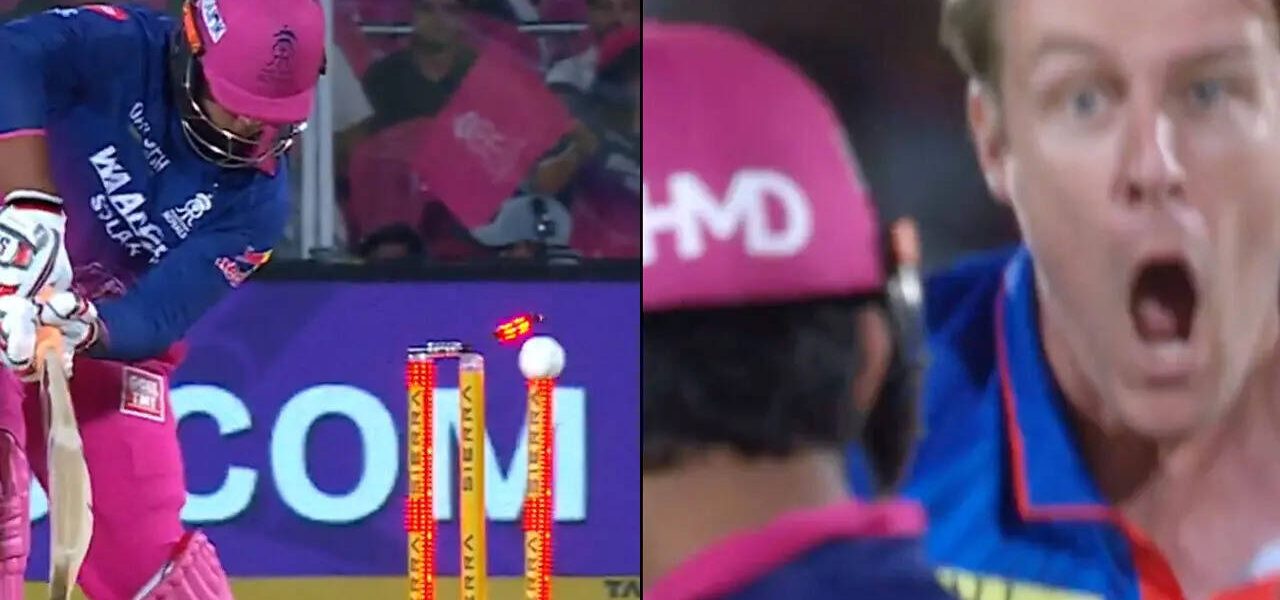
POLICY WIRE — NEW DELHI, India — The pristine veneer of professional cricket, often upheld as a paragon of sporting rectitude, fractured decisively on Friday night in Jaipur. Not due to a contentious umpiring decision or a last-ball thriller, but by an unsettling display of veteran aggression directed at a fledgling talent. Kyle Jamieson, the towering New Zealand paceman, didn’t just dismiss 15-year-old Vaibhav Sooryavanshi in an IPL 2026 fixture; he savored the moment with a pugilistic intensity — a charged stare-down and aggressive clapping — that has since ricocheted across the cricketing world, igniting a fervent discourse on sportsmanship, youth development, and the relentless pressures of the game’s most lucrative league.
It wasn’t an ordinary dismissal. Sooryavanshi, a veritable prodigy — he’s only 15, mind you — was sent back to the pavilion for a paltry four runs by a searing yorker. That delivery itself, an exhibition of pace — and precision, underscored Jamieson’s formidable skill. But it was the protracted, demonstrative send-off that followed, an almost theatrical flourish of dominance, that left many deeply disquieted. Sooryavanshi, barely out of childhood, endured a veteran’s full wrath, a moment many found acutely disproportionate.
And so, the reverberations were immediate. Former India international Priyank Panchal wasted no time, taking to social media to articulate his dismay: “31-year-old Kyle Jamieson giving a 15-year-old kid a send off after dismissing him. Doesn’t make for a pretty sight.” He added, however, a subtle acknowledgment of the youngster’s burgeoning repute: “But also shows how much of an impact and fear Vaibhav has instilled amongst the opponents already.” It’s a curious paradox, isn’t it? The rebuke for poor sportsmanship, yet an inadvertent testament to the youth’s potential.
But the match, of course, continued its tempestuous course. The early innings had been a veritable maelstrom. Mitchell Starc had claimed Yashasvi Jaiswal in the inaugural over, leaving Rajasthan reeling. Then came Jamieson’s intervention, further plunging the Royals into an early abyss at 12 for 2. Yet, skipper Riyan Parag, often a lightning rod for criticism — and not always without cause — responded with a defiant flourish, hammering 90 off just 50 balls, thereby momentarily silencing his detractors. He found invaluable confederates in Dhruv Jurel (42) and Donovan Ferreira, whose explosive 47 runs from a mere 14 deliveries injected a crucial late surge, propelling Rajasthan to a formidable 225 for 6.
The chase, however, belonged to the Delhi Capitals. KL Rahul, an epitome of elegant strokeplay, alongside Pathum Nissanka, whose pull shots were simply majestic, orchestrated a record-breaking pursuit. They stitched together a 102-run opening stand in a blistering 9.3 overs, setting an unassailable platform. Even after a brief mid-innings flutter — Rahul (75) and Nitish Rana departing in quick succession — Ashutosh Sharma and Tristan Stubbs steered DC to 226 for 3, achieving their highest-ever IPL chase. Still, amidst the jubilation of victory, Jamieson’s contentious send-off stubbornly remained the dominant narrative.
This incident, far from being an isolated blip, thrusts into sharp relief the perennial tension between competitive aggression and ethical conduct, especially when a child — and make no mistake, 15 is still a child in many cultural contexts — is involved. “While passion fuels our sport, respect for all players, particularly our budding talents, remains paramount,” asserted Mr. Imran Hashmi, a senior official with the Board of Control for Cricket in India (BCCI). “We can’t condone actions that diminish the spirit of the game, irrespective of match intensity. The IPL is a showcase, not just of skill, but of character.” His comments underscore a delicate balancing act the league — and indeed, global cricket — must perpetually perform.
📄 POLICY WIRE WHITEPAPER PUBLISHED: PAKISTAN'S NATIONAL SECURITY POLICY PRIORITIES
👉 READ BY CLICKING HEREAnd it’s a particularly thorny issue in South Asia, where cricket transcends mere sport, morphing into a cultural touchstone, almost a secular religion. The reverence for elders — and the protection of youth are deeply ingrained societal values. A display like Jamieson’s, therefore, isn’t just a breach of cricketing etiquette; it’s a cultural misstep, one that resonates far beyond the boundary ropes. “It’s a tricky tightrope,” mused Dr. Ayesha Khan, a renowned sports psychologist based in Lahore, (Pakistan) who often consults with regional teams. “The game’s commercial stakes demand aggression, but we’re witnessing a generational shift where young players aren’t just competitors; they’re valuable assets, almost symbols of hope. Sending off a 15-year-old? That’s a PR conundrum — — and a question of values.”
The sheer commercial magnitude of the IPL only exacerbates such ethical quandaries. With IPL viewership figures consistently eclipsing global sporting events, the 2025 season alone drawing an estimated cumulative audience of over 500 million, according to data from Broadcast Audience Research Council (BARC) India, every action on the field is magnified, scrutinized, and endlessly debated. The league, a veritable economic crucible, draws prodigious young talents from every corner, propelling them into a high-stakes arena, sometimes before they’ve even fully physically matured. Even established stars like KL Rahul find their every move dissected; for a 15-year-old, the pressure must be almost unimaginable.
What This Means
This incident, seemingly minor in the grand tapestry of a bustling IPL season, carries consequential implications. Economically, it nudges the IPL — and its sponsors — to consider the optics of aggressive sportsmanship, particularly concerning its youngest participants. Brands investing heavily in the league often project images of fair play — and inspirational youth. An overzealous send-off to a minor could, at the margins, tarnish that carefully cultivated image, complicating their messaging. Politically, within the sporting ecosystem of South Asia, it reignites debates about the ‘spirit of cricket’ — a concept fiercely guarded in this region — and the extent to which commercial imperatives are eroding traditional values. It’s a delicate negotiation between the cutthroat demands of professional sport and the societal expectation of mentorship and protection for emerging talent. The incident could prompt cricket boards to re-evaluate guidelines on player conduct, especially towards debutants and minors, ensuring that the drive for victory doesn’t inadvertently crush the budding aspirations of the game’s future. It’s a reminder that the IPL isn’t just about cricket; it’s a colossal social and economic phenomenon, with every on-field interaction bearing weight.