


Mumbai’s Reckoning: How a Star’s Hamstring Becomes an Economic Barometer in India’s Premier League
POLICY WIRE — Mumbai, India — In the high-octane theatre of the Indian Premier League, where player bodies are simultaneously celebrated assets and precarious liabilities, a single hamstring has...

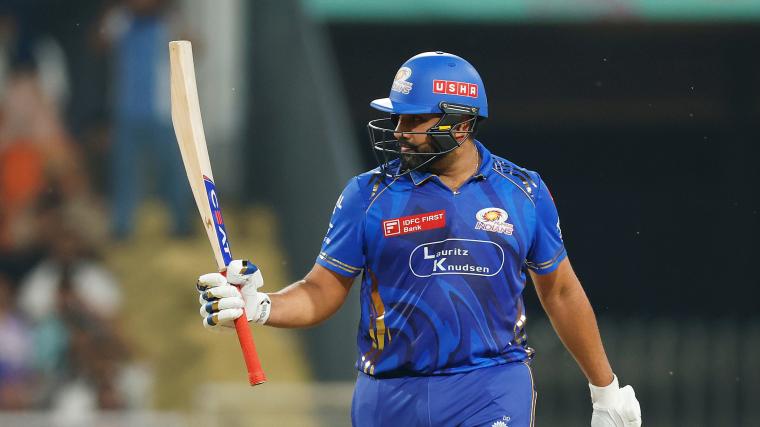
POLICY WIRE — Mumbai, India — In the high-octane theatre of the Indian Premier League, where player bodies are simultaneously celebrated assets and precarious liabilities, a single hamstring has seized the narrative. Rohit Sharma, the talismanic opener for the Mumbai Indians, remains shrouded in medical ambiguity. His availability for the crucial May 2 clash against Chennai Super Kings is a meticulously guarded secret. This isn’t merely about runs or wickets; it’s a stark, visceral reminder of the human capital calculus at play in a sports economy estimated to be worth north of $10 billion annually.
At its core, the saga of Sharma’s fitness epitomizes the brutal arithmetic of modern professional sports. A seasoned veteran, turning 39 this week, his 78 runs off 38 balls in Mumbai’s inaugural win against Kolkata Knight Riders now feels like a distant memory—a fleeting burst of form before injury struck. Four consecutive absences have since relegated him to the sidelines, forcing Mumbai’s coaching staff into a dizzying carousel of replacements. Twenty-two players deployed in just eight games: a veritable human laboratory experiment. Still, results haven’t materialized. The franchise languishes ninth in the standings, two wins from eight matches, facing an existential gauntlet: win every remaining fixture to even flirt with the playoffs.
Mumbai Indians head coach Mahela Jayawardene, perpetually navigating the tightrope between transparency and strategic opacity, offered reporters a practiced blend of reassurance and evasion. “It’s progressed well,” he conceded, speaking on Sharma’s recovery. “He’s working really hard to get back at it. So for us with the medical team, it’s on a daily basis. We see how he feels, how he pulls up the next day. So we’ll make a decision. Let’s see how he feels tomorrow and what the medical team will tell us.” His careful cadence, punctuated by medical team consultation, underscored immense pressure; player health, in this ecosystem, isn’t just well-being, but bottom-line solvency. The league’s relentless schedule often pushes athletes to their physical limits.
But behind the headlines, the economic implications are profound. Rohit Sharma isn’t just a player; he’s a brand, a magnet for viewership — and endorsements. His absence chills the air for sponsors, broadcasters, and even the legions of fans whose emotional investment translates directly into market value. “The uncertainty around a marquee player like Rohit directly impacts brand visibility and, frankly, the marketability of our upcoming fixtures,” lamented Priya Singh, a senior board member for the Mumbai Indians, emphasizing the commercial imperative. “We’re talking about millions in potential revenue tied to these high-stakes games—it’s a critical factor, not just a sporting one.” (A sentiment rarely articulated so bluntly by team management.)
This precarious reliance on individual talent echoes across the sporting world, particularly in South Asia and the broader Muslim world. Cricket transcends mere sport to become a cultural behemoth — and a significant economic driver here. From the Pakistan Super League (PSL) to Bangladesh’s Premier League (BPL), the IPL’s commercial model has inspired regional imitations, all grappling with the same fundamental challenge: how to monetize star power while safeguarding the fragile human mechanisms that generate it. The frenzy surrounding players like Babar Azam or Shakib Al Hasan in their leagues mirrors the cult of personality built around Sharma—their health, performance, and presence are potent financial levers. The brutal calculus of human capital in these high-stakes environments is undeniable.
📄 POLICY WIRE WHITEPAPER PUBLISHED: PAKISTAN'S NATIONAL SECURITY POLICY PRIORITIES
👉 READ BY CLICKING HEREStill, the Mumbai Indians find themselves in a bind, a classic management dilemma exacerbated by astronomical stakes. They’ve already explored their bench depth, using 22 different players—a statistically significant departure from their historical average of 16 players per season. This churn, Jayawardene insisted, wasn’t “experimentation” but a necessary response to injuries — and availability. Mumbai’s current predicament is amplified by the sheer financial heft of the IPL, a league that, according to a 2022 report by Kroll (formerly Duff & Phelps), boasts a brand valuation of $10.9 billion. A single team’s slump, especially one as prominent as Mumbai, sends tremors through this delicate financial ecosystem. (A fact seldom lost on the league’s astute owners.)
So, will Rohit Sharma step onto the Chepauk pitch on May 2? The answer remains frustratingly elusive, buried beneath layers of medical assessment — and strategic deliberation. His presence would undoubtedly provide a psychological lift, a surge of adrenaline for a team teetering on the precipice of elimination. But it wouldn’t, experts opine, cure the systemic malaise that has plagued Mumbai’s campaign. The bigger task, as ever, isn’t just getting one star back, but aligning an entire constellation—a feat that, with six games remaining, seems increasingly less like a sporting challenge and more like an exercise in economic alchemy for the franchise.
What This Means
The protracted uncertainty surrounding Rohit Sharma’s hamstring isn’t merely a sports update; it’s a policy bellwether for global sports leagues. It underscores the immense commercial pressures on high-value athletes and, by extension, on the teams and leagues that house them. For the IPL, and similar ventures across South Asia, robust player welfare policies aren’t just ethical considerations—they’re economic imperatives. A star’s body is a depreciating asset, subject to extreme wear, and its incapacitation can trigger significant financial headwinds. This scenario also highlights challenges of squad management in a hyper-competitive, injury-prone environment. Teams balance short-term victory demands with long-term player asset sustainability, often leading to rapid, desperate, roster changes. The Mumbai Indians’ struggle is a microcosm of broader global labor issues: the value of skilled human capital is immense, yet its fragility is often underappreciated until a crisis hits. Investors and policymakers should note the ripple effects: a star player’s health isn’t just about athletic performance; it’s about the financial health of an entire industry.