


Edgewood’s Precarious Truce: Emergency Services Accord Reveals Deep Municipal Cracks
POLICY WIRE — EDGEWOOD, N.M. — The eleventh-hour rescue of Edgewood’s emergency services — a testament to pragmatic, if strained, negotiation — barely disguises the deeper fissures within municipal...

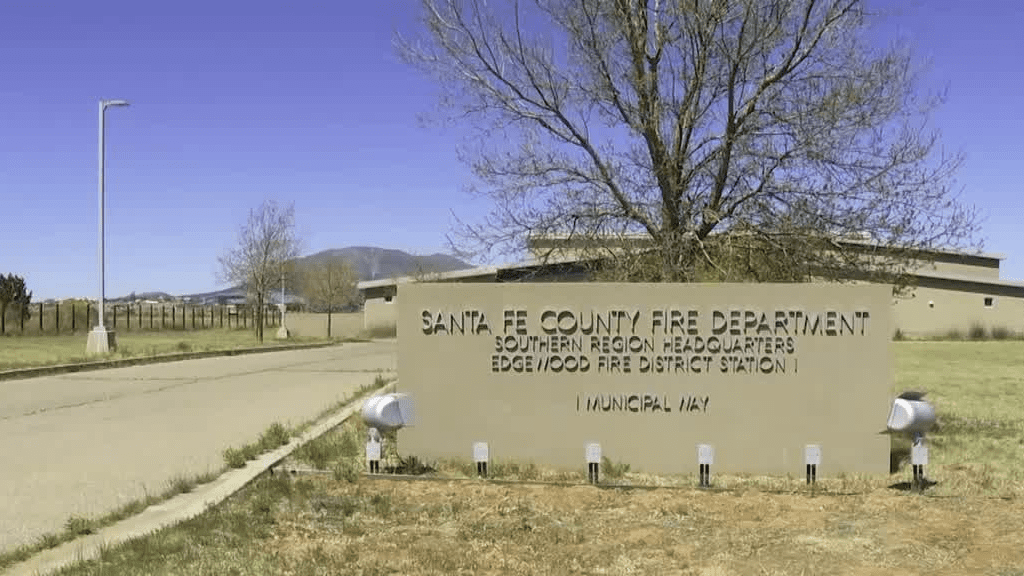
POLICY WIRE — EDGEWOOD, N.M. — The eleventh-hour rescue of Edgewood’s emergency services — a testament to pragmatic, if strained, negotiation — barely disguises the deeper fissures within municipal governance across the American landscape. Just weeks after Santa Fe County signaled a blunt termination of its decades-long fire and emergency medical services pact with the small town, Edgewood commissioners, by a vote of 4-1, opted for continuity Friday, cementing an agreement that re-establishes the status quo payment structure.
It’s a reprieve, certainly, but hardly a resolution. Behind the headlines of bureaucratic accord lies the perennial struggle of small municipalities to fund essential services, a struggle that often brings them to the brink of fiscal and functional collapse. This latest skirmish, sparked by a payment dispute that threatened to leave Edgewood without immediate fire and paramedic response, speaks volumes about the delicate dance between county-level resources and town-level vulnerabilities. And let’s be frank, these aren’t just local squabbles; they’re echoes of a larger, systemic challenge to public welfare.
The original termination threat, delivered with a certain bureaucratic crispness, had painted a grim picture for Edgewood’s roughly 6,000 residents. Imagine, for a moment, waiting for a distant jurisdiction’s fire truck while your home burns—a scenario that, until Friday, seemed chillingly plausible. So, the relief here isn’t just palpable; it’s a profound exhale from a community staring down a very real catastrophe. But how did it even get to this? Years of existing under the county’s protective umbrella, Edgewood, like many small towns, hadn’t quite mustered the wherewithal to stand entirely on its own two feet for such critical functions.
“It wasn’t merely about averting a crisis; it was about honoring our fundamental obligation to every Edgewood family,” declared Commissioner Amelia Sanchez, one of the driving forces behind the successful negotiation. “This new accord isn’t a permanent fix, no, but it grants us the vital breathing room necessary to chart a truly sustainable path forward for our emergency response capabilities.” Her sentiment captures the cautious optimism now permeating the town’s administrative corridors.
The agreement, jettisons any automatic termination clauses, a previous sticking point, and commits Santa Fe County to assist Edgewood in exploring the creation of its own, fully independent fire department. This isn’t a minor undertaking. Establishing a fully operational municipal fire department, complete with equipment, personnel, and training, can easily run into the multi-million dollar range, often exceeding $5 million for initial setup in a community the size of Edgewood. That’s a staggering sum for any small town, let alone one grappling with its existing financial bandwidth.
Santa Fe County Manager Ramon Garcia, commenting on the resolution, shot back against any notion of county avarice. “Our fiscal responsibilities extend to every taxpayer within Santa Fe County, and that necessitates a careful allocation of shared resources,” Garcia stated, emphasizing the county’s pragmatic stance. “While we believe in regional cooperation, we also firmly support Edgewood’s long-term autonomy. This new arrangement, though maintaining the financial status quo, is a step towards helping them achieve that vital self-sufficiency.” His words underscore the delicate balance between regional interdependence and local sovereignty, a dance that’s often more about economics than anything else.
📄 POLICY WIRE WHITEPAPER PUBLISHED: PAKISTAN'S NATIONAL SECURITY POLICY PRIORITIES
👉 READ BY CLICKING HEREThe agreement now awaits signatures from the town, Santa Fe County, and the New Mexico Secretary of Finance and Administration. Only then will the truce be officially consecrated, moving from a political handshake to a legally binding commitment. Still, the inherent fragility of such accords, dependent on the goodwill and strained budgets of multiple entities, offers a stark parallel to the complex inter-state resource sharing agreements — or their often violent failures — seen in regions far removed from New Mexico’s high desert. Consider, for instance, the perpetual, often existential, disputes over water rights in South Asia, where life itself hinges on upstream and downstream cooperation; the dynamics, though scaled differently, aren’t entirely dissimilar.
The incident also highlights the evolving nature of emergency services in an increasingly unpredictable world. From wildfires like those that recently scorched large swaths of the state, as explored in Gila’s Fiery Grip, to sudden medical emergencies, robust and immediate response capabilities aren’t a luxury; they’re a baseline expectation of modern governance. Yet, the price tag associated with these expectations continues to climb.
What This Means
This Edgewood-Santa Fe County resolution, while averting immediate disaster, serves as a consequential microcosm of broader governmental challenges. Economically, it showcases the immense fiscal pressure on smaller municipalities, many of whom rely on larger, county-level entities for services they simply can’t afford to provide independently. The commitment to help Edgewood build its own department is commendable, but the underlying question remains: how will a town of its size realistically absorb such a colossal financial burden without significant state or federal intervention? It’s a classic case of mandated responsibilities bumping against limited tax bases, a situation familiar to countless communities nationwide.
Politically, the episode underscores the sometimes-fraught nature of inter-local cooperation. What begins as a practical arrangement can, over time, devolve into disputes over equity and obligation, particularly when budgetary belts tighten. The absence of an automatic termination date in the new agreement buys both sides time, yes, but it also means future disagreements will require deliberate, often contentious, re-negotiation. the role of state oversight — through the Secretary of Finance and Administration’s required sign-off — highlights the layered bureaucracy inherent in maintaining even the most fundamental public services. It’s a stark reminder that even seemingly local issues are often entangled in a web of larger governmental structures, each with its own agenda and constraints.