


Moscow’s Silent Aisles: A Glimpse Into Russia’s Reshaped Economic Reality
POLICY WIRE — Moscow, Russia — The modern shopping mall, that gleaming temple of consumerism, has long served as a potent barometer of a nation’s economic vitality. In most capitals, these...

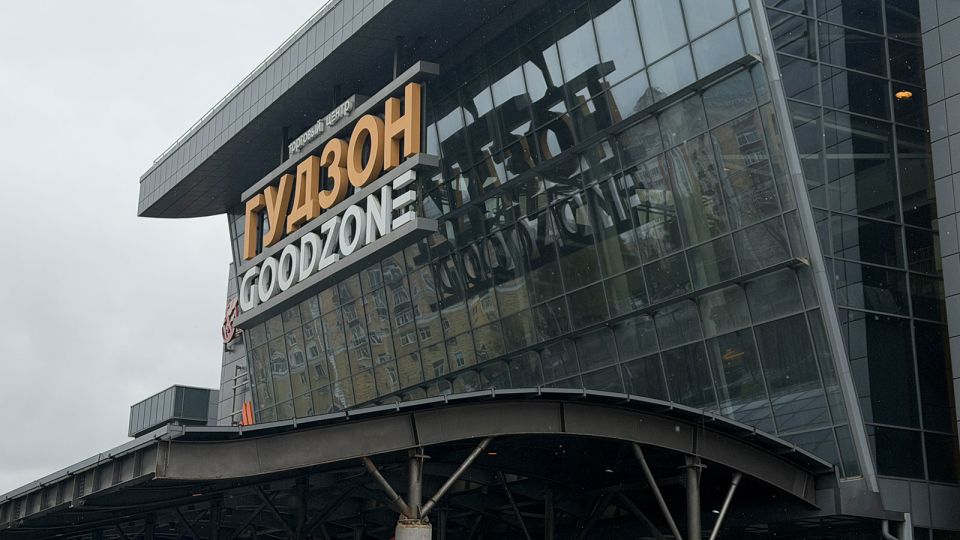
POLICY WIRE — Moscow, Russia — The modern shopping mall, that gleaming temple of consumerism, has long served as a potent barometer of a nation’s economic vitality. In most capitals, these sprawling complexes thrum with the relentless rhythm of commerce; they’re vibrant, often chaotic, reflections of purchasing power and globalized aspirations. But stroll through certain high-end retail bastions in Moscow, — and you encounter an eerie, almost cinematic silence. It’s not merely quiet; it’s a profound, conspicuous emptiness. The designer boutiques, once glittering with international brands, now stand as hollow monuments to an era abruptly concluded—a stark visual counterpoint to official pronouncements of economic resilience.
This isn’t just about vacant storefronts. Oh no. It’s about an economic reorientation so thorough, so swift, that it has peeled back layers of global integration built over decades. The initial shock of Western sanctions following the full-scale invasion of Ukraine spurred a mass exodus of multinational corporations, tearing a significant seam in Russia’s consumer economy. And while the Kremlin’s economic managers have been impressively adept at papering over some cracks—stabilizing the ruble, maintaining essential imports through parallel channels—the visible gaps in consumer choice and capital inflow tell a rather different, more nuanced tale.
“The Kremlin can tout resilience all it likes, but the sustained absence of international capital and advanced technologies calcifies inefficiencies,” opined Dr. Svetlana Petrova, a perceptive economist at the Moscow School of Economics, during a recent digital briefing. “We’re not witnessing a cataclysmic collapse, but rather a slow, persistent erosion of future growth potential. It’s an economic atrophy that’s less dramatic, but perhaps more insidious.” She conveyed a grim prognosis, suggesting the true costs would only fully materialize years hence.
Still, Russian officials maintain a strikingly different narrative. Dmitri Volkov, a brisk spokesperson for the Ministry of Economic Development, shot back against Western assessments. “Sanctions were always intended to hobble us,” Volkov asserted in a televised address. “Instead, they’ve galvanized our domestic industries — and accelerated our pivot to reliable partners in the East. Western brands? They’re simply no longer relevant for the discerning Russian consumer who now values quality Russian alternatives.” It’s a compelling argument, if one glosses over the breadth of absent options.
Behind the headlines of robust GDP figures—boosted by military spending and high oil prices—lies the more granular reality: a consumer landscape fundamentally altered. According to the Kyiv School of Economics, over 1,600 international companies, representing a significant portion of foreign direct investment and consumer choice, have either left Russia or significantly curtailed operations since February 2022. That’s a staggering divestment, shaping not just Moscow’s malls but also industrial supply chains and employment figures. This isn’t just a reshuffling; it’s a re-founding.
The global ramifications extend far beyond Russia’s borders. Moscow’s desperate quest for new markets — and suppliers has fundamentally reshaped global trade currents. We’ve seen Russia deepen energy and trade ties with nations like India and China, and increasingly explore avenues with Middle Eastern and even some South Asian economies for goods, technology, and investment. This reordering directly influences economies like Pakistan’s, which navigates its own complex geopolitical and economic landscape—a landscape now subtly, but profoundly, altered by these titanic shifts. Pakistan, like many non-aligned states, finds itself walking a tightrope, balancing traditional partnerships with new opportunities arising from a fractured global order. And it’s not an easy walk.
📄 POLICY WIRE WHITEPAPER PUBLISHED: PAKISTAN'S NATIONAL SECURITY POLICY PRIORITIES
👉 READ BY CLICKING HEREWhat This Means
The empty aisles of Moscow’s malls aren’t just a peculiar photographic opportunity; they’re a potent symbol of a nation’s forced evolution. Politically, the narrative of resilience, however strained by ground truth, serves to rally domestic support and project an image of invulnerability abroad. Economically, Russia is indeed adapting, albeit towards a more insular — and state-directed model. This shift, while painful in terms of consumer choice and access to advanced Western technology, has paradoxically strengthened certain domestic sectors and forged new economic alliances that will endure long after the conflict in Ukraine concludes.
The long-term implications are particularly consequential for global commerce. We’re witnessing the acceleration of a multipolar economic world, where established supply chains are bifurcating, and new trade blocs are consolidating. For developing nations, particularly those in South Asia — and the Muslim world, this presents a delicate calculus. On one hand, there are opportunities to secure discounted resources or new investment from Russia and its allies; on the other, there’s the perennial risk of secondary sanctions and alienation from established Western markets. It’s a delicate balance, one that often pits immediate economic gain against long-term strategic alignment. Ultimately, the silent malls of Moscow aren’t just a testament to Russia’s new normal; they’re a harbinger of a profoundly different global economic architecture, one that redefines the brutal calculus of global labor and capital. It’s a paradigm shift, plain and simple, impacting everything from human trafficking for Russia’s war effort to the price of lentils in Karachi.