

Desertion of Authority: Mali’s Retreat Cedes Ground to Rebels, Deepens Sahel Quagmire
POLICY WIRE — Bamako, Mali — The desert wind, it seems, carries more than just sand across northern Mali’s vast, unforgiving landscape; it’s now whispering tales of retreat, of state...

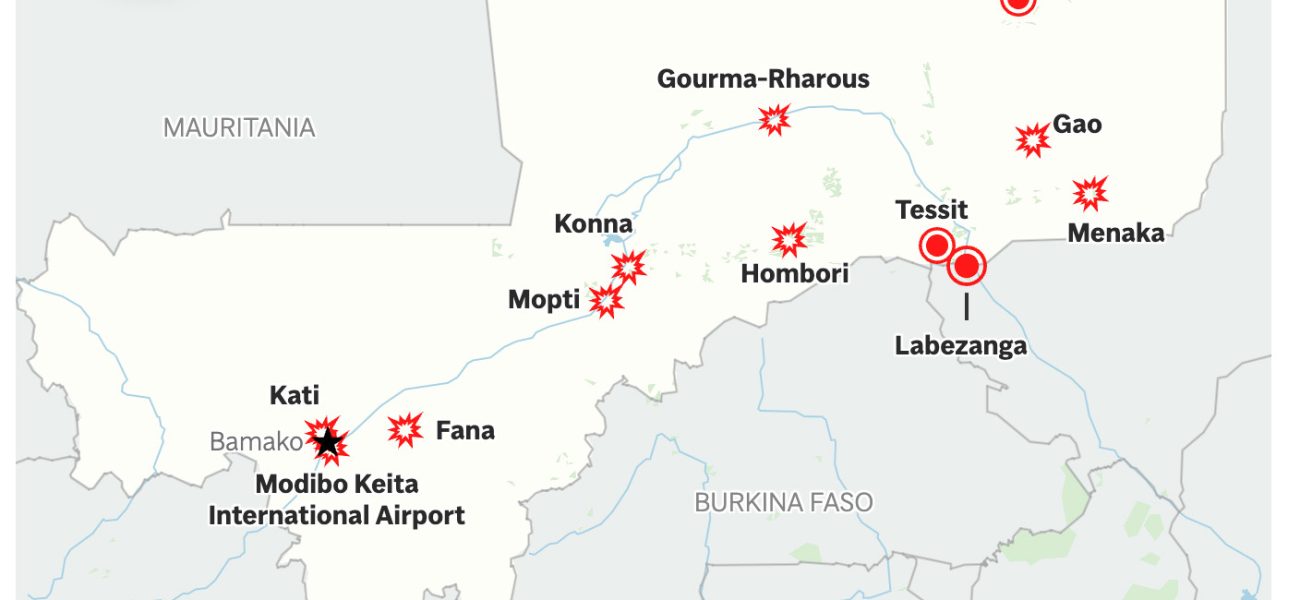
POLICY WIRE — Bamako, Mali — The desert wind, it seems, carries more than just sand across northern Mali’s vast, unforgiving landscape; it’s now whispering tales of retreat, of state authority visibly eroding. What began as a unilateral withdrawal of Malian armed forces from a pivotal military installation near Kidal has culminated, unsurprisingly, in its swift occupation by an amalgam of Tuareg separatist groups. This isn’t just a lost outpost; it’s a stark, rather theatrical, performance of power dynamics in a region already a crucible of insurgencies and external meddling.
It’s become quite the spectacle, hasn’t it? The Coordination of Azawad Movements (CMA), a coalition of ethnic Tuareg rebels, wasted little time declaring triumph, hoisting their flags over what was once a bastion of government control. But this wasn’t a hard-won victory in the traditional sense; it was a handover, a deliberate abandonment that leaves more questions than it answers about Bamako’s long-term strategy, especially given its increasingly cozy relationship with Russian private military contractors — Wagner, if you’re keeping score. The official line from the Malian transitional government, delivered with the kind of bureaucratic precision that skirts inconvenient truths, frames the withdrawal as a “strategic repositioning.”
“This was a strategic repositioning, not a retreat,” shot back Colonel Abdoulaye Camara, Spokesperson for the Malian Armed Forces, in a recent communique. “Our forces are dedicated to protecting every inch of Malian soil, and we’ll reclaim what’s ours when the time is right, without risking unnecessary civilian casualties in futile engagements.” A noble sentiment, perhaps, but one that rings hollow against the backdrop of an ever-expanding rebel footprint.
And the rebels? They’re practically giddy, you’d imagine. “The regime’s weakness is plain for all to see,” asserted Mohamed Ag Intalla, a prominent spokesperson for the CMA, whose pronouncements invariably carry the weight of generations of grievances. “This camp’s fall underscores our resolve for self-determination and the liberation of our people from centralist oppression. The days of Bamako dictating terms from afar are nearing their end.” Such pronouncements, brimming with confidence, won’t likely soothe an already agitated populace.
Behind the headlines, this development signals an accelerating fragmentation of state control, particularly in the northern reaches where extremist groups like Jama’at Nusrat al-Islam wal Muslimeen (JNIM) also operate with alarming impunity. The government’s pivot from French military support to Russian mercenaries — whose operational tactics are, shall we say, less concerned with conventional warfare ethics — has done little to stabilize the security landscape. In fact, it’s arguably exacerbated it. According to the UN Office for the Coordination of Humanitarian Affairs (OCHA), over 412,000 people were internally displaced in Mali by the end of 2023, a grim testament to the escalating violence.
📄 POLICY WIRE WHITEPAPER PUBLISHED: PAKISTAN'S NATIONAL SECURITY POLICY PRIORITIES
👉 READ BY CLICKING HEREStill, the geopolitical implications ripple far beyond Mali’s borders. This isn’t just a local skirmish; it’s a further unraveling of the Sahel, a region whose instability has direct bearing on the wider Muslim world and global counter-terrorism efforts. The vacuum created by state retreats isn’t merely filled by separatist aspirations; it’s an open invitation for extremist ideologies to flourish, providing fertile ground for recruitment and radicalization. It’s a familiar, deeply regrettable cycle that echoes in other conflict-ridden Muslim-majority nations, where state capacity struggles against entrenched grievances and opportunistic external actors. Countries like Pakistan, for instance, frequently find themselves navigating similar complexities of internal security challenges and external geopolitical pressures, often positioning themselves as crucial mediators in volatile regions.
What This Means
At its core, this latest development isn’t merely about a military camp changing hands; it’s about the Malian state’s fundamental crisis of legitimacy and its increasingly isolated foreign policy. The strategic retreat, whether forced or calculated, indicates a prioritization of immediate survival for the junta in Bamako over territorial integrity. It suggests a potential consolidation of forces around key urban centers, effectively ceding control of vast, resource-rich swathes of the north to various non-state actors.
Economically, this portends further instability, discouraging foreign investment — and exacerbating humanitarian crises. For the local population, it means heightened insecurity, a brutal choice between competing authorities, and a deepening sense of abandonment. Politically, it strengthens the hand of the CMA, potentially leading to renewed calls for autonomy or even outright independence for Azawad, a historical dream for many Tuareg. It’s also a win for Russia, whose growing influence in the Sahel is often predicated on filling security voids left by retreating Western powers. Their model isn’t about fostering stable democracies, mind you, but about securing access to resources and leveraging instability for strategic gain. So, don’t expect any swift resolution; this quagmire’s only getting deeper.