

Albuquerque’s Lindy’s Collapse: More Than Just Rubble, a Tectonic Shift in Urban Fabric
POLICY WIRE — ALBUQUERQUE, N.M. — The quiet thud of an exterior wall giving way — a seemingly isolated incident at Lindy’s Diner on Central Avenue — has reverberated far...

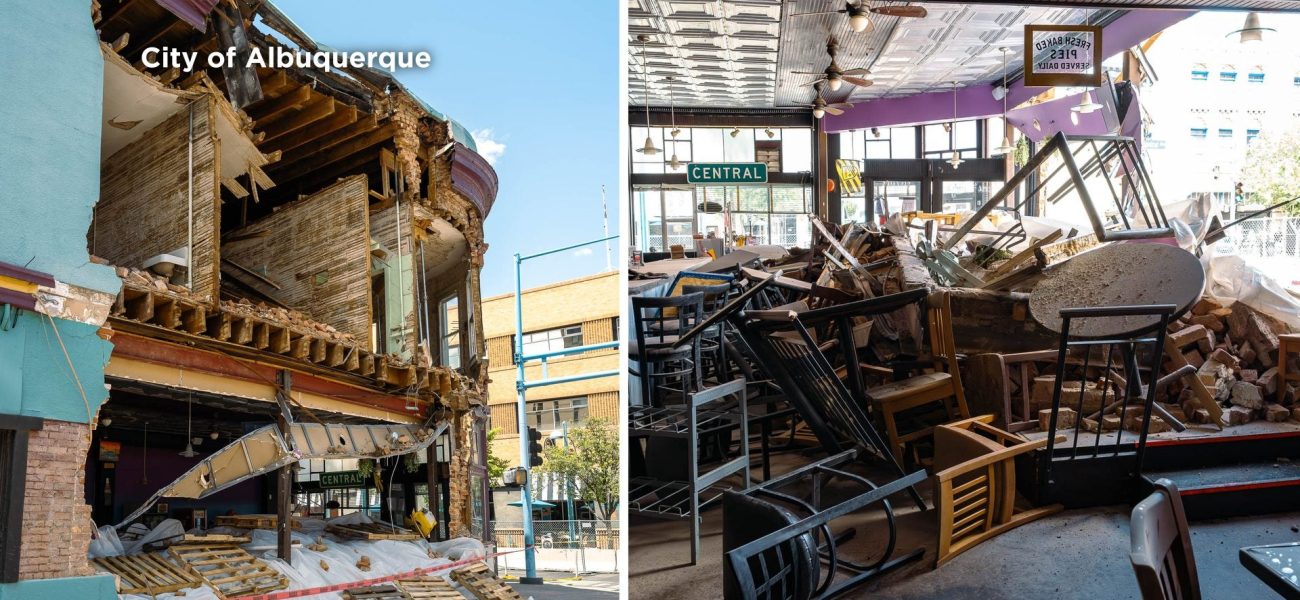
POLICY WIRE — ALBUQUERQUE, N.M. — The quiet thud of an exterior wall giving way — a seemingly isolated incident at Lindy’s Diner on Central Avenue — has reverberated far beyond the immediate debris field. It isn’t just a pile of bricks and mortar; it’s a sudden, stark rupture in the daily rhythms of Albuquerque’s downtown core, exposing the delicate interplay between aging infrastructure, local commerce, and the sometimes-fragile memory of a city’s past.
For weeks now, the stretch of 5th Street and Central Avenue has been a labyrinth of concrete Jersey barriers and chain-link fences, a stark testament to the ongoing structural anxieties plaguing the site. What began as an urgent response to a Monday collapse has metastasized into a prolonged urban embolism, with city officials conceding the area will remain largely inaccessible for the “foreseeable future.” It’s a polite bureaucratic euphemism for a problem whose depth is only just beginning to be plumbed.
City leaders, grappling with the tangible — and intangible costs, are moving with a calibrated caution. They’ve armored the perimeter, deploying those weighty concrete barricades, but the real work — the assessment of structural integrity, the blueprint for remediation, perhaps even demolition — awaits a pivotal Monday debrief with an engineering firm. Until then, downtown Albuquerque hums with a dissonant chord of forced detours — and attenuated business. And locals, accustomed to the diner’s vintage neon glow (a beacon since 1929, mind you), now navigate a landscape of absence.
“This isn’t merely a structural remediation; it’s a public trust imperative. We simply cannot compromise on the safety of our residents, even as we grapple with the economic tremors this creates for downtown businesses,” stated Councilwoman Clara Ramirez, whose district encompasses the affected area. Her voice, usually robust, carried an undercurrent of weariness — a sentiment common among those tasked with patching up a city’s fraying edges.
Behind the headlines, however, lies the profound impact on the area’s economic ecosystem. Nearby establishments, like the 505 Food Hall and the historic KIMO Theater, find themselves orphaned by the closures, their usual ingress points severed. Navigational advisories, replete with serpentine instructions — “from 6th, you can loop back toward the food hall via Copper or Tijeras” — offer little solace to proprietors watching foot traffic dwindle. “You see this building, it’s not just bricks — and mortar to folks who’ve lived here their whole lives. It’s a landmark, a memory lane, now a gaping wound in our cityscape. The loss of foot traffic? That’s just adding insult to injury for the rest of us trying to make a living,” lamented Maria Sanchez, proprietor of “The Turquoise Trinket,” a nearby gift shop. She’s not alone in her fiscal anxieties; many small businesses simply can’t absorb extended periods of diminished patronage.
At its core, Albuquerque’s predicament isn’t unique; it’s a microcosm of a much larger, often neglected challenge confronting municipalities across the globe. America’s infrastructure, particularly in its older urban centers, is a ticking clock. A 2021 report by the American Society of Civil Engineers (ASCE) gave the U.S. infrastructure a C- grade, estimating a $2.59 trillion investment gap over 10 years for essential improvements. It’s a staggering figure — one that hints at countless Lindy’s-esque incidents awaiting their inevitable collapse, albeit perhaps less dramatically.
📄 POLICY WIRE WHITEPAPER PUBLISHED: PAKISTAN'S NATIONAL SECURITY POLICY PRIORITIES
👉 READ BY CLICKING HEREConsider the bustling metropolises of Pakistan, where ancient bazaars jostle for space with gleaming new high-rises. Cities like Lahore and Karachi, steeped in millennia of history, constantly wrestle with the dual pressures of breakneck modernization and the imperative to preserve a rich, yet often structurally precarious, architectural heritage. They, too, face the colossal task of retrofitting, repairing, and occasionally sacrificing old structures in the relentless march toward urban viability — often with fewer resources and more immediate humanitarian concerns. The challenges in managing urban decay and renewal — whether in Albuquerque or Peshawar — underscore a universal policy dilemma that extends far beyond a diner’s collapsed wall. For insights into Pakistan’s own infrastructure ambitions, one might consider Gwadar’s moment, a testament to massive, albeit complex, infrastructural investment.
Still, the immediate focus remains on Albuquerque. The collapse of Lindy’s isn’t merely an inconvenience; it’s a poignant reminder of the unseen stresses on the built environment, the kind that often go unnoticed until a wall tumbles down and the familiar suddenly becomes inaccessible. It forces a city to pause, to re-evaluate its foundations, both literal — and metaphorical. And this, perhaps, is the most salient policy lesson embedded in the dust of a beloved diner.
What This Means
The protracted closure around Lindy’s Diner in downtown Albuquerque is more than a local headache; it’s a potent illustration of several interconnected policy failures and economic vulnerabilities. Politically, it spotlights the chronic underfunding of urban infrastructure maintenance. Municipal budgets are perennially strained, often prioritizing new development over the less glamorous, yet critically necessary, upkeep of existing assets. This incident will undoubtedly intensify calls for greater investment in structural audits and preventative measures, likely sparking debates over bond initiatives or federal infrastructure allocations.
Economically, the impact is immediate — and insidious. Small businesses, already operating on razor-thin margins, face an existential threat from prolonged accessibility issues. Lost revenue isn’t just a hiccup; it can trigger closures, job losses, and a ripple effect across the local economy. Policymakers will now confront demands for relief programs, property tax abatements, or creative solutions to reroute commerce, lest the collapse of one building precipitates the demise of several businesses. it undermines confidence in urban centers, potentially deterring future investment and diminishing the appeal of downtown areas already struggling against suburban sprawl. The episode serves as a stark, unsolicited audit of urban resilience — a test Albuquerque, like many cities, is now compelled to pass.