

Lebanon’s Perpetual Edge: Escalation Claims Lives Amidst Festering Regional Tensions
POLICY WIRE — Beirut, Lebanon — The predictable rhythm of cross-border animosity, a grim metronome ticking away in the Levant, registered another devastating beat this week. It wasn’t the first...

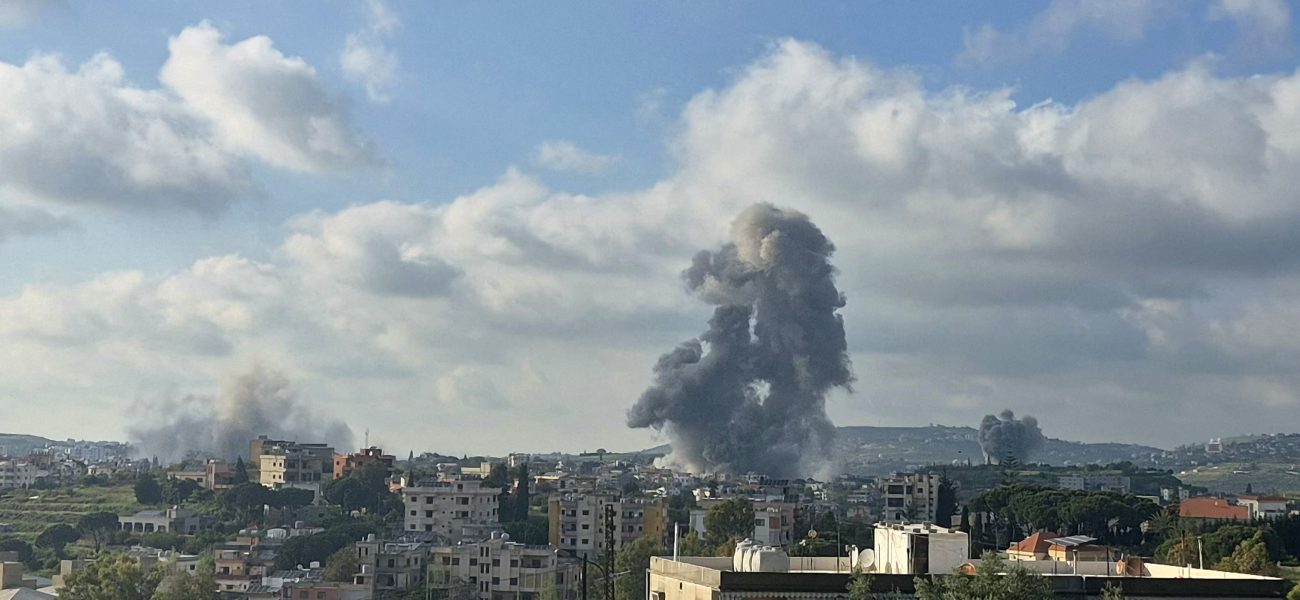
POLICY WIRE — Beirut, Lebanon — The predictable rhythm of cross-border animosity, a grim metronome ticking away in the Levant, registered another devastating beat this week. It wasn’t the first time; it surely won’t be the last. But a fresh volley of Israeli airstrikes, which tore through southern Lebanese villages and the eastern Bekaa Valley, didn’t just claim at least a dozen lives—it underscored the region’s simmering volatility, a constant state of precarity that occasionally, violently, boils over.
Behind the headlines of immediate casualties lies a narrative far older, deeply entrenched in geopolitical friction and reciprocal retribution. This isn’t merely an isolated skirmish; it’s a critical escalation within a broader, long-running conflict that frequently pulls in Hezbollah, Israel’s northern adversary, and, by extension, Iran. The targets, ostensibly military assets, frequently obliterate civilian infrastructure, creating a humanitarian crisis that quietly grinds on, largely out of the global spotlight.
Still, the latest wave, coming after weeks of relatively contained exchanges, suggests a deliberate broadening of engagement by Tel Aviv. One can’t help but observe the increasingly brazen reach of these operations. It’s a calculated gamble, surely, to push the boundaries of what constitutes ‘deterrence’ without triggering an all-out regional conflagration—a line that constantly shifts, constantly risks being overstepped. And it’s a line that ordinary Lebanese citizens, like those who perished in the recent barrages, often pay for with their very existence.
In Tel Aviv, the narrative is, predictably, one of self-defense. Rear Admiral Daniel Hagari, spokesperson for the Israel Defense Forces, didn’t mince words. “We won’t tolerate any aggression against our citizens or territory,” he shot back in a televised briefing. “Our response is a proportionate defensive measure against persistent threats originating from Lebanese soil. This isn’t about choice; it’s about necessity.” His words, delivered with characteristic gravitas, reflected a national stance hardened by decades of conflict.
But Beirut views it through an altogether different lens. Caretaker Prime Minister Najib Mikati, his government already grappling with a crushing economic collapse, condemned the assaults as a blatant violation of sovereign rights. “This unprovoked aggression,” Mikati asserted from the Grand Serail, “represents a flagrant transgression of international law and a direct assault on our national integrity. The international community, frankly, must move beyond mere statements and actively condemn these indiscriminate attacks targeting our civilians and infrastructure.” His exasperation wasn’t just palpable; it was a testament to Lebanon’s perpetual victimhood in a conflict not entirely of its making.
📄 POLICY WIRE WHITEPAPER PUBLISHED: PAKISTAN'S NATIONAL SECURITY POLICY PRIORITIES
👉 READ BY CLICKING HEREThe human cost is staggering. According to the United Nations Office for the Coordination of Humanitarian Affairs (UN OCHA), over 93,000 individuals have been internally displaced in southern Lebanon alone since hostilities spiked following the October 7th attacks in Israel. They’ve fled their homes, their livelihoods shattered, seeking refuge in a country already at breaking point. So, while political elites trade barbs and launch missiles, entire communities are being erased, rendered ghost towns by the shadow of perpetual war.
This localized conflict, though geographically confined to the Israel-Lebanon border, casts long, ominous shadows across the broader Muslim world. Nations like Pakistan, geographically distant yet spiritually and politically intertwined through Islamic solidarity, observe these escalations with profound concern. They’ve often found themselves in delicate diplomatic balancing acts, attempting to foster stability in a region perpetually on the brink. Pakistan’s burgeoning diplomatic role in other volatile areas highlights, starkly, the absence of similar, effective mediation in this intractable conflict—a vacuum that allows cycles of violence to repeat with dreadful regularity.
What This Means
At its core, this latest uptick in hostilities signals a dangerous erosion of already fragile deterrence mechanisms. The Israeli strikes deep into Lebanon, particularly the Bekaa, indicate an expansion of operational scope, challenging Hezbollah’s perceived safe havens and potentially inviting a more robust, unpredictable response from the powerful Shi’ite militia. The risk of miscalculation remains astronomically high; an errant missile or a disproportionate counter-attack could quickly morph this contained, albeit deadly, proxy war into a full-blown regional conflagration. Economically, Lebanon, already in freefall, can ill afford further destabilization. Foreign investment remains a pipe dream, and humanitarian aid efforts face immense hurdles— logistical and political. Internationally, the muted reactions underscore a weariness, perhaps even an impotence, in addressing the Israeli-Palestinian conflict’s wider repercussions. Don’t think for a second that this isn’t noticed across capitals from Islamabad to Tehran. It’s a calculated test of international resolve, and so far, that resolve appears largely absent, offering little hope for a genuine de-escalation, let alone a lasting peace.