

Albuquerque’s Culinary Landmark Crumbles: A Deeper Look at Urban Decay and Economic Ripple Effects
POLICY WIRE — Albuquerque, N.M. — The aroma of sizzling green chile, a comforting constant in downtown Albuquerque for over eight decades, has been abruptly displaced by the sterile tang of...

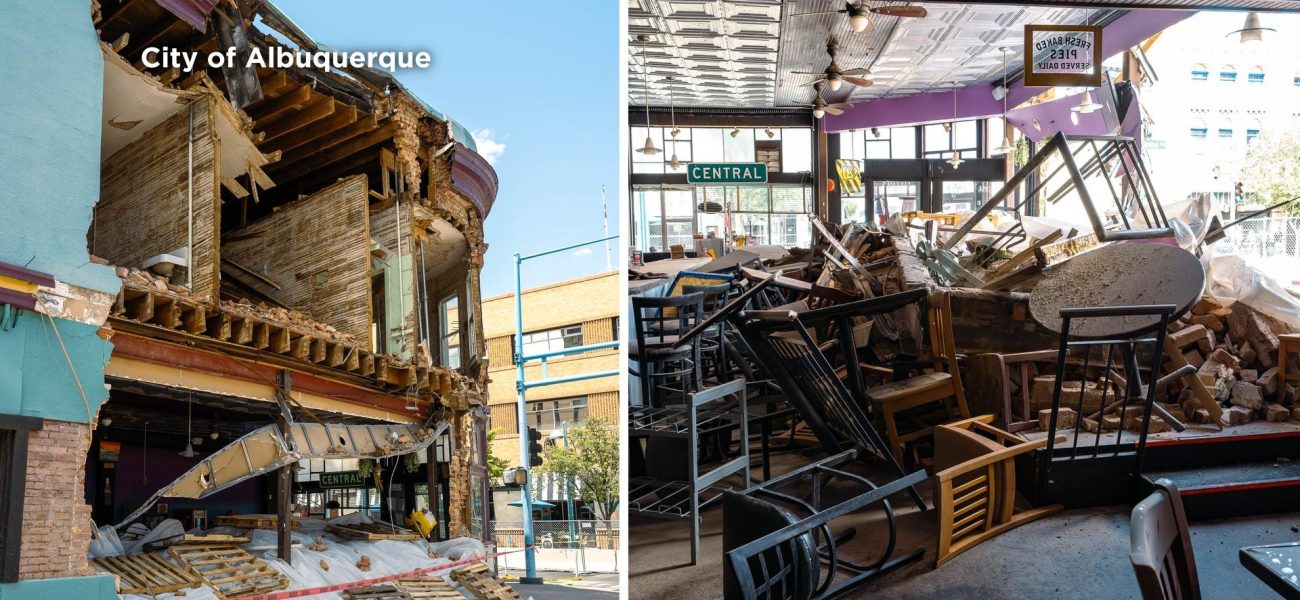
POLICY WIRE — Albuquerque, N.M. — The aroma of sizzling green chile, a comforting constant in downtown Albuquerque for over eight decades, has been abruptly displaced by the sterile tang of construction dust and bureaucratic deliberation. Lindy’s Diner, a beloved culinary institution, isn’t just closed; a significant portion of its exterior wall lies in rubble, triggering an indefinite closure of critical thoroughfares and casting a pall over a district desperately vying for revitalization.
It wasn’t a fire, nor an earthquake, but the silent erosion of time that brought down a piece of city history. Last Monday, a section of Lindy’s facade simply gave way, prompting immediate street closures at 5th Street and Central Avenue. Now, days later, those concrete Jersey barriers and chain-link fences aren’t just temporary inconveniences; they’re stark monuments to structural instability, effectively cordoning off a vibrant nexus of commerce and culture.
City officials, navigating the delicate dance between public safety and economic preservation, provided a somber update on Friday. “Our primary concern, it goes without saying, is the safety of our citizens,” stated Albuquerque Mayor Tim Keller, his voice reportedly tinged with a blend of regret and resolve. “But we’re also acutely aware of the profound economic ripple effect this closure has on our cherished local businesses. It’s a delicate balance, one we’re working tirelessly to restore.” And it isn’t just Lindy’s; the surrounding businesses — the 505 Food Hall, the historic KIMO Theater — find themselves marooned on an island of accessibility challenges, their usual foot traffic rerouted by a sudden, unplanned urban chasm.
Crews have since reinforced the immediate perimeter, but the city isn’t fooling itself; this isn’t a quick patch-and-reopen scenario. A debrief with a structural engineering firm is slated for early next week, a meeting that will undoubtedly determine the diner’s fate and the duration of downtown’s enforced quietude. “Our preliminary assessments indicate a deeper structural compromise than initially observed,” shot back Sarah Chen, the City’s Chief Structural Engineer, in a follow-up statement. “We can’t — and won’t — compromise on safety for a quick fix. The integrity of the entire block hangs in the balance, — and frankly, we’re looking at all options, however difficult.”
For the average commuter, the instructions are labyrinthine: approach Central from 6th or 7th Street, loop via Copper or Tijeras, avoid 5th entirely. For the small business owners, however, the directions are far more opaque. They’re facing reduced patronage, confused customers, and the gnawing uncertainty of an indefinite roadblock, a literal impediment to their livelihoods. It’s a microcosm of a larger problem plaguing many American cities, where historic charm often conceals aging infrastructure teetering on the brink. According to the American Society of Civil Engineers, the U.S. infrastructure received a C- grade in their 2021 report, highlighting significant underinvestment and widespread decay — a reality now starkly visible on an Albuquerque street corner.
📄 POLICY WIRE WHITEPAPER PUBLISHED: PAKISTAN'S NATIONAL SECURITY POLICY PRIORITIES
👉 READ BY CLICKING HEREWhat This Means
At its core, the Lindy’s collapse isn’t just a local tragedy; it’s a potent symbol of the broader, often ignored, policy challenge of urban infrastructure. For Albuquerque, a city striving to revitalize its downtown core, this incident represents a significant setback, potentially eroding public confidence and deterring investment. The economic implications for nearby businesses are immediate and severe, forcing many to consider temporary closures or even permanent relocation if the closures persist. Politically, Mayor Keller’s administration faces pressure to demonstrate decisive action without overextending city resources or alienating a tax-paying populace.
Still, this isn’t an American anomaly. Look around the globe, from the bustling megacities of South Asia to the historic quarters of the Muslim world. Cities like Lahore or Karachi, grappling with immense population growth and rapid development, constantly battle the precarious balance between preserving their rich architectural heritage and accommodating modern infrastructure demands. The sudden, unannounced collapse of an aged structure — whether it’s a residential building or a cherished eatery — isn’t uncommon there, often resulting in far greater human and economic tolls. Governments, like Pakistan’s, often face the immense challenge of retrofitting or replacing crumbling infrastructure while simultaneously building new, resilient systems, all under intense public scrutiny and often with limited budgets. The policy parallels are striking: the need for robust building codes, consistent inspection regimes, and dedicated funding for maintenance and rehabilitation. What happened at Lindy’s, then, is a localized event with deeply resonant global themes, highlighting the universal struggle to maintain the physical fabric of our urban centers.
Ultimately, the saga of Lindy’s Diner will serve as a bellwether for how Albuquerque approaches its aging urban core. Will it catalyze a broader investment in infrastructure, or will it remain a cautionary tale of what happens when the foundations of history begin to crack? We’re all watching, it seems, to see if downtown Albuquerque can pick up the pieces, literally — and figuratively.