


America’s Perilous Dance: Resisting China’s Protectionist Lure in the Global Tech Scramble
POLICY WIRE — Washington D.C. — The invisible hand of global commerce, once championed as the great equalizer, now seems to be clenching into a strategic fist, particularly in the cutthroat arena of...

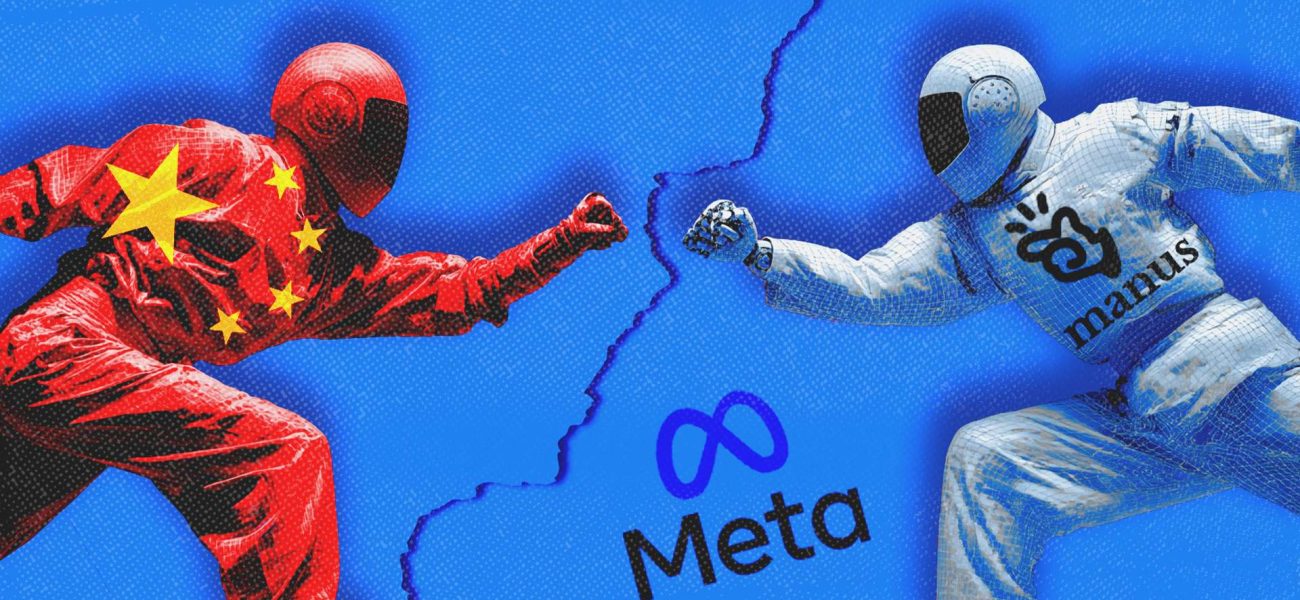
POLICY WIRE — Washington D.C. — The invisible hand of global commerce, once championed as the great equalizer, now seems to be clenching into a strategic fist, particularly in the cutthroat arena of advanced technology. Beijing’s increasingly assertive stance on blocking foreign tech acquisitions and cultivating indigenous champions hasn’t only redrawn the lines of economic competition but also presents Washington with a rather uncomfortable quandary: Should it mimic China’s protectionist playbook, or steadfastly cling to the open-market principles it has so long espoused? It’s a high-stakes gamble, fraught with both ideological — and very real economic peril.
For decades, the United States has operated under the broad assumption that a free flow of capital and ideas, even across geopolitical divides, ultimately fosters innovation and global prosperity. But China, evidently, doesn’t subscribe to that particular catechism. Its legislative and regulatory architecture, meticulously refined over years, now routinely stymies foreign entities from acquiring Chinese tech firms deemed ‘strategically important’—a rather elastic definition, isn’t it? This isn’t just about market access; it’s about control, about shaping the future of foundational technologies from artificial intelligence to quantum computing, often with state-backed fervor.
And the numbers don’t lie. According to a 2023 analysis by the Rhodium Group, Chinese outbound direct investment in US technology companies plunged by over 90% since its 2016 peak, signaling a deepening decoupling in sectors Beijing considers vital. This isn’t just cyclical; it’s systemic. They’re constructing a digital Great Wall, brick by arduous brick, ensuring that core technologies remain firmly under domestic purview. Still, some in Washington argue against mirroring such tactics, asserting that America’s strength has always been its dynamism, its willingness to embrace global talent and capital.
“To mimic Beijing’s protectionist impulses would be to surrender the very principles that have fueled American innovation for generations,” remarked Commerce Secretary Gina Raimondo, her voice a measured counterpoint to the hawkish clamor. “Our strength lies in open competition, not in erecting digital fortresses that ultimately stifle our own creativity and global leadership.” It’s a sentiment that echoes through corridors of power where the long-term vision contends with immediate anxieties about national security.
Behind the headlines, this technological arms race has tangible repercussions far beyond Silicon Valley or Shenzhen. Consider the developing economies of South Asia, for instance. Pakistan, a nation strategically entwined with China through the Belt and Road Initiative (BRI), often finds itself navigating this intricate tech landscape with dwindling options. Its burgeoning digital infrastructure—from 5G networks to smart city projects—is heavily reliant on Chinese tech giants. Were the US to adopt a similarly restrictive approach, limiting its own tech exports or acquisitions from certain nations, countries like Pakistan could face even fewer viable choices, potentially exacerbating technological dependence on a single power and hindering their own digital sovereignty ambitions.
But China’s narrative paints a different picture. “National security — and core technological self-reliance aren’t negotiable. Every nation must safeguard its strategic interests in an increasingly volatile global landscape,” asserted Zhao Lijian, then-spokesperson for China’s Ministry of Foreign Affairs, during a routine briefing. It’s a plausible argument, of course, given the historical context of geopolitical rivalries and the ever-present threat of technological espionage. But one can’t help but observe the inherent irony in a nation that has so expertly leveraged global supply chains now advocating for staunch technological autarky.
📄 POLICY WIRE WHITEPAPER PUBLISHED: PAKISTAN'S NATIONAL SECURITY POLICY PRIORITIES
👉 READ BY CLICKING HERESo, what’s Washington to do? The immediate temptation might be to retaliate in kind, to build its own firewalls and block foreign access to its crown jewels. But isn’t that precisely what China wants? To draw America into a zero-sum game, where the foundational tenets of a globalized economy are chipped away, piece by painful piece? It’s a path that could lead to a fragmented global tech ecosystem, one less efficient, less innovative, and ultimately, less prosperous for everyone involved. The cost of such a ‘decoupling’ extends far beyond quarterly earnings reports; it’s about the very architecture of future economies.
Still, the pressure mounts from certain congressional factions to act decisively. They’re worried, and rightly so, that continued openness in the face of Beijing’s aggressive industrial policy is akin to unilaterally disarming in a tech war. It’s a delicate balance, isn’t it, between protecting national interests and preserving the very economic liberties that define American enterprise? A nation doesn’t just lose its edge; it risks its standing as a beacon of innovation.
What This Means
The geopolitical chessboard is shifting, — and tech is the kingpin. Should the US succumb to the allure of mirroring China’s protectionist strategies, we’d likely see an acceleration of ‘splinternet’ scenarios and the bifurcation of global supply chains. Economically, this could mean higher costs for consumers, stunted innovation due to reduced collaboration, and a dramatic reorientation of global trade flows. Politically, it strengthens the narrative of an inevitable US-China rivalry, forcing neutral nations—especially those strategically positioned like Pakistan—to make increasingly difficult choices about their technological partners and, by extension, their geopolitical allegiances. It also risks undermining the very multilateral institutions designed to foster open trade, potentially leading to a more fragmented and less predictable global order. The long-term implications for global GDP growth — and technological progress are profoundly negative. Beijing’s tariff gambit in other regions already illustrates the ripple effects of such nationalistic economic policies. It’s a move that could transform mere economic competition into something far more resembling economic warfare, with collateral damage reverberating through every sector.
And let’s not forget the strategic implications for international standards development. If tech ecosystems diverge completely, whose standards will prevail? The struggle for technological dominance isn’t just about market share; it’s about setting the rules of the game for the next century, influencing everything from cybersecurity protocols to the foundational algorithms that power our daily lives. This isn’t just a trade dispute; it’s a foundational battle for technological sovereignty — and global influence.