

Tuscan Inferno: Europe’s Picturesque Heart Burns, Revealing Deeper Climate Cracks
POLICY WIRE — Florence, Italy — The scent of burning pine and ancient olive, usually a nostalgic evocation of Mediterranean hearths, has, for legions of Tuscans, become an olfactory...

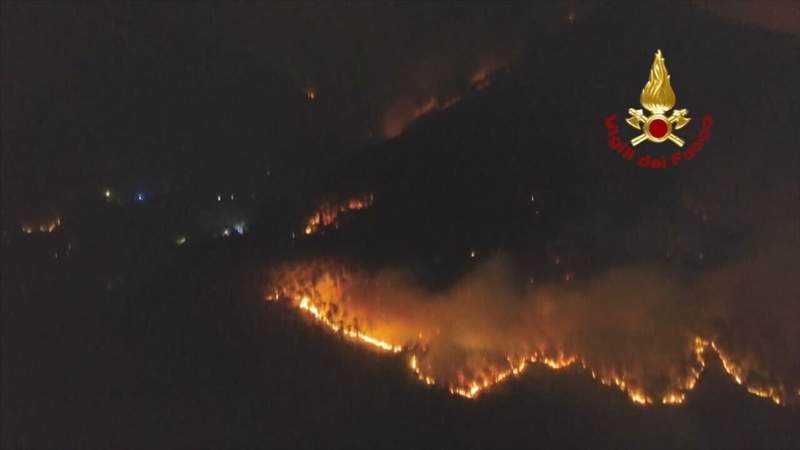
POLICY WIRE — Florence, Italy — The scent of burning pine and ancient olive, usually a nostalgic evocation of Mediterranean hearths, has, for legions of Tuscans, become an olfactory harbinger of dread. It’s a familiar perfume now, this acrid, choking smoke that coils through valleys and obscures the region’s storied hills — a grim annual reminder that Europe’s idyllic southern flank is increasingly, brutally, on fire. No longer an anomaly, these infernos are the predictable, devastating punctuation marks in a continent grappling with an undeniable climate shift.
Behind the headlines of hurried evacuations — thousands fled their homes this week, from picturesque villas to humble farmsteads — lies a starker, more systemic reality. This isn’t merely a localized emergency; it’s an acute symptom of a broader European malaise, a climate crisis that doesn’t just threaten holidaymakers but fundamentally alters the economic bedrock and social fabric of an entire region. And make no mistake, the political implications are profound.
Still, the immediate priority remains containment. Firefighting crews, bolstered by aerial support, battled tenacious blazes that have already consumed thousands of hectares. It’s a Sisyphean task, you know — battling flames fueled by parched earth — and capricious winds. Maurizio Bettini, head of Tuscany’s Civil Protection, didn’t mince words. “Our teams are operating under immense pressure, stretched thin across multiple fronts. We’re fighting not just the fire, but the very exhaustion that comes from this relentless, yearly assault,” he shot back in a hurried press conference, his voice hoarse from the smoke-filled air.
Local authorities contend that the specific spark might be human negligence — a carelessly discarded cigarette, a rogue barbecue — but the kindling is undeniably climatic. Italy, like much of Southern Europe, has endured prolonged drought and successive heatwaves, turning its forests into tinderboxes. The European Forest Fire Information System (EFFIS) documented that over 785,000 hectares — roughly the size of Rhode Island — burned across the EU in 2022 alone, a grim statistic far exceeding the 20-year average. So, while we can point fingers at individuals, the real culprit is a warming planet that makes every such mistake catastrophically consequential.
This isn’t an isolated Italian problem either. The Mediterranean basin, a jewel of global tourism and a cradle of civilization, finds itself increasingly on the front lines of climate change. Its dry summers grow hotter, longer, — and more conducive to such devastating events. The region’s unique blend of culture, history, and natural beauty — a potent magnet for billions in tourist revenue — now stands in peril.
And yet, the broader global context often gets lost in the immediate crisis. While Europe grapples with its burning landscapes, countries in the Muslim world, particularly in South Asia, face their own, often more brutal, climate realities. Pakistan, for instance, has weathered unprecedented floods — devastating millions and displacing entire communities — and crippling heatwaves, all while possessing a fraction of the resources available to wealthy European nations. It’s a stark reminder that while the settings differ, the planetary forces at play are identical; the rich nations simply have a more robust, if increasingly strained, buffer against disaster.
📄 POLICY WIRE WHITEPAPER PUBLISHED: PAKISTAN'S NATIONAL SECURITY POLICY PRIORITIES
👉 READ BY CLICKING HEREEugenio Giani, the President of the Tuscany Region, underscored the magnitude of the challenge, emphasizing that the economic ramifications extend far beyond charred timber. “This isn’t merely an environmental tragedy; it’s an economic wound that impacts our agriculture, our tourism, and the very spirit of our communities,” Giani opined, lamenting the immediate and long-term costs. “We can’t just rebuild; we must fundamentally adapt our strategies and infrastructure to a climate that has irrevocably changed.” For many, that adaptation feels painstakingly slow, a political ballet often performed amidst the literal ashes of earlier policy failures. The battle for environmental dignity, it seems, is a global, continuous fight.
What This Means
At its core, Tuscany’s fiery ordeal is a microcosm of Europe’s unfolding climate vulnerability — a stark political problem wrapped in environmental calamity. Economically, the blow to Italy’s vital tourism sector is undeniable, even if temporary. Images of fleeing residents — and smoke-choked vineyards don’t exactly inspire bookings. the cost of firefighting, infrastructure repair, and long-term ecological restoration places an immense burden on regional and national budgets already grappling with post-pandemic economic volatility. This translates into less public spending on other crucial services, potentially fueling public discontent.
Politically, these recurring crises amplify calls for more aggressive climate action from Brussels, pushing EU member states to move beyond rhetoric to tangible, costly mitigation and adaptation strategies. It also invariably ignites debates about urban planning, land management, and preventative measures, often pitting environmental conservation against development interests. The consensus, for now, remains elusive. Don’t forget, there’s also the subtle, yet potent, pressure on governments to project competence and control — a narrative that becomes increasingly difficult to maintain as these ‘unprecedented’ events become annually commonplace. The silent question hanging over each plume of smoke is: what will it take for sustained, decisive action?