


McLaren Golf’s Grand Drive: Can Auto Prestige Translate to Putting Green Prowess?
POLICY WIRE — MIAMI, Fla. — It isn’t the gleaming carbon fiber of a Formula One racer, nor the roar of an engine hitting redline, that’s defining McLaren’s latest...

POLICY WIRE — MIAMI, Fla. — It isn’t the gleaming carbon fiber of a Formula One racer, nor the roar of an engine hitting redline, that’s defining McLaren’s latest high-stakes maneuver. No, this time, the iconic British marque — a byword for speed and precision — is navigating the nuanced, often unforgiving, terrain of the golf equipment market. A curious pivot, some might observe, for a brand synonymous with horsepower — and competitive circuits. But at its core, this isn’t just about selling clubs; it’s a profound test of brand equity, market perception, and the ambitious — some would say audacious — attempt to redefine what luxury means on the links.
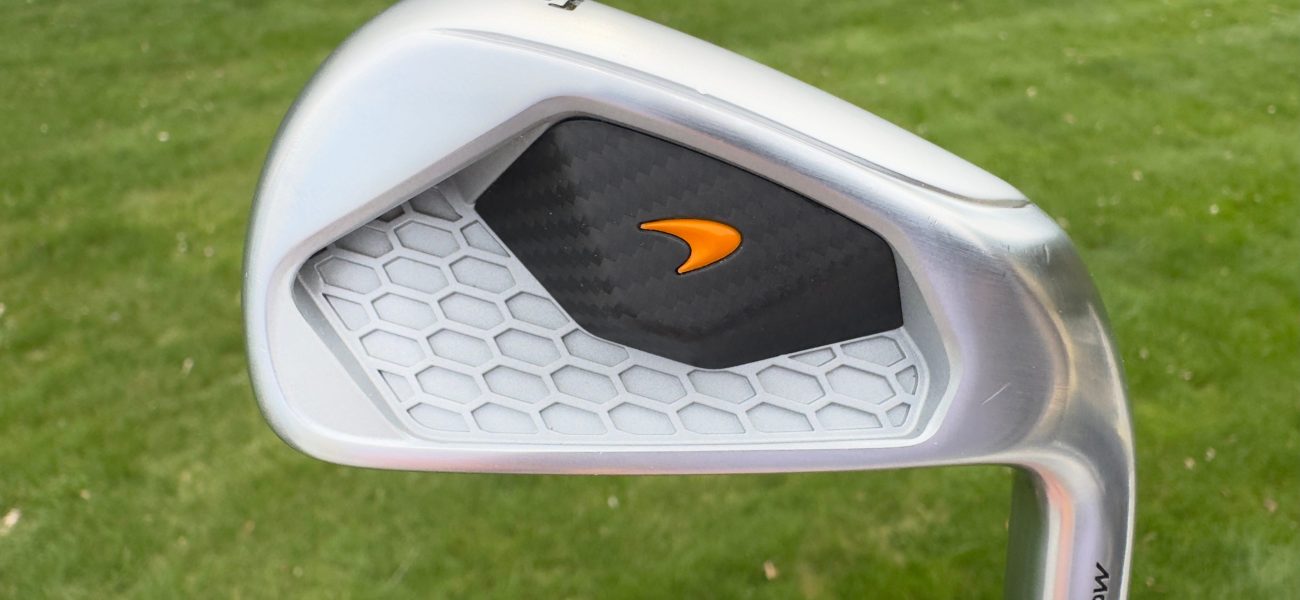
The initial reviews of McLaren Golf’s Series 3 irons are, surprisingly, more than just polite applause for a well-heeled newcomer. These aren’t merely trinkets for the affluent fan; they’re genuinely proficient instruments. I’ve swung them, and that unmistakable "clean, solid sensation" at impact, the kind that makes seasoned players unconsciously hum their approval, it’s undeniably there. The aesthetics, too, mirror the sleek, engineered elegance one expects from McLaren, looking less like assembled components and more like sculptures ready for flight. For a company taking its maiden swing in this specialized arena, that’s no small feat. Yet, the golf world has watched this narrative unfold countless times — a grand entrance, bold pricing, promises of disruption. And then, typically somewhere between the 18 to 24-month mark, the true crucible descends.
McLaren Golf has, it seems, judiciously populated its ranks with industry veterans. They’re acutely aware of the pitfalls. This isn’t some fleeting co-branding dalliance, not Oracle Red Bull Racing x TaylorMade redux, nor a rehash of Ferrari x Cobra Golf from yesteryear. McLaren Golf aims for full-fledged autonomy, a golf company — period. That’s a commendable ambition. But it’s also a distinction the market hasn’t quite processed yet. When a discerning golfer spies that McLaren emblem on a hosel, their mind still invariably drifts to Zak Brown in the Monaco paddock, not to the intricacies of metal injection molding or optimal forgiveness for an off-center hit. That gap, between F1 fantasy — and fairway reality, is far wider than it appears.
Justin Rose, the seasoned English professional, carries a heavy burden as the brand’s marquee ambassador. At 45, Rose — a precision player known for his meticulous approach — has cultivated a sympathetic following. His recent contention in major championships, even without a win, amplifies McLaren’s visibility. And that’s precisely what a nascent brand needs. His game perfectly articulates McLaren Golf’s self-perception. But while Rose lends undeniable credibility, the other ambassadorial choices — Ian Poulter, now a LIV Golf fixture, and Michelle Wie West, an iconic figure whose competitive days are largely behind her — feel like a different calculus altogether. They offer reach, yes, an undeniable social media footprint, but perhaps less direct relevance in the brutal, performance-driven crucible of pro tour validation. It’s a pragmatic move for launch, but it certainly concentrates the pressure on Rose’s aging shoulders.
Then, we must consider the price tag: a staggering $375 per iron. A full set commands north of $2,500 before a single custom fitting. For a particular echelon of golfer — the one who refreshes their luxury SUV every three years, who maintains lockers at multiple exclusive clubs — this isn’t an obstacle. They’ll acquire them because they’re McLaren, — and because they’re demonstrably good. PXG, another premium entrant, proved this luxury niche exists. But PXG also illuminated a crucial, sobering truth: you can’t reside there indefinitely. PXG, once the epitome of exorbitant golf gear, has quietly, then significantly, recalibrated its pricing. Their drivers — and irons now align more closely with industry titans like Callaway or Titleist. Fanboys might buy once, but serious golfers, even those with deep pockets, ultimately seek performance fused with relative value.
The global luxury goods market is projected to reach approximately $380 billion by 2027, according to Statista, a testament to enduring affluence. Yet, golf equipment — despite its cachet — remains a highly specialized segment within this opulent pie. So, while McLaren’s splashy Miami launch, replete with F1 cars and champagne-sipping cognoscenti snapping selfies with clubs, undoubtedly generated buzz, those are not the clientele who will forge McLaren Golf into a sustainable, long-term enterprise. The true test unfolds beyond the velvet ropes. What happens when McLaren must diversify its offerings — drivers, wedges, putters? Will they be judged solely on their performance against decades-old incumbents like Mizuno or Ping, or will the racing legacy continue to cast a long, perhaps distracting, shadow?
📄 POLICY WIRE WHITEPAPER PUBLISHED: PAKISTAN'S NATIONAL SECURITY POLICY PRIORITIES
👉 READ BY CLICKING HEREAnd what of markets beyond the traditional Western golf strongholds? In burgeoning economies across the Muslim world — from the opulent greens of Dubai to Pakistan’s nascent, albeit exclusive, high-end golf scene — brand prestige can often hold disproportionate sway. The McLaren name, untethered from direct golf lineage, might initially carry immense, aspirational weight, potentially short-circuiting some of the credibility concerns prevalent in established markets. One could argue, for example, that the growth of luxury hospitality — exemplified by W Hotels’ expansion into places like Sardinia, as discussed in a recent Policy Wire analysis — signals a broader acceptance of diverse luxury offerings in these regions. But even there, performance, ultimately, dictates enduring loyalty. McLaren’s journey isn’t just a marketing exercise; it’s a profound economic gambit, an attempt to leverage an automotive legend into an entirely distinct, fiercely competitive consumer landscape.
What This Means
This venture by McLaren is a fascinating case study in luxury brand diversification, carrying significant economic and market implications. Firstly, it signals a broader trend where established high-end brands, facing saturation or seeking new revenue streams in their core sectors, attempt to ‘brand-stretch’ into tangential — or sometimes, entirely disparate — luxury segments. It’s a calculated risk: success can unlock vast new markets and customer bases, but failure risks diluting the core brand’s mystique and perceived quality. McLaren, here, isn’t just selling golf clubs; it’s selling an extension of its high-performance, precision-engineered identity.
Economically, this strategy targets the elusive ‘affluent consumer’ whose purchasing decisions are often driven by status and exclusivity as much as utility. The challenge lies in converting that initial intrigue into sustained loyalty. The golf equipment market, while niche, is also intensely brand-loyal — and performance-obsessed. For McLaren to truly succeed, it can’t just be ‘good for a car company’s clubs’; it must become genuinely competitive with — and ideally, superior to — brands that have spent decades, even centuries, refining their craft. This venture will ultimately provide valuable insights into the elasticity of luxury brand identity and the limits of aspirational marketing in a truly specialized consumer goods sector. As Michael Leiters, CEO of McLaren Group, once shot back regarding the endeavor, "We aren’t just slapping a badge on; we’re building a legacy. This isn’t a vanity project, it’s a strategic expansion into a complementary luxury lifestyle segment." Yet, as veteran sports market analyst Eleanor Vance observed with characteristic dry wit, "The golf market is a graveyard for brands that confuse prestige with performance. McLaren’s got the first, but the second takes decades to cultivate. Just ask Titleist." And she’s not wrong.
The ambition to be a full 14-club brand is commendable, the direct-to-consumer model smart, and the tour presence with Rose, astute. But McLaren’s real test isn’t merely crafting superb clubs. They can certainly accomplish that. No, the true challenge is morphing into a venerable golf company — one people associate not with race cars, but with unwavering excellence on the driving range, in the fitting bay, and most crucially, out on the course, where only the ball’s flight truly matters. It’s a long, arduous race, — and McLaren Golf has just crossed the starting line.