


Gaza’s Information Blackout: Media Giants Decry Israeli Restrictions as Silence Deepens
POLICY WIRE — Tel Aviv, Israel — The silence emanating from Gaza, punctuated only by carefully curated military dispatches and the increasingly grim accounts of Palestinian journalists, has become a...

POLICY WIRE — Tel Aviv, Israel — The silence emanating from Gaza, punctuated only by carefully curated military dispatches and the increasingly grim accounts of Palestinian journalists, has become a profoundly unsettling phenomenon. For months, the world’s most formidable newsgathering organizations have watched, aghast, as independent foreign reporting from the embattled strip has been systematically throttled. Now, their collective frustration has boiled over.
Leaders from a phalanx of global media powerhouses – including The Associated Press, CNN, BBC, and Reuters – aren’t just requesting; they’re effectively demanding that Israel’s government dismantle a restrictive cordon, one that has, since late 2023, barred foreign journalists from independently entering and reporting from Gaza. This persistent exclusion, they contend, maintains an information vacuum, despite an ostensible ceasefire having held for half a year.
Their joint statement, a rare public broadside, didn’t pull punches. At its core, the issue isn’t merely about press freedom in the abstract; it’s about the very bedrock of informed public discourse, a principle often observed more in rhetoric than reality. “Being on the ground is absolutely essential,” the statement underscored. “It allows journalists to scrutinize official narratives on all sides, to speak directly with civilians, and to report back what they witness firsthand. That’s precisely why news organizations dispatch their reporters into the field, often at profound personal risk.”
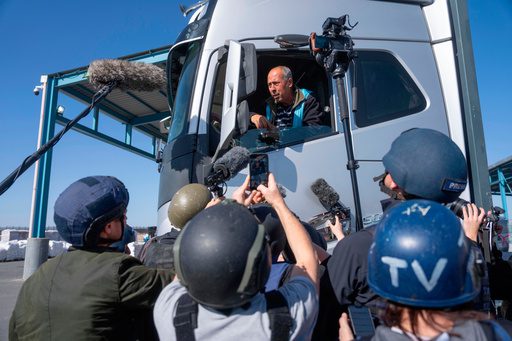
But Israel, it seems, remains unswayed. Initial justifications for the ban hinged on operational security – the specter of foreign reporters inadvertently (or otherwise) compromising Israeli troop positions. Other rationales invoked the extreme dangers of an active battle zone. And while the Israel Defense Forces have occasionally shepherded foreign correspondents on highly controlled, meticulously choreographed tours (little more than photo opportunities, some critics sneer), these fall demonstrably short of the unfettered access the global media corps demands.
“Our paramount responsibility is the safety of our soldiers and the integrity of our ongoing security operations,” Lieutenant Colonel Avi Kaplan, a spokesperson for the Israel Defense Forces, shot back when pressed on the matter. “While we appreciate the press’s desire for comprehensive access, this remains a volatile area, and we cannot jeopardize operations or lives for uncontrolled reporting. It’s a complex, fluid situation; not a static press conference.”
Still, the prevailing argument for continued exclusion has begun to fray. The heaviest fighting, by most accounts, has subsided. A ceasefire, however fragile, is purportedly in place. “The hostages, or many of them anyway, have returned home. Journalists don’t pose a direct threat to Israeli troops,” the media executives pointed out with biting logic. “There’s even a mechanism — however restrictive — that allows aid workers to enter and exit. So, why not journalists?” It’s a question many ask, particularly in the Muslim world, where perceptions of Western media bias are already deeply entrenched.
Behind the headlines, the ramifications of this journalistic blockade are stark. Coverage of the unfolding catastrophe within Gaza has fallen almost entirely to local Palestinian journalists. These aren’t merely reporters; they’re witnesses, victims, — and chroniclers of their own communities’ destruction. They’ve faced the dual burden of covering a war while enduring it personally — their homes obliterated, their loved ones killed. Last year, as food supplies dwindled, concerns surged for their very survival, with Agence France-Presse raising alarm about the hunger plaguing its Palestinian colleagues, a sentiment echoed by AP and Reuters.
📄 POLICY WIRE WHITEPAPER PUBLISHED: PAKISTAN'S NATIONAL SECURITY POLICY PRIORITIES
👉 READ BY CLICKING HEREAnd their lives, tragically, have been extinguished with alarming regularity. Well over 200 journalists and media workers have been killed since the conflict began, according to a tally from the Committee to Protect Journalists. That figure dwarfs the fatalities in conflicts elsewhere, like the Russia-Ukraine war, casting a grim spotlight on the unique perils of reporting from Gaza. Among those lost was Mariam Dagga, a 33-year-old visual journalist who freelanced for the AP, killed in an Israeli strike last August.
The Foreign Press Association, representing international media in the region, has pursued legal avenues, submitting a petition to the Israeli Supreme Court for independent access. Filed in 2024, a ruling has been repeatedly delayed, most recently in January — a bureaucratic stonewall that speaks volumes.
What This Means
This escalating dispute isn’t just a squabble over press credentials; it’s a critical battleground in the broader information war surrounding the Gaza conflict. Politically, Israel risks further eroding its international standing, particularly among key democratic allies who champion press freedom. The absence of independent, verifiable reporting allows competing narratives to flourish unchecked, often fueling anti-Israel sentiment globally and making diplomatic efforts far more challenging. For nations like Pakistan or those in South Asia, where public opinion is acutely sensitive to events in the Middle East, the lack of objective reporting from the ground means narratives are often shaped by less scrupulous sources, further exacerbating regional tensions and distrust.
Economically, while less direct, the long-term impact on foreign investment and tourism could be tangible if Israel is increasingly perceived as a nation hostile to transparency and open information. The constant legal skirmishes and public denunciations by major media houses also divert attention and resources, creating unnecessary friction. It’s a self-inflicted wound, really. Ultimately, an unobserved conflict is a narrative vacuum, one that states, no matter their military might, struggle to control. And it’s a vacuum that, inevitably, gets filled by rumor, propaganda, — and profoundly damaging speculation.
This latest appeal by media chiefs, issued during Press Freedom Week (a subtle, almost ironic, timing), serves as a stark reminder. “Freedom of the press is a basic value in any open society. It’s time for the delays to end. Let us into Gaza.” The message couldn’t be clearer. The question remains: will Israel heed it?