


Digital Shadows, Deadly Devices: New Mexico Arrests Expose Online Illicit Arms Bazaar
POLICY WIRE — LOS LUNAS, N.M. — The digital age, it seems, hasn’t merely streamlined commerce; it’s also provided a disturbingly efficient conduit for the illicit arms trade, pushing the...

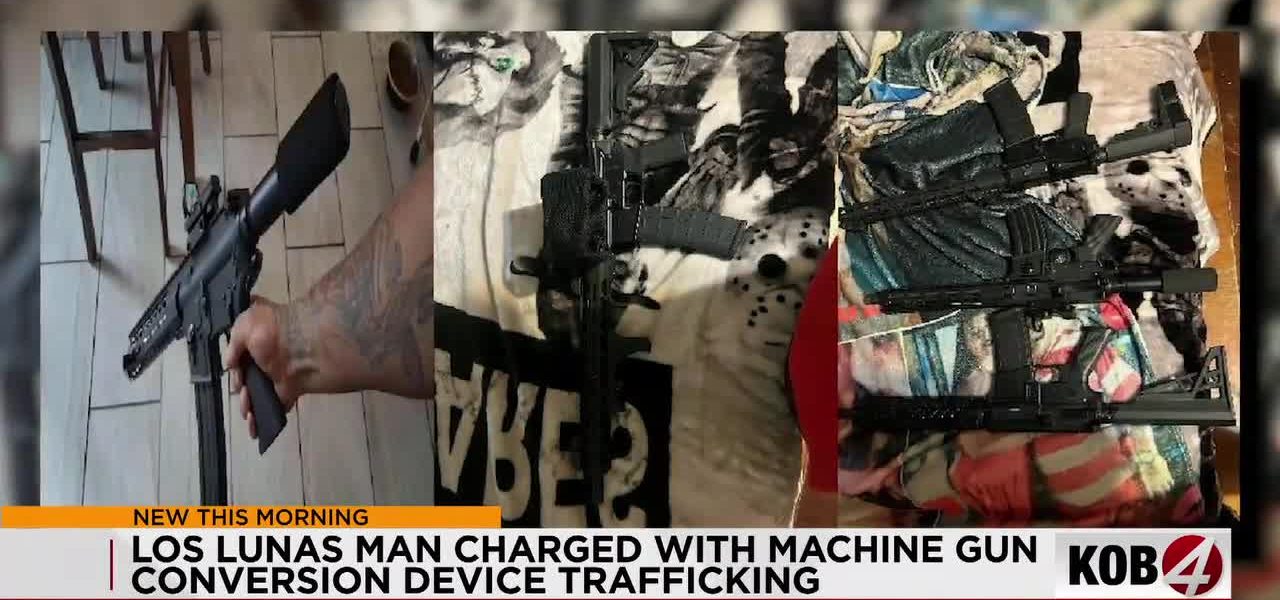
POLICY WIRE — LOS LUNAS, N.M. — The digital age, it seems, hasn’t merely streamlined commerce; it’s also provided a disturbingly efficient conduit for the illicit arms trade, pushing the boundaries of what constitutes a ‘firearm.’ This unnerving trajectory reached a crescendo in Los Lunas, New Mexico, where federal agents recently dismantled an alleged operation transacting in just such deadly capabilities: devices that can transform a common semi-automatic rifle into a fully automatic machine gun.
Behind the headlines of Friday’s apprehensions lies a months-long investigation, a stark reminder of the persistent, often unseen, battle waged against the proliferation of illegal weaponry. It wasn’t a back-alley deal; it was, initially, an advertisement on Facebook—a platform designed for social connection now doubling as a clandestine arms bazaar. Robert Gurule, a mere 23 years old, reportedly leveraged these digital avenues to peddle not just firearms, but the conversion kits that weaponize them to a terrifying degree. His purported partner, 21-year-old Izatah Hausner, now faces charges of aiding — and abetting in this unsettling affair.
The saga commenced last August, when an undercover agent with the Bureau of Alcohol, Tobacco, Firearms and Explosives (ATF) flagged Gurule’s digital footprint. The advertisements weren’t subtle; they allegedly featured videos of Gurule himself handling and firing a fully automatic weapon. This brazen display wasn’t just bravado; it was a clear signal to prospective buyers of the dangerous goods on offer. And it didn’t take long for the covert operation to escalate. In October, Gurule allegedly transacted a rifle, already fitted with a machine gun conversion device and an extended-capacity drum magazine, for $1,600.
Just two months later, the ante was upped considerably: three more machine guns and an additional firearm changed hands for $4,600. But the most consequential exchange occurred last Friday. Agents arrested Gurule and Hausner following a purported sale of 80 machine gun conversion devices—along with other firearms—for a staggering $11,500. Laboratory analysis subsequently confirmed what agents had suspected: these devices, once affixed, met the federal definition of a machine gun. Each suspect, should they be convicted, faces a federal prison term of up to 10 years. They’ll both cool their heels in custody until at least Wednesday, when their respective detention hearings are scheduled.
“This isn’t about second amendment rights; it’s about criminal enterprises leveraging readily available technology to endanger our communities,” shot back Special Agent in Charge Fred Williams of the ATF’s Phoenix Field Division, whose jurisdiction includes New Mexico. “When individuals market and sell devices that turn ordinary firearms into military-grade weapons, we won’t hesitate to act.”
📄 POLICY WIRE WHITEPAPER PUBLISHED: PAKISTAN'S NATIONAL SECURITY POLICY PRIORITIES
👉 READ BY CLICKING HEREThe digital marketplace has simply outpaced our regulatory frameworks, hasn’t it? “We’re seeing a global trend where these conversion kits are shockingly accessible, often through channels that blur the lines between legitimate e-commerce and outright illicit trade,” observed Dr. Lena Khan, a professor of international law at Georgetown University, specializing in arms trafficking. Her analysis underscores a broader, unsettling reality: the ease with which such devices can be manufactured or acquired online presents a formidable challenge to law enforcement worldwide.
The ATF, for instance, reported an alarming 570% increase in the recovery of machine gun conversion devices by law enforcement between 2020 and 2021, according to their 2022 “Firearms Commerce in the United States” report. This isn’t merely a domestic concern. Still, the implications stretch far beyond New Mexico’s borders. Consider regions like Pakistan or other parts of the South Asian and Muslim world, where political instability and existing illicit arms routes could provide fertile ground for such digital trafficking. If young entrepreneurs in Los Lunas can so readily source and sell these conversion kits, imagine the potential for extremist groups or organized crime syndicates in less regulated environments. The proliferation of these easily concealable, rapidly deployable automatic weapons presents a terrifying prospect for regional security, potentially escalating local conflicts or empowering militant factions. It’s a sobering thought, isn’t it—how a Facebook ad in one corner of the globe could, theoretically, fuel aggression thousands of miles away, monetizing global aggression through unseen digital supply chains.
What This Means
At its core, this Los Lunas affair represents a microcosm of a much larger, insidious problem: the weaponization of connectivity. Law enforcement’s success here, while commendable, highlights the cat-and-mouse game underway between federal agencies and those exploiting the internet’s reach for illicit purposes. Economically, the underground market for these devices thrives on their relatively low cost and high lethality multiplier, creating a dark economy that undermines legal arms manufacturers and poses a significant threat to public safety. Politically, this incident will undoubtedly fuel renewed debates over gun control, the regulation of online platforms, and the resources allocated to agencies like the ATF. It also spotlights a concerning global trend. The ease of access to these conversion kits suggests a burgeoning black market that could easily traverse national boundaries, complicating international efforts to curb illicit arms flows, particularly in volatile regions like the Middle East or South Asia, where the lines between state and non-state actors are frequently blurred. What happens in Los Lunas, in other words, doesn’t always stay in Los Lunas.