

Zimbabwe’s White Gold Rush: Beijing’s Quiet Gambit in the Global Resource Scramble
POLICY WIRE — Harare, Zimbabwe — The electric hum of a future powered by batteries just got a little louder in Southern Africa, though you wouldn’t know it from the typically muted...

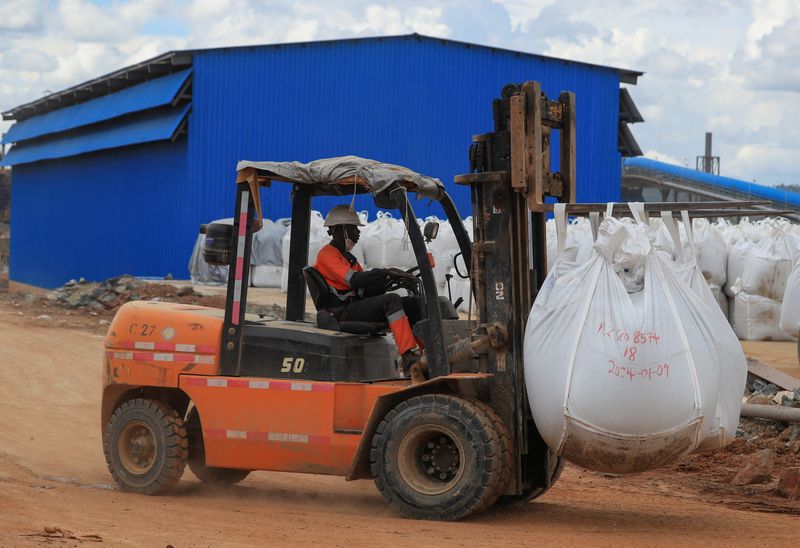
POLICY WIRE — Harare, Zimbabwe — The electric hum of a future powered by batteries just got a little louder in Southern Africa, though you wouldn’t know it from the typically muted announcements. What commenced as a subtle, almost clandestine industrial maneuver has now crystallized into a tangible shift in the global supply chain: the inaugural export of lithium salt from Zimbabwe by China’s Huayou Cobalt. It’s far more than a simple shipment; it’s a palpable indicator of the relentless, often unheralded, international contest for the elemental building blocks of the 21st century’s green economy.
At its core, this transaction spotlights China’s deeply entrenched strategy to secure pivotal resources, a long-game approach that’s been unfolding across the African continent for decades. But now, with the ravenous demand for electric vehicles (EVs) and renewable energy storage solutions, the stakes have become breathtakingly high. Lithium, often dubbed “white gold,” isn’t merely a commodity; it’s a strategic asset, essential for what many nations deem their economic and environmental futures.
Behind the headlines of nascent resource extraction, one finds a complex web of geopolitical machinations and economic exigencies. Huayou, a titan in China’s mineral processing sector, didn’t just acquire mining assets in Zimbabwe; it has, with formidable alacrity, established the infrastructure necessary to process raw ore into lithium salt – a higher-value product – directly on Zimbabwean soil. This isn’t altruism; it’s shrewd business, ensuring a vertically integrated supply chain that bypasses the vagaries and tariffs of international markets for unprocessed raw materials.
And so, while Zimbabwean officials celebrate a new revenue stream, the true beneficiary of this accelerated processing capability remains a point of subtle contention among policy wonks. “Zimbabwe’s sovereignty over its resources remains sacrosanct,” averred Hon. Tendai Moyo, Minister of Mines — and Mining Development, in a recent address. “But we recognize the imperative of global partnerships to unlock their value, providing jobs and infrastructure for our people, lifting them from precarity.” It’s a fine line to tread, balancing national aspirations against the undeniable pull of foreign capital and expertise.
Still, Beijing’s long-term vision is clear. Its enterprises aren’t just buying mines; they’re investing in the entire ecosystem. “Our investments aren’t about extraction alone; they’re about fostering a shared future, ensuring the energy transition benefits all partners,” shot back Ambassador Li Wei of the Chinese Embassy in Harare, during a low-key trade forum. “Zimbabwe stands to gain immensely from this collaboration, building its industrial capacity alongside ours.” Such pronouncements often precede an expanding footprint, creating interdependencies that prove difficult to unravel.
📄 POLICY WIRE WHITEPAPER PUBLISHED: PAKISTAN'S NATIONAL SECURITY POLICY PRIORITIES
👉 READ BY CLICKING HEREThis dynamic isn’t exclusive to Southern Africa, you see; it resonates across the developing world, particularly within the orbit of China’s ambitious Belt and Road Initiative (BRI). Countries like Pakistan, a key BRI partner, are watching these developments intently, understanding the implications for their own burgeoning economies and nascent infrastructure needs. Pakistan, itself exploring its mineral wealth, recognizes the blueprint being laid in Africa. The reliance on Chinese financing and expertise for such ventures mirrors trajectories seen across the Muslim world, from Central Asia to the Middle East, where China’s economic footprint continues its inexorable expansion, often with similar mineral concessions.
The global race for these minerals is accelerating at an astonishing clip. The International Energy Agency (IEA) projects that global demand for lithium alone will increase by over 500% by 2050 to meet ambitious climate goals. This statistic underscores the urgency — and strategic importance of every ton of lithium salt leaving Zimbabwe. For developed nations, scrambling to diversify their supply chains away from an increasingly dominant China, these shipments represent a deepening strategic challenge. It’s the quiet resource war playing out in plain sight, with implications for everything from automotive production lines to national security.
What This Means
This singular shipment of lithium salt from Zimbabwe isn’t just about trade; it’s a bellwether for the future of global energy. Politically, it solidifies China’s position as an indispensable, if often controversial, partner for resource-rich developing nations. It accentuates Beijing’s strategic advantage in controlling critical mineral supply chains, giving it leverage in a world increasingly reliant on green technologies. Economically, it promises a significant, albeit potentially lopsided, boon for Zimbabwe, offering desperately needed foreign currency and infrastructure development, but also raising questions about long-term debt sustainability and genuine technology transfer. For the broader geopolitical landscape, it intensifies the global competition for resources, forcing Western powers to rethink their strategies in Africa and beyond, lest they concede vital ground in the race towards a decarbonized future. And it’s a future that, apparently, will have a distinctly Chinese accent.