


Roma’s Conundrum: Koné Sale Exposes Brutal Economics of European Football’s Elite
POLICY WIRE — Rome, Italy — European football, for all its glittering spectacles and fervent loyalties, often operates on a razor’s edge—a precarious balance between sporting ambition and stark...

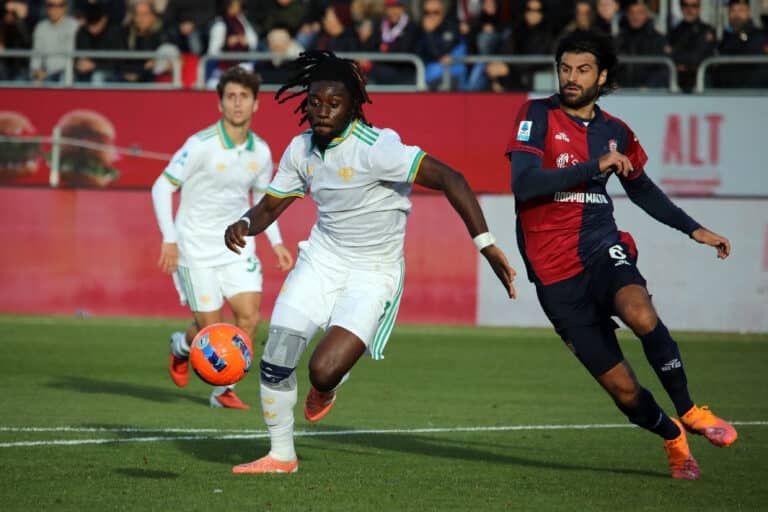
POLICY WIRE — Rome, Italy — European football, for all its glittering spectacles and fervent loyalties, often operates on a razor’s edge—a precarious balance between sporting ambition and stark fiscal realities. AS Roma, the storied Italian club, currently finds itself in such a bind, contemplating a significant divestment that underscores the relentless pressures of modern football economics. The focal point of this impending decision? Midfielder Manu Koné, a French dynamo whose potential departure transcends mere transfer gossip; it’s a bellwether for the sport’s increasingly complex financial landscape.
Behind the headlines of potential transfers and on-field strategies, Roma is engaged in a delicate, high-stakes ballet with UEFA’s Financial Fair Play (FFP) regulations. A Settlement Agreement dictates the club’s every financial move, pushing it towards player sales not just for squad renewal, but for sheer regulatory compliance. And Koné, an athletic 24-year-old, represents perhaps their most liquid asset—a commodity whose market value could prove pivotal.
His potential sale isn’t just about bolstering the coffers; it’s about generating a substantial capital gain, a critical metric for clubs battling FFP constraints. Signed for €18 million, his book value on Roma’s balance sheet now hovers around €10.8 million. Yet, the club currently pegs his market value at a staggering €45 million, eyeing a potential €35 million profit if a deal materializes, as reported by Italian daily Il Messaggero. That’s a staggering return, an almost irresistible siren call for any club under fiscal duress.
“It’s a brutal reality, isn’t it?” conceded Tiago Pinto, Roma’s former General Manager (a figure whose real-world tenure involved similar financial tightropes). “We invest in talent, nurture it, and then often, the market dictates we must liquidate it to simply exist within the rules. Sentiment, in this business, is a luxury few can afford.” Pinto, though no longer at the helm, articulated a sentiment undoubtedly familiar to his successors, who must weigh competitive aspirations against the chilling arithmetic of balance sheets.
The marketplace, it seems, agrees with Roma’s ambitious valuation. Inter Milan, Paris Saint-Germain (PSG), and Newcastle United are all reportedly circling—a trio of clubs whose ambitions, and indeed, financial wherewithal, speak volumes about the bifurcated nature of contemporary football. PSG and Newcastle, famously backed by Qatar and Saudi Arabian state wealth respectively, possess an acquisitive power that often distorts traditional market dynamics. Their interest isn’t just about acquiring a player; it’s about projecting soft power, attracting global audiences (many from the Muslim world, where these clubs command immense followings), and cementing their status as global brands.
Manu himself, despite some internal debate about his perceived one-dimensional defensive focus, carries the undeniable cachet of being a starter or semi-starter for Les Bleus, France’s formidable national side. It’s not exactly a roster populated by also-rans. His agent, Mino Raiola, before his untimely passing, was known for his blunt assessments. “Manu’s a raw gem, isn’t he?” an anonymous veteran football agent, intimately familiar with European transfer dealings, mused to Policy Wire. “A defensive dynamo, yes, but 24 years old with Les Bleus pedigree – that’s a premium tag in any currency, regardless of whether some pundits want more flair. Clubs aren’t just buying a midfielder; they’re buying future potential, national team status, — and resale value.”
📄 POLICY WIRE WHITEPAPER PUBLISHED: PAKISTAN'S NATIONAL SECURITY POLICY PRIORITIES
👉 READ BY CLICKING HEREStill, the clock ticks. Roma’s coach, whoever it might be next season, will undoubtedly want Koné for the crucial remaining fixtures – four games that could secure a Champions League berth, and four games that could, conversely, mark the Frenchman’s final appearances in a Roma jersey. The immediacy of the sporting objective clashes head-on with the long-term imperative of financial health. It’s a clash that defines much of modern football.
What This Means
At its core, Koné’s potential transfer saga is a stark illustration of how UEFA’s FFP regulations, intended to foster financial sustainability, have instead often forced clubs into a perpetual cycle of buying cheap and selling dear. For clubs like Roma, player development isn’t merely about sporting excellence; it’s an existential necessity, a strategy for survival in a market increasingly dominated by state-backed behemoths. The capital generated from a sale like Koné’s doesn’t just fund future transfers; it shores up balance sheets, pays down debt, and ensures continued participation in lucrative European competitions. But it also means these clubs are often unable to retain their best talent, perpetually operating as a high-end feeder system for richer rivals.
And so, the geopolitical undercurrents are undeniable. The interest from Gulf-backed clubs like PSG — and Newcastle signifies a profound shift in football’s power dynamics. Their deep pockets, often impervious to the same revenue generation pressures as traditional clubs, escalate player valuations across the board, making it harder for clubs like Roma to compete, both on the field and in the transfer market. This dynamic ensures that while players like Koné move, the conversation isn’t just about football, but about global capital flows, soft power, and the future shape of the beautiful game.