


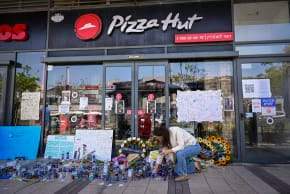
Beneath the Festivities, a Bleak Reality: Ninth Minor Held in Stabbing Probe
POLICY WIRE — [City, State] — The fireworks have long faded, the barbecues cleaned, and the patriotic fervor of Independence Day is a distant memory for most. But for one beleaguered...

POLICY WIRE — [City, State] — The fireworks have long faded, the barbecues cleaned, and the patriotic fervor of Independence Day is a distant memory for most. But for one beleaguered community, the reverberations of that July 4th are still chillingly palpable. They’re not from lingering echoes of celebratory explosions, but from the relentless drumbeat of police arrests — the latest tallying a ninth suspect, another minor, ensnared in a brutal stabbing investigation that has frayed public nerves and underscored a disquieting truth about youth violence.
It’s a numbing cadence, isn’t it? Each new apprehension, particularly when it concerns teenagers, feels less like a triumph of justice and more like another grim bookmark in a chapter nobody wants to read. This isn’t just about a crime; it’s about what’s festering beneath the surface of seemingly stable communities, erupting during moments meant for collective joy. And this latest detainee — unnamed, like the others, due to their age — only deepens the collective unease, suggesting a conspiracy of minors, a chilling collaborative act that speaks volumes about peer influence and desperation.
Police haven’t been loquacious about the specifics, citing the ongoing investigation and the sensitive nature of dealing with juvenile suspects. But the sheer scale of the arrests — nine individuals now, a significant portion underage — demands attention. It’s a stark indicator that the incident wasn’t an isolated flare-up but potentially a coordinated, perhaps premeditated, act involving a cohort barely out of childhood. We’re talking about a cohort still navigating the thorny thickets of adolescence, yet already entangled in something far more sinister.
“We’re committed to bringing every individual responsible for this heinous act to justice, regardless of age,” shot back Chief Anya Sharma, her voice clipped, during a brief, perfunctory press conference earlier this week. “But our focus extends beyond arrests. It’s on understanding the genesis of such violence amongst our youth and preventing future tragedies.” Her sentiment, while professionally articulated, didn’t quite obscure the palpable frustration emanating from the podium. They’re dealing with symptoms, she seemed to suggest, while the disease continues its silent spread.
But the ‘genesis,’ as the Chief phrased it, remains stubbornly elusive for many. “We’ve lost our way with these kids,” lamented Reverend David Hayes, a long-time community advocate, speaking to Policy Wire from his small, often-overlooked outreach center. “They’re adrift, untethered from the institutions that once gave them mooring — family, faith, even just a sense of belonging. What we’re seeing isn’t just bad choices; it’s a desperate cry for attention, for purpose, that’s gone horribly, tragically wrong.” Hayes’s words echo a growing chorus, one that sees in these young faces not just criminals, but casualties of a society perhaps too preoccupied with its own divisions to nurture its youngest.
Still, the data doesn’t lie, even if it offers little comfort. The Office of Juvenile Justice and Delinquency Prevention (OJJDP) reported that in 2022, juvenile arrests for violent crime offenses increased by 5% nationally compared to the previous year. It’s not an anomaly; it’s a trend, a slow-motion disaster unfurling across neighborhoods — and news cycles. And it’s not confined to America’s shores. The challenges of youth disaffection and vulnerability, often exacerbated by socioeconomic pressures and a perceived lack of opportunity, are universal.
📄 POLICY WIRE WHITEPAPER PUBLISHED: PAKISTAN'S NATIONAL SECURITY POLICY PRIORITIES
👉 READ BY CLICKING HEREIn Pakistan, for instance, a nation grappling with its own complex social fabric, the issue of youth radicalization or involvement in petty crime often stems from similar roots: lack of education, unemployment, and the seductive allure of alternative, often illicit, pathways to power or identity. While the cultural contexts differ profoundly, the underlying human struggle — for significance, for a voice — often remains tragically consistent. It makes you wonder, doesn’t it, if we’re all just rearranging the deck chairs on different versions of the same sinking ship?
What This Means
At its core, this unfolding drama isn’t merely a police blotter entry; it’s a consequential barometer of societal health. The involvement of multiple minors in such a violent act on a national holiday signals a deeper crisis of youth engagement and supervision. Politically, expect increased rhetoric from law-and-order proponents calling for tougher juvenile sentencing, while social justice advocates will undoubtedly press for greater investment in youth programs, mental health services, and educational opportunities. The debate will inevitably polarize, probably without offering much in the way of tangible solutions. Economically, communities scarred by such events face a subtle but significant downturn: reduced local investment, a reluctance for new businesses to settle, and a general erosion of civic trust that costs more than just dollars and cents. It’s an intangible erosion, but profoundly impactful. The shadow games of societal fissures aren’t just played out between nations; they’re increasingly present in our own backyards, manifesting in the most vulnerable demographics.
So, as the investigation grinds on, and the legal machinery begins its ponderous turn, the community isn’t just waiting for justice. It’s waiting for answers, for reassurance that its future isn’t irrevocably tied to the tragic missteps of its youngest citizens. It’s a wait that feels interminable, punctuated only by the drip, drip, drip of further arrests, each one a stark reminder of innocence lost, and a holiday forever stained.