


Europe’s Discarded Couture: The Industrial Gambit to Recapture a Trillion-Dollar Waste Stream
POLICY WIRE — Brussels, Belgium — The mountains of discarded garments, often unseen by the haute couture devotees or fast-fashion addicts who created them, represent Europe’s dirtiest open...

POLICY WIRE — Brussels, Belgium — The mountains of discarded garments, often unseen by the haute couture devotees or fast-fashion addicts who created them, represent Europe’s dirtiest open secret. For decades, the continent’s prodigious appetite for cheap clothing has led to an equally prodigious waste problem, with millions of tons shipped off to distant shores or simply incinerated. But now, a quiet revolution is stirring, threatening to upend an opaque global economy built on linear consumption: Europe is finally getting serious about industrial-scale textile recycling.
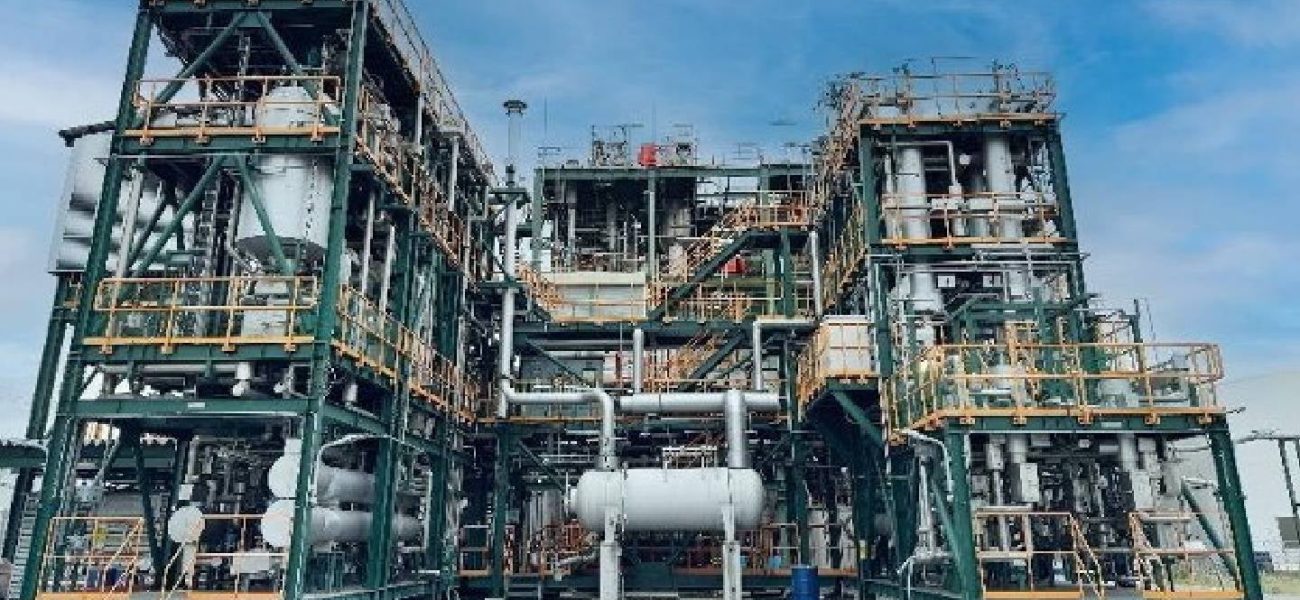
It’s not the quaint image of charity bins or boutique upcycling. No, this is about processing European textile waste at a gargantuan scale, turning synthetic blends and cotton discards back into reusable fibers. The initial trials, though unheralded by fanfare, are already underway, hinting at a future where textile waste isn’t merely an externality to be offloaded but a valuable resource, meticulously recaptured. And it’s a prospect that’s making certain players in the global textile value chain — particularly those in South Asia — rather uneasy, if not outright vexed.
Behind the headlines of sustainability pledges — and green initiatives, the economics are stark. According to Eurostat, European consumers discard approximately 11 kilograms of textiles per person annually, translating to an astonishing 5.8 million metric tons across the EU in 2020 alone. Much of this isn’t even sorted for reuse; it’s simply bundled and exported, often to countries ill-equipped to handle the deluge. Ghana’s Kantamanto market, for instance, grapples daily with thousands of tons of unsellable cast-offs from the West, creating colossal environmental and social burdens. It’s an inconvenient truth that Europe’s fashion habit is another continent’s problem.
This new wave of industrial recycling, however, aims to keep those materials onshore, or at least within a controlled circular economy. The technology, once deemed too complex or cost-prohibitive for mixed fibers, has matured. We’re talking about sophisticated chemical and mechanical processes that can separate polyester from cotton, regenerating high-quality feedstock for new garments. It’s a far cry from the rags-to-wipes industrial legacy.
“This isn’t just about sustainability; it’s an economic imperative. We’re literally throwing away billions of euros annually in perfectly good materials,” stated Dr. Ingrid Vogel, Head of Circular Economy Initiatives at the European Commission, her voice betraying a hint of exasperation during a recent industry briefing. “The era of infinite resources is a fable; we must internalize the true cost of consumption.”
But the ramifications stretch far beyond Europe’s borders. For decades, nations like Pakistan, Bangladesh, and India have been pivotal cogs in the global textile machine, not just as manufacturers of new goods but also as significant processing hubs for used clothing, some of which gets recycled into lower-grade materials or sold as secondhand apparel. A shift towards European self-sufficiency in textile recycling could significantly disrupt these established pathways.
📄 POLICY WIRE WHITEPAPER PUBLISHED: PAKISTAN'S NATIONAL SECURITY POLICY PRIORITIES
👉 READ BY CLICKING HERE“For too long, the developing world has been Europe’s dumping ground, accepting mountains of unwanted garments with limited capacity to sort or truly recycle them,” asserted Ahmed Khan, CEO of GreenThread Textiles in Karachi, Pakistan, during a recent virtual summit on circular economies. “If Europe keeps its waste, it must also consider the downstream impacts on the livelihoods and infrastructure we’ve built around that trade – it’s a double-edged sword.” His sentiment captures the apprehension felt across South Asia, where millions rely on the traditional textile and secondhand clothing trade.
Still, the EU’s push isn’t merely altruistic. It’s a strategic move to secure critical raw materials, reduce reliance on volatile global supply chains, and mitigate the environmental blight of textile waste. It also aligns with ambitious climate targets, like those that animate Germany’s own complex environmental policies, as explored in Germany’s Green Paradox: Bureaucracy Battles Ambition in a Climate Crucible. It’s an acknowledgment that the true cost of fast fashion isn’t just felt by exploited garment workers abroad, but by the entire planet.
What This Means
At its core, Europe’s aggressive pivot towards industrial textile recycling is a seismic shift in global trade and environmental policy. Politically, it signals a deeper commitment to circularity, potentially setting a precedent for other resource-hungry blocs. Economically, it promises the birth of a entirely new domestic industry, creating jobs in waste management, chemical processing, and advanced manufacturing. But it’s not without its challenges: scaling these technologies, establishing robust collection infrastructures, and overcoming the sheer diversity of textile compositions will require colossal investment and regulatory muscle. And, perhaps most consequentially, it forces a reckoning for nations that have historically absorbed Europe’s textile detritus. They’ll need to rapidly adapt their own economies, potentially pivoting from managing imported waste to developing indigenous recycling solutions or even – dare one say it – focusing on higher-value manufacturing. The textile supply chain, already a precarious labyrinth, is about to get a lot more interesting.