


Beyond the Debris: South Sudan Crash Exposes Enduring Perils in a Fragile Nation’s Lifelines
POLICY WIRE — Juba, South Sudan — For the weary traveler, the humanitarian worker, or the intrepid trader in South Sudan, the rumble of a propeller plane isn’t just transport; it’s a...

POLICY WIRE — Juba, South Sudan — For the weary traveler, the humanitarian worker, or the intrepid trader in South Sudan, the rumble of a propeller plane isn’t just transport; it’s a gamble. Often, it’s the solitary thread connecting disparate, isolated regions to the fledgling capital, Juba, in a nation whose rudimentary road network all but dissolves during the relentless rainy seasons. Sometimes, that thread snaps, leaving wreckage.
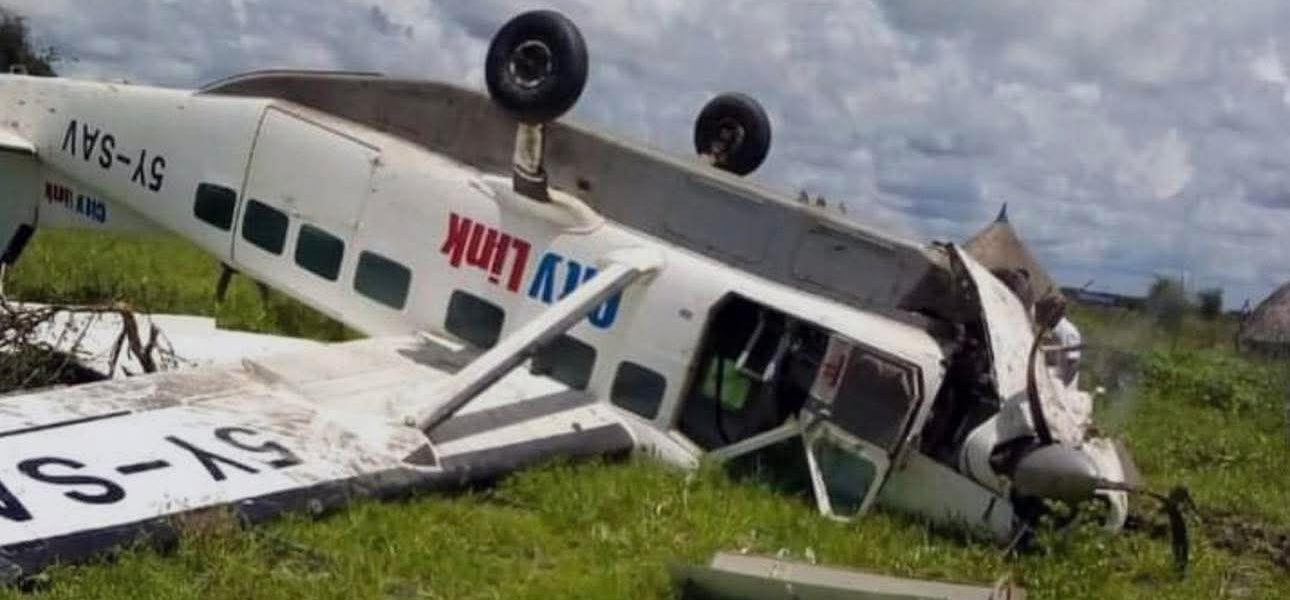
Such was the tragic denouement last week when an aging cargo aircraft, reportedly an Antonov model – a ubiquitous sight across African skies – plunged from the heavens shortly after takeoff from Juba International Airport. All fourteen on board died. This isn’t an anomaly; it’s a grim echo of systemic vulnerabilities that permeate the nation’s air transport sector.
The aircraft, carrying a diverse manifest of passengers and undisclosed cargo, hadn’t flown far before its sudden, fatal malfunction. Local authorities sift through debris. Findings likely won’t assuage deep-seated concerns about operational standards — and maintenance. It’s a familiar challenge for emerging economies: connectivity colliding with prohibitive costs and regulatory deficits.
“This is a deeply sorrowful moment for our nation,” declared South Sudan’s Minister of Transport, Madut Biar Yel, his voice heavy with grief. “We’re committed to a thorough investigation, but we must collectively address the fundamental issues plaguing our aviation sector – for the sake of our people and our future.” Still, acknowledging severe resource constraints—a post-conflict reality—he offered no quick fixes.
So the crash reverberates far beyond Juba. South Sudan, born amidst civil strife, relies heavily on air logistics for everything from food aid to medical supplies, and for transporting international workers. Many expatriates – including professionals from Pakistan and other South Asian and Muslim-majority nations, often part of UN missions or commercial ventures – find air travel indispensable. Their expertise is pivotal to stability, yet they’re subject to the same systemic risks.
“We’ve seen this script play out too many times across this continent,” shot back Dr. Anya Sharma, a senior aviation safety analyst with the International Air Transport Association (IATA), speaking from Geneva. “Sub-Saharan Africa, according to the Aviation Safety Network, consistently records some of the highest rates of air accidents globally, with 3.3 accidents per million flights in 2022, disproportionately involving aging aircraft and often operating under less-than-optimal regulatory oversight.” Her observation, a stark statistical reality, underscores the problem’s daunting scale: a foundational crisis, not merely about spare parts.
📄 POLICY WIRE WHITEPAPER PUBLISHED: PAKISTAN'S NATIONAL SECURITY POLICY PRIORITIES
👉 READ BY CLICKING HEREAt its core, South Sudan’s air safety conundrum mirrors its broader developmental struggles. Conflict decimated infrastructure, human capital, — and resources. Airlines often use older, more affordable aircraft rugged enough for unpaved airstrips – a necessary compromise with a steep human cost. Recurring incidents erode confidence, deter foreign investment, and complicate humanitarian aid delivery, all crucial for recovery. This incident, echoing global geopolitical resource struggles, highlights how fundamental infrastructure dictates the flow of people and goods, impacting economic and social progress.
What This Means
The tragic loss of life isn’t merely a statistic; it’s a potent symbol of South Sudan’s battle against infrastructural decay and institutional fragility. Politically, recurring accidents pressure President Salva Kiir’s government to demonstrate competence and public safety commitment. Failure to address aviation safety could erode public trust, providing fodder for critics who argue the state isn’t governing effectively. It’s a delicate balancing act for a leadership navigating ethnic tensions — and a sputtering peace process.
Economically, the implications are equally consequential. A nation aspiring to attract foreign investment and integrate into regional trade blocs can’t afford a reputation for unsafe skies. This crash will inevitably boost insurance premiums, increasing freight costs and making essential imports more expensive. For indispensable humanitarian organizations, increased risks might necessitate re-evaluating procedures or even scaling back activities – a devastating blow to a population already on the brink. Peace dividends, after all, only truly materialize when basic safety and reliable infrastructure are established, a challenge confronting many post-conflict states, from the Middle East to Central Asia.